
































Cohere and Aleph Alpha Finalize Merger at ~$20B Valuation, Schwarz Group Injects $600M
Cohere and Aleph Alpha have signed a definitive merger agreement valuing the combined company at roughly $20 billion, with Germany's Schwarz Group committing $600 million and planning an €11-13 billion data-center campus, creating a Berlin-Toronto sovereign AI company with more than 1,000 employees.
Five months after first announcing plans to combine, Cohere and Aleph Alpha made it official. The two companies signed a definitive combination agreement on September 16, formalizing a deal that values the merged entity at roughly $20 billion and positions it as, in Cohere CEO Aidan Gomez's words, AI that's "powerful enough to compete, but secure and governable enough to trust."


The structure reveals which company is really driving the bus. Cohere shareholders retain about 90% of the combined entity, reflecting the sharp gap in revenue between the two — Cohere reported $240 million in annual recurring revenue last year, while Aleph Alpha's stood at less than €1 million in 2023. A few details define how the merger actually comes together:
- Lidl-owner Schwarz Group is committing $600 million to Cohere's upcoming Series E, alongside a separate €500 million direct investment in the new entity
- The combined company keeps the Cohere name, dual-headquartered in Toronto and Berlin, with Aleph Alpha's Heidelberg office retained as a research hub
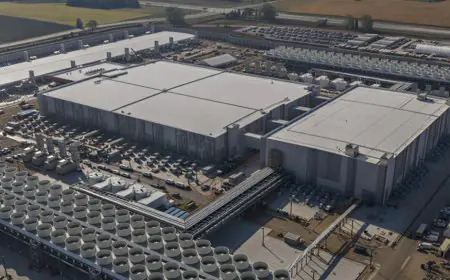
- Schwarz plans to spend between €11 billion and €13 billion on a German data-center campus housing up to 100,000 AI chips
The bet underneath the merger is that not every enterprise or government wants the most capable chatbot — some want a system they can run entirely inside their own infrastructure, under their own jurisdiction's laws.
That's a deliberately different fight than the one OpenAI, Google and Anthropic are having over raw model performance, where both Cohere and Aleph Alpha's models have lagged well behind the frontier leaders.
The timing also isn't coincidental — the deal closes just a week after French rival Mistral raised €3 billion at a valuation above €21 billion, underscoring how urgently European capital is trying to build alternatives to US-controlled AI infrastructure before that window closes.