







































Toyota AI Vision Engine Is Turning Woven City Into A Living Laboratory
Toyota and Woven by Toyota have officially debuted the Woven City AI Vision Engine, a groundbreaking Vision Language Model (VLM) designed to serve as the sensory brain for Japan's high-tech experimental city, bridging the gap between digital intelligence and physical urban infrastructure.
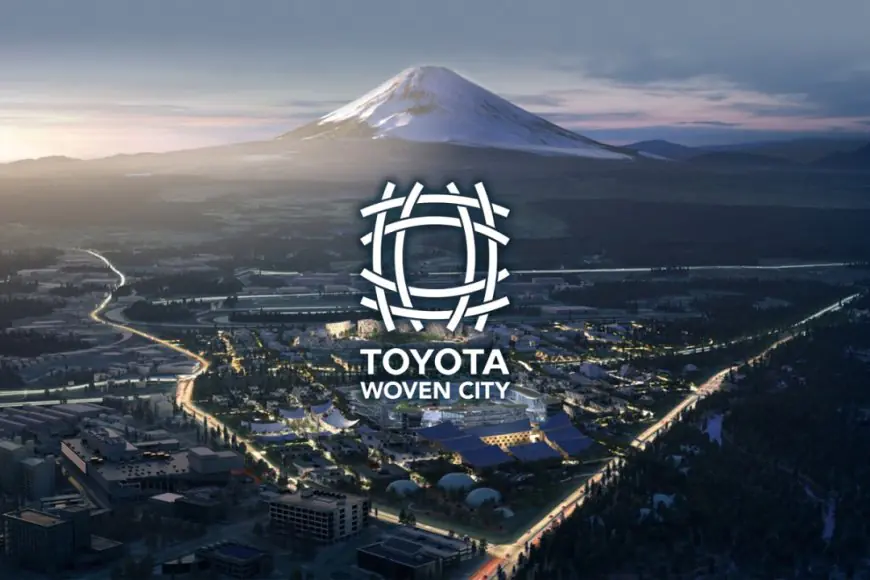


While most of the world has spent the last few years obsessed with AI that lives inside a browser tab, Toyota has been quietly building an AI that lives in the streets. At its sprawling "Woven City" testing ground at the base of Mount Fuji, Toyota Motor Corporation and its technology arm, Woven by Toyota, have officially unveiled the Woven City AI Vision Engine. This isn't just another update to a navigation system; it is a proprietary Vision Language Model (VLM) designed to act as the primary sensory brain for an entire ecosystem of robots and mobility products.
The announcement, made on April 22, 2026, marks a pivotal moment in the evolution of "physical AI." For the first time, we are seeing a foundation model that doesn't just process text or static images, but perceives and understands real-world environments in real time. The AI Vision Engine integrates visual data from camera feeds, behavioral patterns from pedestrians, and environmental information from city infrastructure to create a cohesive, living map of urban interaction.
The Sensory Brain Of A Smart City
At the heart of this technology is the ability to bridge the gap between seeing and doing. Traditional AI in smart cities has often been reactive—think of a camera that counts cars. The AI Vision Engine is different because it uses VLM architecture to "understand" context. It can identify patterns, detect potential risks, and enable coordinated action across a fleet of autonomous vehicles and delivery robots.
For example, if the system detects a child running toward a street, the Vision Engine doesn't just log the movement; it communicates that specific risk to every connected vehicle and traffic signal in the vicinity. This level of predictive safety is part of what Toyota calls the Integrated ANZEN System (Anzen meaning "safety" in Japanese). By combining the Vision Engine with "Woven City Behavior AI," the city can actually interpret and predict human behavioral patterns to prevent accidents before they happen.
According to the latest official Toyota newsroom release, this rollout is central to their "Kakezan" concept—a Japanese term for multiplication. The idea is that by multiplying Toyota’s hardware excellence with Woven’s advanced software, they create solutions that have a far greater impact on society than either could achieve alone.
Beyond Cars: The Rise Of Urban Robotics
The debut of the AI Vision Engine also coincided with the opening of the Woven City Inventor Garage. This is a high-tech hub where external partners—ranging from startups to established giants like Joby Aviation—can plug their own inventions into the city’s AI nervous system. The goal is to move past the idea of the "car" and toward "mobility for all."
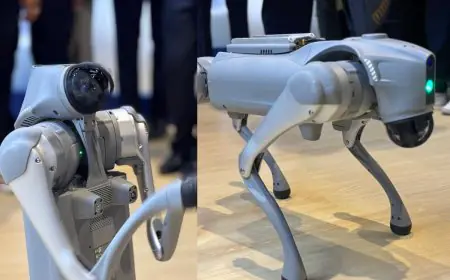
We are seeing the Vision Engine being applied to personal mobility devices for the elderly, autonomous delivery carts, and even AI-driven hospitality services. The system serves as a shared foundation, allowing different robots to "speak" the same sensory language. This reduces the friction of introducing new automated services into a public space, as every device can tap into the city’s collective intelligence to navigate safely around "Weavers"—the residents of Woven City.
To ensure that this massive influx of data doesn't compromise the trust of those living there, Toyota has launched the Woven City Data Fabric. This framework is designed to manage data utilization while strictly respecting individual privacy. You can find more details on how these urban data ecosystems are being structured at the Woven City global portal, which highlights the balance between innovation and resident well-being.
Why This Matters For The Future Of AI
The significance of the AI Vision Engine lies in its move toward "embodied AI." While Large Language Models (LLMs) have mastered the art of conversation, they lack a physical presence. Toyota is essentially giving AI eyes, ears, and a sense of space. If Woven City succeeds as a proof-of-concept, we could see this AI Vision Engine exported to urban centers worldwide, transforming how cities manage traffic, energy, and public safety.
As we look ahead, the hard reality is that integrating AI into the physical world is infinitely more complex than training a chatbot. It requires a level of reliability and real-time processing that most current systems simply cannot match. Toyota’s "living laboratory" is the ultimate stress test. If the AI Vision Engine can handle the unpredictable nature of a living city, it might just be the blueprint for the next century of urban life.