


































Mira Murati Secured A Massive One Gigawatt Nvidia Compute Deal For Thinking Machines Lab
Former OpenAI CTO Mira Murati has officially escalated the AI arms race by securing a multi-year partnership with Nvidia to deploy one gigawatt of "Vera Rubin" compute power, a scale previously reserved for only the world's largest sovereign nations and tech titans.


The global race for artificial intelligence supremacy just witnessed its most aggressive move of 2026. Mira Murati, the former Chief Technology Officer of OpenAI and now CEO of the red-hot startup Thinking Machines Lab, has signed a historic agreement with Nvidia to secure a staggering one gigawatt of AI computing power. This isn't just a standard server lease; it is a foundational bet on the next generation of "Vera Rubin" architecture that aims to move beyond simple chatbots and into the realm of deep, customizable human-AI collaboration.
To put a "gigawatt" into perspective, it is roughly the electrical output of a large-scale nuclear power plant—enough to power 750,000 homes simultaneously. In the world of silicon, industry experts estimate that a deployment of this magnitude carries a price tag approaching $50 billion. By securing this volume of compute, Thinking Machines Lab has effectively vaulted itself into the "super-lab" category, competing directly with the infrastructure of OpenAI, Google, and Meta.
The Power Of Vera Rubin Architecture
Central to this deal is Nvidia’s latest technological marvel: the Vera Rubin platform. Succeeding the Blackwell architecture that dominated 2025, the Vera Rubin systems are built specifically for the era of "Agentic AI." Each node features the new Vera CPU—an 88-core custom ARM processor—paired with Rubin GPUs that boast 288GB of ultra-fast HBM4 memory. The goal of this architecture is a 10x reduction in the cost of generating tokens for complex reasoning tasks.
According to an official report from Nvidia, Thinking Machines Lab will be one of the first private entities to receive volume shipments of these systems starting in early 2027. The startup plans to use this horsepower to build "frontier-level" models from the ground up, focusing on a philosophy of "customizable AI." Unlike other labs that aim for a single, omniscient intelligence, Murati’s team is focused on building models that can be fine-tuned to the specific expert needs of scientists, engineers, and creators.
A Strategic Shift From OpenAI
Since her departure from OpenAI in late 2024, Murati has been vocal about the need for AI systems to be more "understandable" and "collaborative" rather than purely autonomous. Thinking Machines Lab launched its first product, "Tinker," in late 2025—an API that allows developers to fine-tune open-source models using a high-efficiency technique known as LoRA. The newly announced one-gigawatt deal suggests that Tinker was just the appetizer; the main course is a proprietary suite of multimodal models designed for high-stakes professional environments.
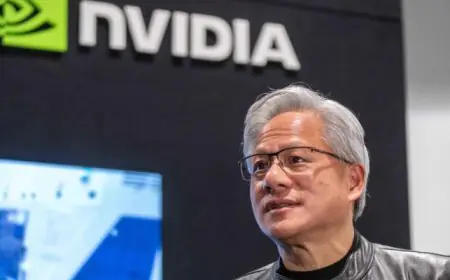
The deal also includes a significant direct investment from Nvidia into Thinking Machines Lab. This "kingmaker" strategy by Nvidia CEO Jensen Huang has become a hallmark of the 2026 tech economy. By investing in the labs that consume its chips, Nvidia creates a closed-loop ecosystem of capital and compute. As noted by Reuters, this partnership likely includes a "preferred status" for Murati’s startup, ensuring they stay at the front of the line while other firms grapple with ongoing GPU supply constraints.
The Battle For AI Talent And Sovereignty
The scale of this agreement also serves as a defensive moat. In an era where top-tier AI researchers are being poached with million-dollar signing bonuses, the ability to offer "limitless compute" is often the strongest recruiting tool available. Despite some recent high-profile departures back to OpenAI, Thinking Machines Lab has managed to recruit heavyweights like Soumith Chintala, the creator of PyTorch, to lead its engineering efforts.
As we look toward 2027, the success of Thinking Machines Lab will depend on whether it can turn this massive electrical footprint into actual cognitive value. If Murati can deliver models that are truly collaborative, she may just prove that the future of AI isn't about replacing humans—it's about giving them a gigawatt-powered partner.