







































Researchers Demonstrate AI-Designed Viruses That Target Bacteria
Stanford University and Arc Institute researchers have used generative AI to design brand-new, self-replicating viruses for the first time. The breakthrough offers hope against antibiotic-resistant bacteria but also raises urgent biosafety and biosecurity questions about the governance of AI-designed pathogens.
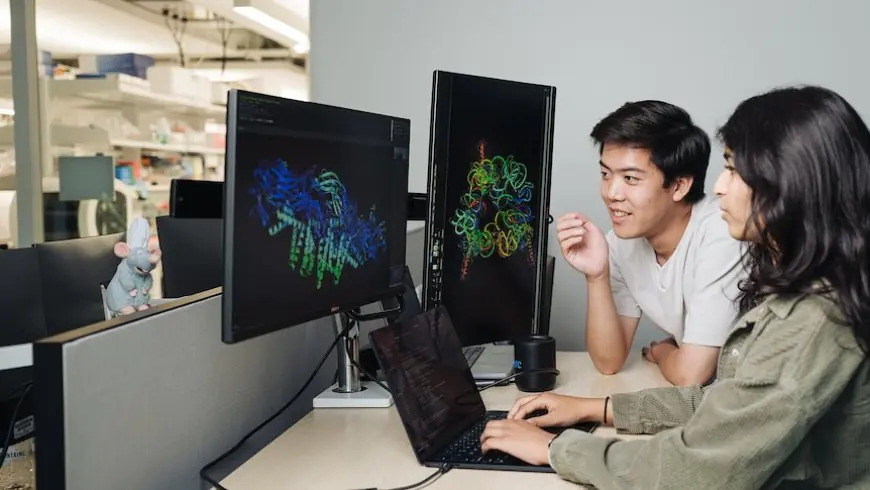
For the first time, researchers have used artificial intelligence to design entirely new viruses not found in nature. Scientists from Stanford University and the Arc Institute in California trained generative AI models called Evo 1 and Evo 2 on millions of natural genomes.


The models, which function like genetic equivalents of large language models, predicted genetic sequences rather than text. Given the blueprint of a known bacteriophage — ΦX174, a virus that infects E. coli bacteria — the AI generated approximately 700,000 potential genome designs.
The researchers selected 285 of the most promising candidates, synthesized new DNA molecules, and inserted them into E. coli bacteria. Within days, 16 of the petri dishes showed clear signs that viable, self-replicating viruses had emerged — viruses that exist nowhere in nature.
"In this case, we wanted the model to generate the entire genome end-to-end in a single left-to-right pass. We didn't add anything." – Dr. Brian Hie, Stanford University.
The AI-designed bacteriophages proved remarkably effective. When tested, a cocktail of the new viruses killed E. coli bacteria that had evolved resistance to naturally occurring phages.
Some of the AI-generated viruses were even more effective at attacking E. coli than the original ΦX174 phage. This breakthrough is particularly significant given the global crisis of antibiotic resistance.
Phage therapy has long been explored as a potential solution, but engineering phages that can overcome bacterial resistance has been extremely difficult. The AI approach suggests a path toward rapidly designing custom phages that can adapt as bacteria evolve resistance.
Key implications of this research include:
- Phage therapy advancement – AI could accelerate the development of personalized phage treatments for drug-resistant infections
- New antibiotic development – Engineered phages could complement traditional antibiotics
- Genome-scale design – The work establishes a foundation for designing larger, more complex genomes
- Open access – The researchers have made Evo 2 openly available, accelerating broader scientific progress
Alongside the promise, the research has sparked urgent warnings. Experts from the Johns Hopkins Center for Health Security wrote that "the ability to compose viral genomes using generative AI now exists; the governance to safely steer it does not".
While the researchers deliberately excluded viruses that infect humans, animals, or plants from the AI's training data to reduce risk, concerns remain that similar techniques could be misused to design dangerous pathogens.
The researchers themselves emphasize the need for expert oversight and robust safeguards throughout the design process. As one commentator noted, the question is no longer whether generative viral genome design will exist, but whether society can build oversight to prevent harm while enabling benefits.