







































Why Microsoft Just Slashed Transcription Prices With MAI-Transcribe-2
Microsoft has launched MAI-Transcribe-2, a speech-to-text model priced at $0.10 per audio hour, a 72% cut from its prior version, while expanding language coverage to 60 and claiming faster performance than OpenAI, Google and ElevenLabs.
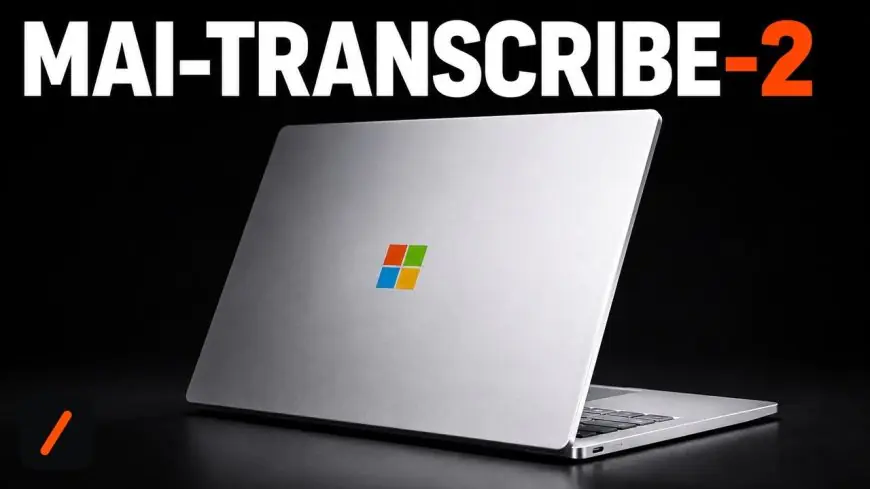
Microsoft just made transcription cheap enough to stop budgeting for. The company released MAI-Transcribe-2 on Thursday, pricing it at just $0.10 per audio hour — a 72% cut from the $0.36 hourly rate Microsoft charged for its first model in the line only five months ago.


For a company processing 100,000 hours of call-center audio a year, that drop takes the annual bill from $36,000 down to roughly $10,000, which is the kind of number that gets a CFO's attention.
The pricing isn't the only headline here. Microsoft says the model now covers 60 languages, up from 43 in June's MAI-Transcribe-1.5 release, while also claiming meaningful speed gains over the competition. A few specs stand out from the launch:
- Microsoft claims MAI-Transcribe-2 is up to 10x faster than OpenAI's transcription model, 7x faster than ElevenLabs' Scribe v2, and 5x faster than Google's Gemini transcription tool
- New features include speaker diarization, word-level timestamps, and code-switching support for mixed-language conversations like Hinglish or Spanglish
- Developers can choose between "verbatim" mode, which preserves filler words for compliance use cases, and "clean" mode for polished captions
The timing matters as much as the price. Microsoft has now shipped three transcription models in under five months — MAI-Transcribe-1 in April, MAI-Transcribe-1.5 in June, and this latest version in September — a pace that signals just how aggressively the company wants to own the infrastructure layer for voice AI, not just the chatbot layer.
With independent benchmarks placing the model second overall on word error rate, behind only Alibaba's latest release, Microsoft is betting that voice will be the next real battleground in enterprise AI, and it's using price as the wedge to get there.