











JPMorgan Anthropic Ban in Hong Kong Signals Deeper Geopolitical AI Fracture
JPMorgan Chase has blocked Hong Kong employees from accessing Anthropic's Claude AI models, following a similar move by Goldman Sachs. The restrictions highlight how the AI industry is fragmenting along geopolitical lines as banks navigate conflicting U.S. export controls and regional compliance requirements.
A Second Wall Street Giant Pulls the Plug
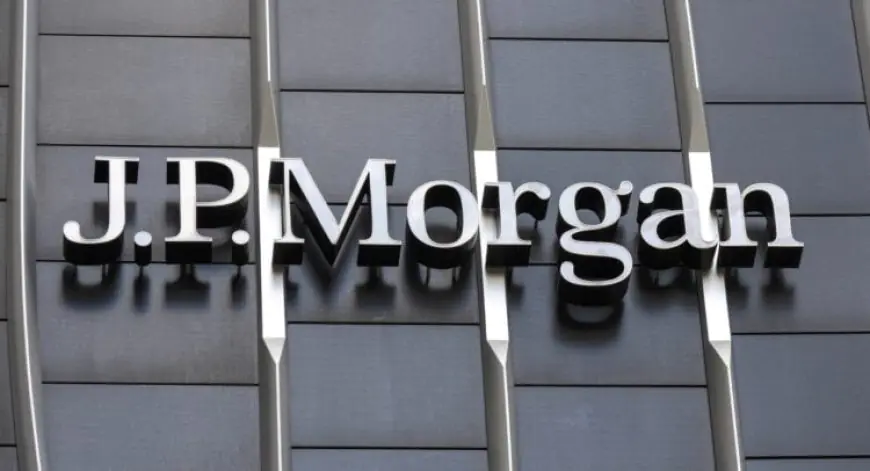
JPMorgan Chase has quietly removed Anthropic's Claude models from its internal list of approved AI tools available to employees in Hong Kong. The decision, first reported by the Financial Times, follows a nearly identical move by Goldman Sachs in April, making JPMorgan the second major U.S. bank to restrict access to Anthropic's AI in Asia's premier financial hub. The bank cited wording in Anthropic's usage terms within its licensing agreement as the trigger for the restriction.

"Combined with the recent Fable and Mythos shutdown, it is an early indicator of an increasingly fragmented AI world with three blocs: U.S.-aligned, China-aligned, and a hedging middle. And this has serious and far-reaching implications. A global bank's AI stack is likely no longer going to be global." – Theo Lau, Founder of Unconventional Ventures
The Contractual Tangle Behind the Ban
Unlike mainland China, where Western AI models are blocked by the Great Firewall, Hong Kong has traditionally maintained open access to global digital platforms. However, U.S. AI companies have long imposed their own regional restrictions, and banks are now taking a stricter interpretation of those terms. One person familiar with Goldman's earlier decision told the Financial Times that the bank adopted a "strict interpretation" of Anthropic's terms of use that exclude usage in Greater China. For JPMorgan, the wording of Anthropic's licensing agreement with the bank prompted the removal. This suggests that the restriction is not a verdict on the model's performance but a contractual and jurisdictional decision driven by a risk-averse compliance culture.
The restrictions come amid a broader U.S. government crackdown on frontier AI exports. Late last week, U.S. Commerce Secretary Howard Lutnick ordered Anthropic to suspend exports of its Mythos and Fable AI models to foreign nationals worldwide without a Commerce Department license, citing national security risks and concerns about potential diversion to military or intelligence users in China, Russia, and other countries of concern. This export control directive means Anthropic's most advanced models, including Fable 5, are no longer available for use by employees of American companies anywhere outside the U.S. without explicit government approval. The geopolitically fragmented AI landscape is rapidly becoming a compliance reality for multinational enterprises.
IPO Ambitions Meet Geopolitical Reality
The timing is particularly awkward for Anthropic. The company has lined up Morgan Stanley and Goldman Sachs to lead its IPO and is reportedly valued in the hundreds of billions of dollars. The same banks that are underwriting Anthropic's public debut are now restricting its use in Hong Kong. The contradiction runs deeper than IPO underwriting. Anthropic has spent the past year embedding Claude across the financial sector. The Hong Kong restriction does not undo any of that; it carves a single jurisdiction out of an otherwise expanding relationship. But it marks the first visible place where geopolitics, rather than capability or cost, sets the boundary of where Claude can be used.
For a company building its valuation partly on the breadth of its enterprise reach, each bank that pulls Claude in a sensitive market is a small dent in that narrative. According to Daniel Wagner, managing director of Multilateral Accountability Associates, "all major U.S. banks should follow the example set by JPMorgan and Goldman Sachs." Oliver Bussman, a Bank of America Europe board member, described the move as "a board-level signal about how banks now negotiate AI tooling," noting that institutions are "moving first on containment rather than waiting for regulators to force the issue." Key implications for the broader AI ecosystem include:
- Fragmented AI adoption – Global banks may need different AI stacks for different regions, increasing complexity and compliance costs
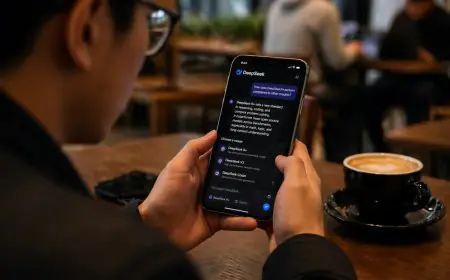
- Rise of local alternatives – Asian institutions are likely to turn to domestic models like DeepSeek-R1, which challenge the assumption that scaling AI requires massive U.S. compute infrastructure
- European sovereign AI push – The U.S. restrictions have triggered alarm in Europe, with French President Emmanuel Macron and German Chancellor Friedrich Merz calling for intensive coordination and independent AI capabilities
The New Reality of AI Compliance
For enterprises operating across borders, the message is now unmistakable: AI vendor selection is no longer just a technology decision. It is a geopolitical positioning one. As Theo Lau told American Banker, "A global bank's AI stack is likely no longer going to be global, as some operations will need to shift to locally-deployable models." The JPMorgan and Goldman Sachs restrictions are not isolated incidents. They are early indicators of a world where access to frontier AI is increasingly defined by national borders, national security priorities, and the willingness of companies to navigate the compliance minefield between them. For Anthropic, the challenge is equally stark: maintaining its enterprise momentum while serving a market that is becoming more fragmented by the day.