







































Food Industry Accelerates AI Adoption but New Survey Reveals Large Implementation Gap
A new wave of industry surveys reveals that food and beverage manufacturers are rapidly increasing AI investment, particularly in bioprocess development. Yet a stark expectation-reality gap persists, with only 8% of executives saying AI is fully meeting their goals, highlighting critical hurdles in data infrastructure and workforce readiness.
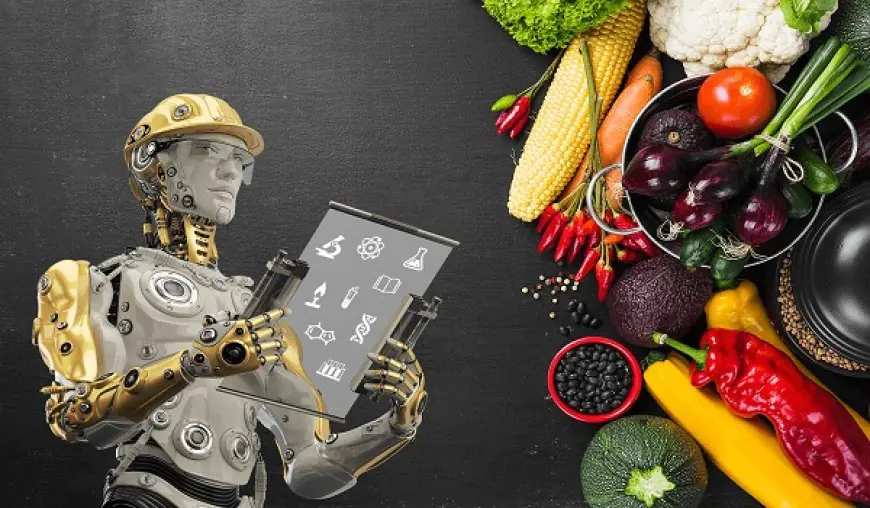
The food and beverage industry is pouring billions into artificial intelligence, yet a fascinating paradox has emerged: investment is soaring while tangible results remain frustratingly elusive.


According to a qualitative survey conducted by Israeli firm Algocell and researchers at the University of California San Diego, a striking 76% of executives say they are accelerating the use of AI in their bioprocess development work.
However, 70% acknowledge a significant expectation-reality gap, and only a mere 8% believe the technology is fully delivering on what they had anticipated. This disconnect between ambition and execution is not just a statistical anomaly—it is a systemic challenge that reveals just how difficult it is to translate algorithmic promise into physical, biological reality.
The hurdles are deeply structural. Legacy IT systems, cited by 38% of food and beverage leaders as the primary barrier, create a fragmented data landscape that makes AI deployment nearly impossible.
Gartner predicts that 60% of AI projects will be abandoned through 2026 due to a lack of AI-ready data, and most food plants are sitting on exactly the kind of fragmented, manual data that stalls progress.
TraceGains' 2026 AI Readiness & Governance Survey of 423 professionals underscores another critical dimension: while only 41% of organizations have formal enterprise AI initiatives in place, individual workers are already adopting ungoverned public tools, creating a "shadow AI" governance gap.
As Algocell CEO Omri Schanin explains, "Executives view AI as a fast-forward button for project timelines, but bench scientists view it through the lens of experimental risk"—a sentiment that captures the cultural friction slowing widespread adoption.
- Bioprocess Acceleration: 76% of food executives are accelerating AI use in bioprocess R&D and manufacturing, yet only 8% say the tech fully meets expectations.
- Data and Infrastructure Gap: 38% cite legacy IT as the top barrier, and 60% of AI projects are expected to be abandoned through 2026 due to poor data readiness.
- Governance Disconnect: Only 41% of food firms have enterprise AI tools, while informal workforce adoption of ungoverned AI tools is rapidly expanding.
The stakes could not be higher. As consumer trends shift at viral speed and supply chains remain volatile, the ability to leverage AI for forecasting, quality control, and bioprocess optimization is becoming a competitive necessity.
The industry is in what HFS Research calls an "AI holding pattern"—64% of food and agriculture enterprises are still exploring AI or have only isolated deployments, and half are not even measuring returns.
Yet the opportunity is immense: AI in food processing is projected to grow from roughly $15 billion to $140 billion by 2034. Companies that can bridge this implementation gap—by modernizing data estates, investing in domain-specific expertise, and fostering a culture that bridges the divide between executive ambition and scientific caution—will be the ones that ultimately turn AI from a buzzword into a true operational backbone.