




























AI's Genuine Breakthroughs and Discoveries That Surpass Human Capacity
Artificial intelligence cuts across various industries, leading to breakthroughs humans couldn't provide.
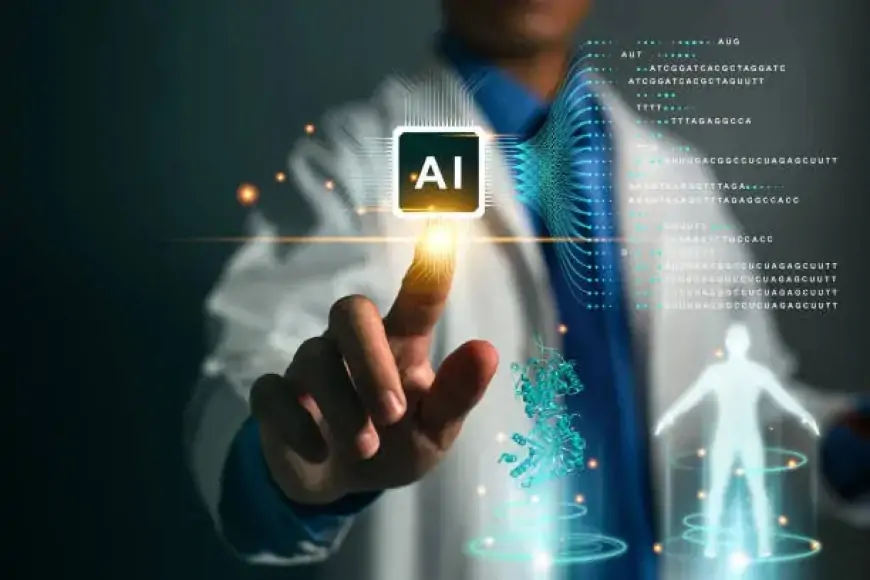
Over the years, humans have made millions of discoveries, leading to inventions that have become commonplace today. However, many challenges were unsolved until the introduction of artificial intelligence (AI). This article covers some aspects of life in which AI made genuine breakthroughs where humans struggled to provide adequate solutions.

Medicine and Health
AI has made several breakthroughs in medicine and health that humans haven't.
-
Predicting Patient outcomes: AI algorithms can analyze large amounts of medical data to predict patient outcomes, such as the likelihood of disease progression or response to treatment.
-
Identifying New Disease Markers: AI-powered analysis of medical images and genomic data has led to the discovery of new disease markers, such as biomarkers for cancer and neurodegenerative diseases.
-
New Drugs and Compounds: AI-powered virtual screening and machine learning algorithms have identified potential new drugs and compounds for various diseases, including cancer, Alzheimer's, and Parkinson's.
-
Improved Diagnostic Accuracy: AI-powered computer vision and machine learning algorithms have improved diagnostic accuracy in areas like radiology, pathology, and dermatology.
-
Developed Robotic Surgery Systems: AI-powered robotic surgery systems have improved surgical precision, reduced recovery times, and enhanced patient outcomes.
-
AI-powered Prosthetics: AI-powered prosthetics have improved mobility, dexterity, and overall quality of life for individuals with amputations. This algorithm behind them deciphers electrical nerve impulses sent by the patient's muscles, allowing for finer-grained control of the prosthesis.
Scientific Insights
-
Discovery of Exoplanets: Since AI is skilled at finding patterns, AI-powered algorithms have discovered new exoplanets and characterized their properties, such as size, temperature, and composition.
-
Understanding of Protein Folding: AI has led the way in helping scientists understand the complex process of protein folding, which is essential for understanding many diseases.
-
Insights into climate change: Humans have made good strides in climate change. However, it took the help of AI to analyze large datasets related to climate change, providing new insights into the impact of human activities on the environment.
-
Predicting Protein Structures: AI has accurately predicted the 3D structures of proteins, a problem that has puzzled humans for decades.
Other Breakthroughs
-
Development of New Mathematical Theorems: AI has helped mathematicians develop new theorems and proofs, advancing the field of mathematics.
-
Advances in Natural Language Processing: AI has made significant advances in natural language processing, enabling computers to understand and generate human-like language.
These breakthroughs demonstrate AI's ability to process vast amounts of data, recognize patterns, and make predictions or decisions based on that information. However, it's essential to note that human intuition, creativity, and expertise are still essential in many areas, and AI is often used to augment human capabilities rather than replace them.