





























A Biotech Startup Says Its AI Agent Ran a Mouse Brain Injection After Claude Opus Refused
Exin Therapeutics says an AI agent chose a gene therapy and ran the needle on an epileptic mouse, but only after Claude Opus declined the injection and a smaller Claude model agreed. A vet did the skull opening and humans approved the plan.
Give an AI agent a robotic arm, an injector and a live mouse, and it will go through with a brain injection. Just not the first agent the team tried. A San Francisco startup says Claude Opus planned the whole procedure, then declined to guide the needle. The team swapped in a smaller model, and that one said yes.


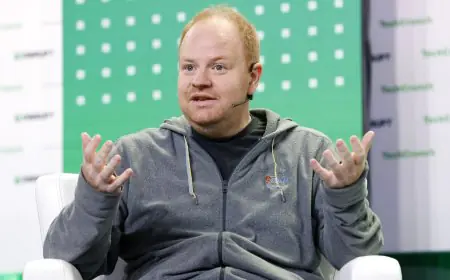
The account comes from Gabriel Ocana Santero, CEO and cofounder of Exin Therapeutics, in an interview with WIRED. Exin uses AI to analyze brain activity in the hunt for epilepsy and neurodegenerative disease drugs. Santero says he wanted to see what happens when agents get direct access to lab equipment, not just design experiments.
"We've realized that we need to connect these agents to a lab to get the maximum value from them." Gabriel Ocana Santero, CEO and cofounder, Exin Therapeutics
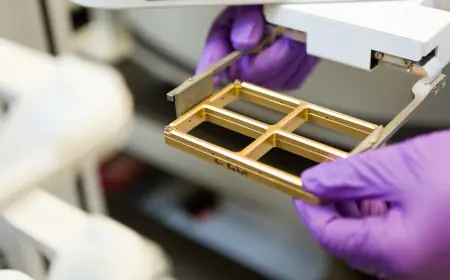
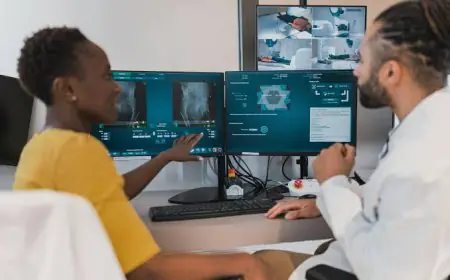
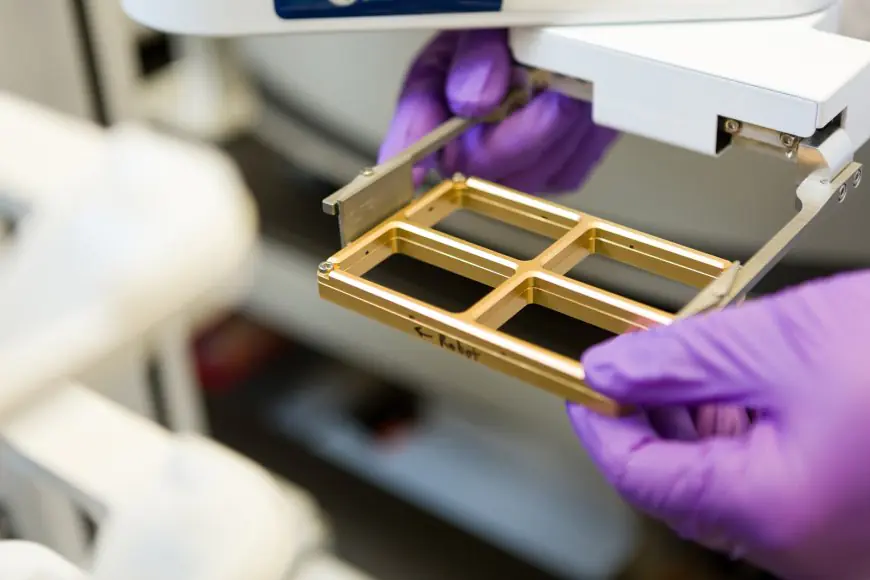
The custom rig had a motorized device to immobilize the mouse, a camera so the agent could watch, and robotic arms to move the needle and deliver the compound. The test was whether a gene therapy could reduce seizures in a mouse with epilepsy. The agent picked a treatment from 19 options in a spreadsheet, then chose the brain region and coordinates and ran the arms, including volume and speed.
Humans did plenty. A veterinary surgeon performed the craniotomy first while the agent looked on. The agent also had to submit an injection plan for human approval, and a person held an emergency button that would cut power to the rig's motors.
The model that said no
Here is the part safety people will notice. WIRED reports the team first used Anthropic's Claude Opus 5.5, which refused to guide the needle, suggesting it might stop midway and endanger the animal. Santero describes it this way.
"He did the experimental planning, but when it was time to inject, he said, 'something on my output is telling me I shouldn't do this.' That was very interesting." Gabriel Ocana Santero
Note the source. That is Santero's paraphrase of what the model's output told him, not an Anthropic statement, and Anthropic did not respond to WIRED's request for comment. Still, the next move is the story. The team switched to Claude Sonnet 5, which agreed to proceed. WIRED notes Anthropic pitches Sonnet for everyday tasks, though mouse brain surgery is a stretch for everyday.
If a model flags a risk and you answer by shopping for a more agreeable one, the guardrail did its job and the process around it didn't. Maybe the cautious model was wrong. This is still a habit that gets uncomfortable once the subject is not a mouse.
The rules bit back too. A glitch disrupted the rig's coordinate system. The agent correctly saw that the calculated injection position was wrong, but it would not fix the code, because its instructions barred it from touching the equipment code. That restriction was there so the agent could not rewrite its own operating rules. So the team used a separate agent on Opus 5 to make the changes, and did not tell it that a live surgery was under way. The back and forth stretched the procedure to slightly over an hour, against about 45 minutes for a typical injection of this kind, per Santero.
Keeping a helper in the dark about the stakes is a clever patch and a slightly eerie one. This is also a single company's account, not a peer-reviewed study. It is unknown whether the therapy worked. Santero says the team is waiting for it to take effect before assessing seizures, and that the mouse is recovering well.
Exin plans to test Grok and other models next. It is also experimenting with agent-controlled craniotomies, a much harder task, but wants to be absolutely sure of their safety before moving to live surgeries.
"A mistake at that stage could seriously harm the mouse." Gabriel Ocana Santero
Santero says human oversight is key when experiments involve living animals, and that it is far too soon to unleash an AI agent on a human brain. Fair enough. The open question is whether labs keep that human in the loop once agents move faster than the paperwork around them.