






































How Recursive Used AI to Build Flint, a Laptop Coding Model Made Mostly by AI
Startup Recursive released Flint, a free 40-billion-parameter coding model that it says was largely built by its own AI research system under human supervision. The launch is an early public test of recursive self-improvement.

A young startup says it just shipped a coding model that AI mostly built itself. Recursive released Flint on Wednesday, and the company's pitch is simple: the same kind of AI that writes code can also help design, train and tune the next model. It is an early public test of an idea that excites some researchers and worries others.


According to TechCrunch's report, Flint is a free coding model small enough to run on a laptop. It uses a mixture-of-experts design, which means only 2.5 billion of its 40 billion parameters work on any given token. That keeps it light and quick. In Recursive's own tests it produced about 131 tokens per second on a MacBook Pro with an M4 Pro chip, and it is free to download under the Apache 2.0 license.
The interesting part is how it was made. Recursive credits its Eureka Machine, an automated research system that proposes ideas, implements them, tests the results and decides what to try next, with helping shape nearly every stage of development. The company says a small team built Flint from scratch in under four months, and that the system contributed a sparser model design, low-bit training that shrank the model by 71% with almost no quality loss, and custom code tuned for specific chips.
WIRED's Will Knight ran Flint on a Mac with 48GB of memory and had it build a to-do list app, a research search tool and a simple website. He reported that it handled his requests every time. Recursive itself admits Flint needs more guidance than the big paid coding assistants and suggests breaking larger jobs into smaller steps.
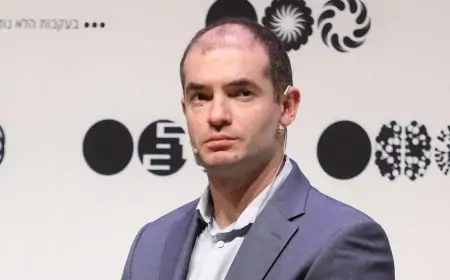
Some caution is warranted. The headline benchmark scores, which show Flint leading models of similar size, come from Recursive, and independent verification has not happened yet. There is also a difference between a model that AI helped build and an AI system that keeps improving itself without help. CEO Richard Socher says full recursive self-improvement is the goal, not something Flint has proven, and that humans supervise the process and can stop it if something goes wrong.
Still, the stakes are real. Recursive raised $650 million at a $4.65 billion valuation, and an open, free model that runs offline lets developers keep their code private and skip usage fees. If Recursive's bet works, each new model should help the Eureka Machine build the next one faster. Watch for independent benchmark results, developer feedback over the coming weeks, and whether Recursive can show its research system improving from one release to the next.