






















Scott Aaronson Says AI Labs Are Quietly Testing Models Against Encryption
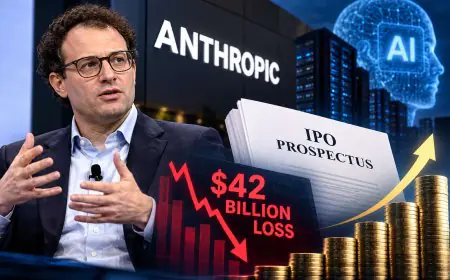
Computer scientist Scott Aaronson says sources tell him several AI labs have begun privately testing whether their newest models can break important cryptographic protocols, an omission he flagged after OpenAI's October 6 release of 722 AI-generated math results notably excluded any cryptography breakthroughs.
A missing category in a massive AI math dump just became the real story. When OpenAI published 722 manuscripts covering 372 major open problems on October 6 — including a claimed proof of the long-standing Unique Games Conjecture — computer scientist Scott Aaronson noticed something conspicuously absent: not one cryptography result.


In an October 7 blog post he titled "The Mathocalypse," Aaronson wrote that he has it from trusted sources that several AI companies have begun quietly pointing their newest internal models at breaking "important cryptographic protocols and primitives" — and keeping whatever they find to themselves. A few details capture how the discourse has moved since:
- Cryptographer Matthew Green responded directly on X, writing starkly: "I think we might lose public key cryptography"
- Ethereum co-founder Vitalik Buterin has separately argued the risk to cryptography from AI-accelerated mathematics deserves to be taken seriously rather than dismissed
- Even the math results that did ship weren't fully digested at release — Aaronson noted no human appears to have understood most of the proofs yet, with mathematician Dana Moshkovitz saying she needed AI assistance just to read the Unique Games Conjecture proof
Aaronson's broader point is about information asymmetry, not a specific break: the labs capable of running this kind of test are also the ones deciding, on their own, whether and when to disclose a result that could matter to everyone relying on encrypted systems.
He added that he's personally witnessed government censorship of academic quantum cryptanalysis results in the past, suggesting secrecy in this space has precedent well beyond the AI labs themselves.
Nothing here confirms an actual cryptographic break has happened — it's a credible researcher flagging an absence and a pattern of private testing. But the Unique Games Conjecture proof itself is a reminder of how quickly that could change.
AI systems are now producing mathematical results dense enough that even specialists need AI help to verify them, which is exactly the kind of speed advantage that would make a quiet cryptographic break hard to catch before it mattered.