

















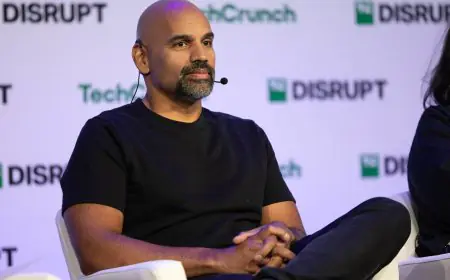









Naveen Rao Bets on Israeli Chipmaker NeuReality as His $4.5B Startup Outruns Its Own Plan
Unconventional AI is buying Israeli chipmaker NeuReality after AI tools sped up its research so much that Naveen Rao told Reuters it needs production engineers years ahead of schedule.
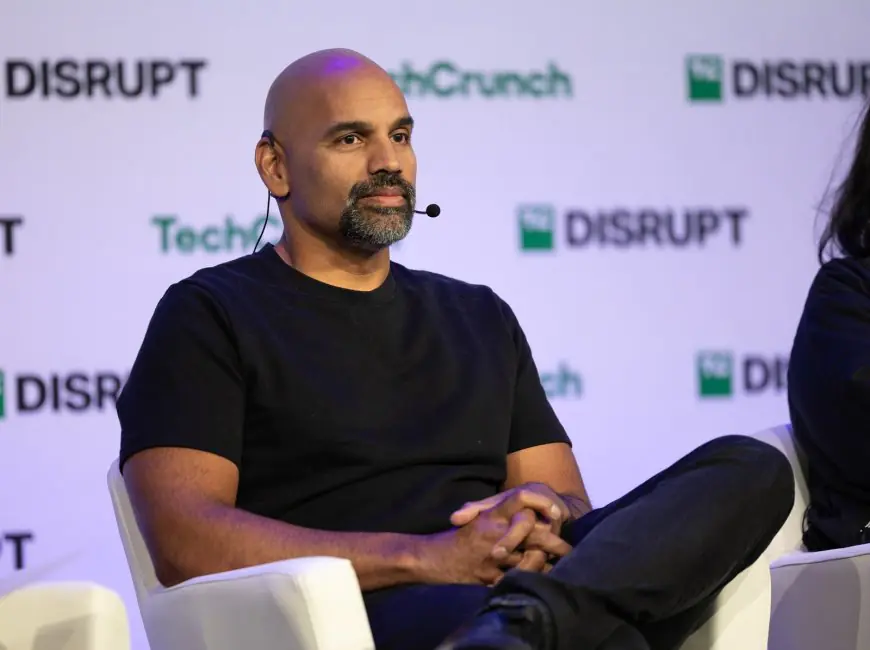
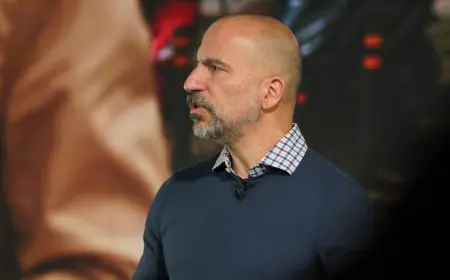
Naveen Rao gave his new chip company five years to ship a product. Less than a year in, he is already shopping for the people who know how to ship one.


Unconventional AI, the Mountain View hardware startup that launched last December at a $4.5 billion valuation, said on Monday that it has reached a definitive agreement to acquire NeuReality, an AI inference chip and systems company based in Caesarea, Israel. The companies did not disclose terms. Globes cited market estimates of $150 to 200 million in cash and shares, and Israel Hayom put the figure at about $200 million. Neither company has confirmed a number.
The interesting part is not the price tag. It is the reason Rao gives for buying anything at all.
In an interview with Reuters, Rao said that when Unconventional raised its $475 million seed round, the plan was three years of research and development and five years to a product. Then the company started leaning on AI tools to speed up its own chip work. Rao told Reuters that Unconventional has already built its first test chip and is close to finishing a second, which pushed it to go looking for an engineering team with experience delivering finished products.
"Things have gone a lot faster than anticipated." Naveen Rao, CEO of Unconventional AI, to Reuters
Rao told Reuters the company has "built up the research bones" and now needs the production ones. That is a candid admission. People who invent exotic silicon are rarely the people who tape out, validate and deploy chips in real data centers, and Rao has decided he cannot grow that muscle fast enough from scratch.
A team buy with a familiar face on both sides
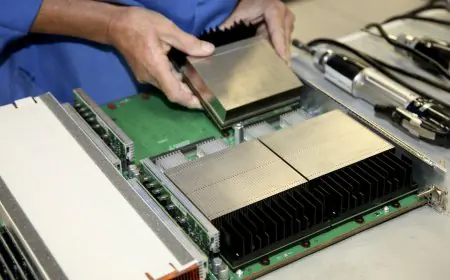
NeuReality was founded in 2019 by Moshe Tanach, Tzvika Shmueli and Yossi Kasus, veterans of Intel, Marvell, Mellanox and Habana Labs. It targets the data movement overhead that inflates the cost of running trained models. According to Globes, the company raised about $105 million in total, and a 2023 round valued it at $220 million, citing PitchBook data. If the reported estimates hold, investors are getting a return on cash invested but a lower price than that last valuation implied. Globes called it a deal that falls "far short" of what backers had aimed for.
There is also a wrinkle worth noting. Rao served on NeuReality's board, Reuters reported, and Globes lists him among the company's early investors from 2020. He is now buying it as CEO of a much larger company. Both boards have approved the deal, which is expected to close in the fourth quarter of 2026.
Rao told Reuters about 40 people will join Unconventional and that the company will keep a presence in Israel. Tanach and the founding team are moving over. Globes reported that some sales, marketing and finance staff will be laid off.
"We are chasing a 1,000x improvement in AI compute efficiency, and that is a systems problem as much as a physics problem." Naveen Rao, in the Unconventional AI announcement
That 1,000x figure is a target, not a result. Unconventional is pursuing what Rao calls a dynamical systems approach, using analog and mixed signal circuits that Globes notes have not yet been deployed commercially. The pitch, as Globes framed it, is energy efficiency far beyond what NVIDIA offers today. Nobody outside the company has seen a benchmark.
Still, the backing is serious. The seed round was co-led by Andreessen Horowitz and Lightspeed, with Sequoia, Lux Capital, DCVC and Jeff Bezos also in. Rao has done this before, selling Nervana to Intel for more than $400 million and MosaicML to Databricks for $1.3 billion, per Reuters. Investors keep paying up for founders who promise to break the GPU cost curve, as Positron and its $5 billion valuation showed last month.
The real test of Rao's claim comes later. A test chip arriving early is a good story. A product anywhere near 1,000x in a working data center would be another thing entirely. Buying NeuReality is Rao's bet that he can get there sooner than his own original plan said he could.