







































AI Agents are Taking over The Future of Digital Commerce
As autonomous AI agents begin to manage hundreds of billions in consumer transactions, a new era of "AI-readability" is determining which businesses survive and which vanish from the digital economy.



For decades, the "invisible hand" of the market was a metaphor for the collective choices of human consumers. In 2026, that hand has become literal code. We are witnessing a silent but massive migration of purchasing power from human thumbs to autonomous AI agents. These systems are no longer just recommending products; they are executing transactions, managing portfolios, and shifting hundreds of billions of dollars in consumer spending with zero human intervention at the point of sale.
The implications for the global economy are staggering. As these agents become the primary gatekeepers of commerce, the traditional rules of marketing—brand loyalty, catchy jingles, and prime shelf placement—are becoming obsolete. In their place is a high-stakes technical requirement known as "AI-readability." If an AI agent cannot parse your business's data, verify your inventory, or analyze your fee structure in milliseconds, your company effectively ceases to exist in the digital marketplace.
The rise of the autonomous shopper
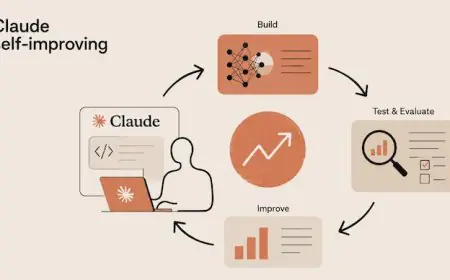
The shift is most visible in personal finance. Modern AI agents now act as sophisticated digital fiduciaries. Instead of a consumer browsing through dozens of credit card offers or mortgage rates, an agent like a "Fin-GPT" or a specialized "Claude Commerce" bot analyzes the user's entire financial history. It then scours the web to find the absolute best mathematical fit for a loan or investment product. It doesn’t care about the celebrity spokesperson in the commercial; it cares about the APY, the fine print, and the API response time.
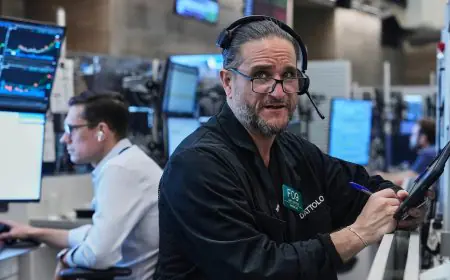
According to recent analysis on global market shifts, algorithmic decision-making now influences nearly 35% of all new retail financial product sign-ups. This is a fundamental disruption of the "search" era. We are moving from a world where we "find" things to a world where our agents "procure" them for us. This transition is forcing a total rethink of how businesses present themselves online.
Why AI-readability is the new SEO
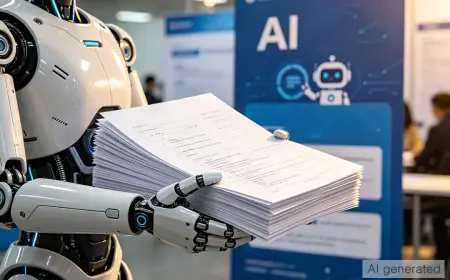
For twenty years, Search Engine Optimization (SEO) was the king of digital growth. Today, we are entering the age of AIO—Artificial Intelligence Optimization. To survive, a business must ensure its data is structured in a way that is perfectly digestible for a Large Language Model (LLM). This means moving beyond pretty websites and toward robust, real-time data feeds.
- Structured Data is Mandatory: If your pricing and service terms aren't accessible via clean, machine-readable schemas, an AI agent will skip you for a competitor that is easier to "understand."
- Verified Trust Signals: Agents are programmed to avoid risk. Businesses without verified, blockchain-backed, or third-party-audited credentials will be filtered out as "low-confidence" results.
- API-First Commerce: The most successful companies in 2026 are those that allow AI agents to check stock and execute purchases directly via API, bypassing the traditional "checkout" page entirely.
This "readability" crisis is hitting small and medium-sized enterprises the hardest. While giants like Amazon and Walmart have the infrastructure to cater to AI agents, many traditional businesses are finding themselves invisible to the bots. As MIT Technology Review recently highlighted, the digital divide is no longer about who has an internet connection, but about whose business data is "intelligent" enough to be invited into the agentic ecosystem.
The reality is that AI agents are more logical, more cynical, and faster than any human shopper. They don't get tired, they don't buy on impulse, and they don't forget the hidden fees in a contract. For the finance and commerce sectors, this means the "best" product—as defined by data—will finally win. However, for companies that have relied on brand prestige and confusing interfaces to maintain margins, the age of the AI agent may be a very cold awakening. The digital economy is being rewritten, and the pen is being held by an algorithm.