



































AI could boost Europe’s productivity by four percent in the next decade
The European Central Bank (ECB) has issued a landmark forecast predicting that artificial intelligence could surge Eurozone productivity by over 4 percentage points by 2036. Chief Economist Philip Lane warns, however, that this economic "renaissance" hinges on Europe overcoming deep-seated dependencies on foreign patents and managing a looming energy crisis.



For a continent often accused of being a "regulatory superpower" rather than an innovation one, the latest projections from Frankfurt offer a rare glimmer of aggressive optimism. In a major address this week, European Central Bank (ECB) Chief Economist Philip Lane revealed that the integration of artificial intelligence into the Euro area could provide a massive tailwind, potentially lifting productivity growth by more than 4 percentage points over the next decade. The message is clear: AI is no longer a "tech sector story"—it is the primary engine for Europe’s long-term economic survival.
The ECB's analysis suggests that the potential payoff from AI adoption will vary significantly depending on the velocity of its spread. While a conservative "internet-speed" adoption would still deliver a respectable 1.5 percentage point boost, Lane argued that if adoption reaches just half of the total economy, the cumulative gains will exceed the 4% threshold. This isn't just a marginal improvement; in a region historically plagued by sluggish growth, a 4% productivity jump would represent the most significant economic shift since the post-war era.
The "4% Dividend" and the Cost of Inaction
The core of the ECB’s optimism lies in AI’s unique ability to transform the innovation process itself. Unlike previous technologies that simply made manual tasks faster, AI is increasingly being used to shorten research and development cycles and accelerate scientific discovery. According to recent ECB research, companies that have already moved aggressively into the AI space are showing higher output quality and a significant reduction in time-to-market for new products.
However, the report also highlights a stark reality: Europe is currently paying a heavy "innovation tax." The Eurozone spends nearly €250 billion ($290 billion) annually on royalties to foreign patent-holders, the vast majority of which are based in the United States. With only 3% of Euro-area patents currently related to AI—compared to 9% in the U.S.—the bloc remains dangerously dependent on imported intelligence. Lane noted that unless Europe develops its own capital markets to fund local startups, much of the 4% productivity gain will simply leak back across the Atlantic in the form of licensing fees.
The Energy Crisis: A Ceiling on Growth?
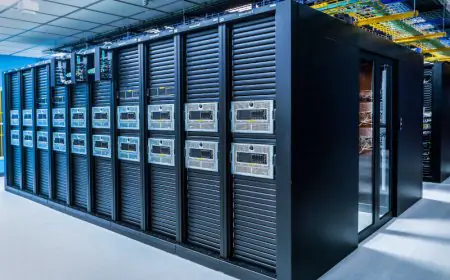
Despite the bullish forecast, the ECB issued a stern warning regarding the physical requirements of the AI revolution. Building and running massive neural networks requires an unprecedented amount of electricity. Lane warned that a "prolonged energy shock" or persistently high fuel costs could effectively cap Europe's AI ambitions.
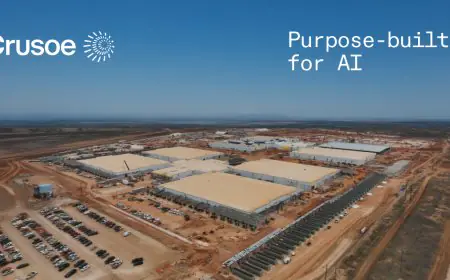
The power consumption of data centers in Europe is expected to triple by 2030. If the continent cannot solve its energy sovereignty issues, the high cost of "compute" will make AI adoption prohibitively expensive for the Small and Medium Enterprises (SMEs) that make up the backbone of the European economy. As noted in the IMF’s latest economic outlook, the disparity between large firms that can afford high energy bills and SMEs that cannot could create a "productivity gap" that destabilizes the single market.
A Balanced Labor Market
Perhaps the most surprising takeaway from the ECB’s analysis is the impact on employment. Contrary to the "doomsday" narratives of mass AI-driven unemployment, the current data suggests a "capital deepening" effect rather than job displacement. Early adopters in the Eurozone have actually been more likely to hire additional staff to manage and integrate new AI workflows.
The challenge, according to Lane, is ensuring that workers have the skills to move into these higher-value tasks. The ECB is calling for "complementary investments" in human capital, arguing that a single percentage point of investment in employee training can amplify AI-driven productivity gains by nearly six percentage points. In short, the AI doesn't just need better silicon—it needs better-trained humans to steer it.
As the decade unfolds, the 4% figure will likely become the benchmark by which European economic policy is measured. If the bloc can bridge the patent gap and secure its energy future, it may finally shed its reputation as a laggard. If not, the "AI boom" may remain a strictly American export.