












































Robotic lawn mowers are finally taking over your yard in 2026
The era of the noisy weekend chore is officially over. As we move through 2026, robotic lawn mowers have transitioned from expensive toys to highly capable, AI-driven yard managers. With advancements from brands like Dreame, Mammotion, and Yarbo, these machines now navigate complex terrains and dense tree cover with surgical precision, making traditional gas mowers look like relics of the past.
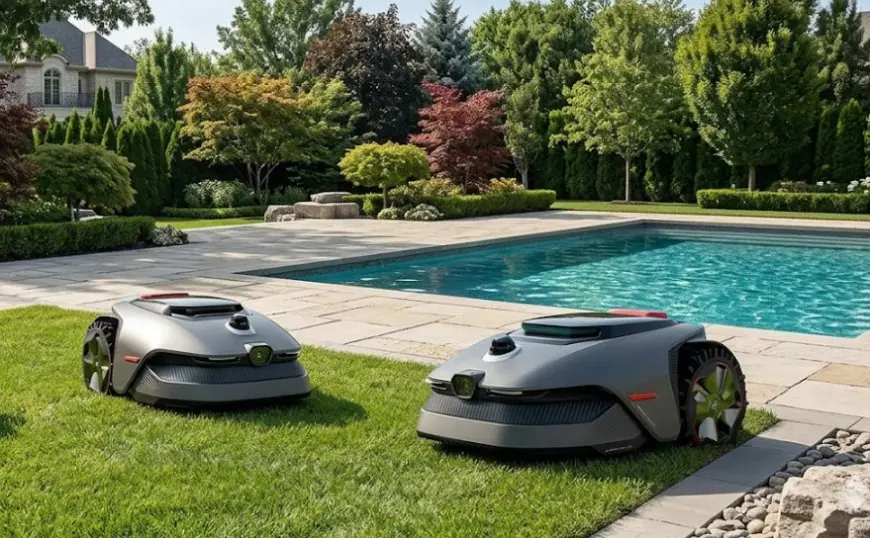
If you take a walk through a typical suburban neighborhood on a Saturday morning in 2026, you might notice something unusual: it is remarkably quiet. The familiar, deafening roar of gas-powered lawn mowers is being replaced by the subtle, high-tech hum of autonomous robots. For years, robotic mowers were seen as "almost there"—finicky machines that got stuck on a stray twig or required a weekend’s worth of labor to install complex boundary wires. But 2026 has marked a definitive turning point where the technology has finally caught up to the promise.


The biggest shift this year isn't just that these robots are better at cutting grass; it is that they have become truly intelligent. We have moved past the "roomba-style" random bouncing. Today’s flagship models use a sophisticated blend of RTK-GPS, LiDAR, and Vision AI to understand their environment. This means they can navigate around a forgotten dog toy or a flower bed with the same spatial awareness as a human, but with much more consistency.
Take the Dreame and Mova lineups, for example. These brands have leaned heavily into LiDAR technology, allowing for "drop and mow" setups that take less than ten minutes to calibrate. Homeowners no longer need to bury miles of wire; they simply walk the robot around the perimeter once using a smartphone app, and the AI handles the rest. It is a level of convenience that has pushed the robotic lawn mower market toward an estimated $3.56 billion in 2026, as more people choose automation over manual labor.
For those with more challenging landscapes, the Mammotion Luba 3 has become the gold standard for steep slopes. Its all-wheel-drive system handles 80% gradients—slopes that would be dangerous for a human to tackle with a push mower. Meanwhile, the Lymow One Plus has carved out a niche as the "tank" of the industry. Utilizing a tracked tread system and dual-rotary blades, it doesn't just cut grass; it maintains heavy, coarse turf on uneven ground that would bog down lesser machines.
Innovation isn't stopping at just cutting grass, either. We are seeing a move toward multi-season utility. The Yarbo modular platform is a prime example of this 2026 trend. Instead of buying a device that sits in the garage all winter, Yarbo owners swap out the mowing deck for a snow blower or a leaf blower module. It is a year-round yard robot that justifies its premium price point by replacing three or four different pieces of equipment. This modularity is a key reason why industry analysts are seeing such high adoption rates in North America this year.
Precision is another area where 2026 models like the Sunseeker Elite X7 shine. By combining VSLAM (Visual Simultaneous Localization and Mapping) with satellite data, these mowers can operate even under dense tree canopies where older GPS-only models used to lose their minds. They "see" the edges of the sidewalk and the base of the oak tree, ensuring that every inch is trimmed without the need for a secondary string trimmer. This "zero-intervention" goal is finally becoming a reality for the average homeowner.
As we look at the state of outdoor AI today, the message is clear: the friction has been removed. With longer battery lives, faster charging, and self-cleaning decks, the 2026 generation of robotic mowers has turned lawn care into a background task. You set the schedule, the robot waits for the morning dew to dry, and you wake up to a perfectly striped lawn every single day. The Sunday morning chore hasn't just been simplified; it has been deleted.