









































AI's Potential to Surpass Human Intelligence: Cracking the Neural Code
Recent research suggests that AI could surpass human intelligence once scientists crack the 'neural code,' with advancements in visual processing and consciousness simulation playing crucial roles in this development.
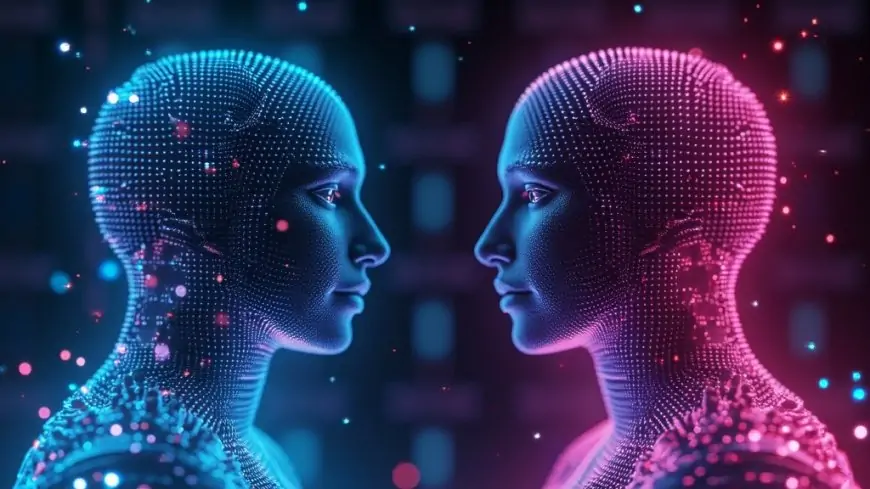
Artificial Intelligence (AI) is on the brink of a revolutionary breakthrough that could potentially surpass human cognitive abilities, according to recent research and expert analysis (Latest AI Research). The key to this monumental leap lies in decoding the 'neural code' - the intricate mechanism by which the human brain processes information and performs complex cognitive tasks.


Unlocking the Neural Code
Eitan Michael Azoff, a specialist in AI analysis, argues that once we understand the neural code, we will be able to engineer artificial brains with superior capacity and speed compared to human brains. This breakthrough would enable AI to emulate crucial cognitive functions such as:
- Thinking and learning
- Problem-solving
- Internal visualization
- Internal dialogue
The Role of Visual Thinking
A critical step towards achieving human-level AI involves emulating consciousness in computers. Azoff suggests that understanding and modeling visual processing will be crucial in this endeavor (Visual Processing in AI). Unlike current AI systems that rely on large language models (LLMs), future AI may need to 'think' visually to unlock the mystery of consciousness.
Simulating Consciousness
Researchers believe that it may be possible to create a virtual brain that emulates consciousness without self-awareness. This type of consciousness, similar to what simpler animals experience, could help AI systems plan actions, predict events, and recall relevant information - much like the human brain does.
Challenges and Cautions
While the potential for AI to surpass human intelligence is exciting, experts urge caution. A study from MIT suggests that more care should be taken when interpreting neural network models of the brain (MIT Neural Network Study). Additionally, Azoff emphasizes the need for safety measures as we develop more advanced AI systems:
- Ensuring human control over AI systems' 'off switch'
- Implementing behavior safety rules in AI systems
The Future of AI and Human Intelligence
As research progresses, the relationship between artificial neural networks and the human brain continues to be a focal point for scientists. Studies have revealed similarities between cognitive processing in the brain and the hidden layers of ANNs. This growing body of research offers promise for improving our understanding of both AI and human cognition.
While the path to surpassing human intelligence with AI is complex and filled with challenges, the potential for groundbreaking advancements in the field remains immense. As we unravel the mysteries of the neural code and consciousness, we may be on the cusp of a new era in artificial intelligence - one that could redefine our understanding of cognition and intelligence itself.