




































2025 The Dawn of AI Agents Revolutionizing Business and Marketing
AI agents are poised to revolutionize business operations in 2025, from marketing and customer service to complex problem-solving and decision-making across industries.
As we approach 2025, the business world stands on the brink of a transformative era driven by artificial intelligence. AI agents are set to revolutionize how companies operate, compete, and innovate across various sectors. This shift promises to reshape marketing strategies, enhance customer experiences, and streamline complex business processes.


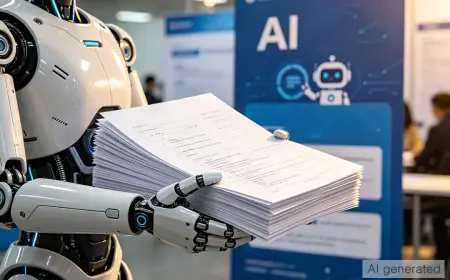
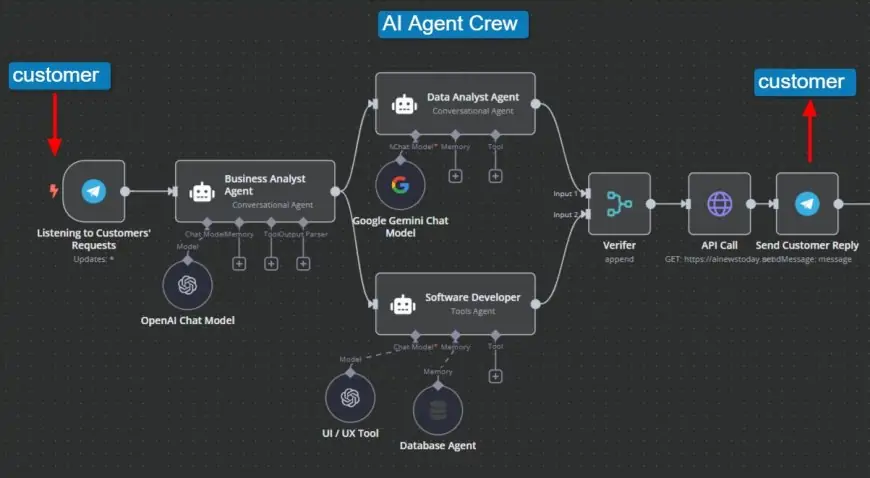
AI agents are becoming an integral part of the business ecosystem. These semi-autonomous systems will go beyond simple task automation, tackling complex problems that typically require input from multiple business disciplines. For instance, AI agents could orchestrate entire marketing campaigns or sales strategies, collaborating with other AI systems to achieve comprehensive solutions.
One of the key developments expected in 2025 is the widespread adoption of multimodal AI. This technology processes information from multiple sources, including text, images, audio, and video, allowing for more intuitive interactions and improved accuracy in AI outputs. In financial services, multimodal AI could analyze market commentary videos, considering non-verbal cues alongside spoken words for a nuanced understanding of market sentiment. Manufacturing sectors may leverage this technology to analyze sensor data, proactively addressing maintenance needs.
Hyper-personalization will reach unprecedented levels by 2025. AI-driven marketing will analyze vast amounts of data to create tailored experiences for individual customers across their entire journey. Websites will adapt in real-time, adjusting layouts, messaging, and offers based on visitor behavior and preferences. This dynamic approach is expected to significantly boost conversion rates and customer satisfaction.
Intelligent Virtual Agents (IVAs) are set to become the primary point of contact for customer interactions. These AI-powered assistants will offer human-like conversations and advanced problem-solving capabilities. By 2025, it's predicted that 80% of customer service organizations will be applying generative AI technology in some form, allowing human agents to focus on more complex issues requiring empathy and critical thinking.
Proactive defense mechanisms powered by AI will be crucial in cybersecurity strategies. AI systems will identify and mitigate risks before they escalate into full-fledged attacks. In market analysis, AI will play a pivotal role in identifying trends, forecasting demand, and providing actionable insights. An estimated 71% of market researchers believe that most market research will use synthetic responses within three years, addressing challenges like limited budgets and data scarcity.
As AI agents become more prevalent, new roles and norms will emerge. We may see the rise of "chief-of-staff" agents overseeing other AI systems, ensuring human control over complex networks of AI. This shift will require businesses to adapt their organizational structures and develop new strategies for human-AI collaboration.
While the potential of AI agents is immense, their implementation comes with challenges. Businesses must navigate ethical considerations, data privacy concerns, and the need for transparency in AI decision-making processes. Additionally, the rapid advancement of AI technology will require continuous learning and adaptation from human workers to remain relevant in this new landscape.
As we look towards 2025, it's clear that AI agents will play a central role in shaping the future of business. Companies that successfully integrate these technologies into their operations stand to gain significant competitive advantages. The dawn of AI agents promises a new era of efficiency, innovation, and personalized customer experiences, fundamentally altering the way businesses operate across all sectors.