





































Five critical boundaries you should never cross when using artificial intelligence chatbots
As generative AI becomes a staple in daily life with over two billion daily prompts, experts identify five dangerous areas where users should never rely on chatbots, ranging from medical diagnoses to sensitive financial data privacy.


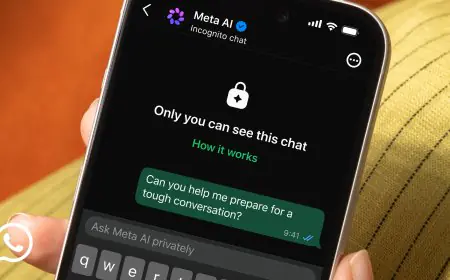
The rise of generative artificial intelligence has fundamentally altered the way we navigate our daily lives. From drafting emails to coding software, chatbots have become indispensable tools. A recent surge in usage shows that the world is now generating an estimated 2.5 billion prompts every single day. Among the most frequent users is Gen Z, who are increasingly turning to AI as a "rehearsal partner" for awkward office conflicts, performance reviews, and salary negotiations. The appeal is clear: a chatbot offers a no-judgment zone where one can practice difficult conversations without the fear of social stigma.
However, as our reliance on these digital companions grows, so does the risk of overstepping critical boundaries. In a recent detailed breakdown by Firstpost, experts highlighted a series of cautionary tales regarding what users should never share with an AI. While these systems are remarkable for productivity, they are not private diaries, licensed doctors, or infallible moral compasses. To maintain digital safety and mental well-being, there are five specific areas where the human-AI interaction must remain strictly limited.
The cloud notebook vs the private diary
The most pressing concern involves the handling of deeply personal or sensitive data. Many users treat their interaction with a chatbot as a private conversation, but the reality is quite different. AI should be viewed as a "cloud notebook" rather than a locked diary. When you input passwords, bank details, or confidential office documents into a prompt, that data is no longer fully within your control [02:08]. The golden rule for the digital age is simple: if you wouldn't shout the information in a crowded room, you should never type it into a chatbot [02:20].
The danger of digital diagnosis and therapy
Perhaps the most alarming trend is the use of AI for medical advice and therapy. Statistics show that therapy is currently one of the leading reasons people engage with ChatGPT [02:37]. While the AI might offer empathetic-sounding responses, it lacks the professional training and clinical nuance of a human therapist. More importantly, studies have found that AI carries a high risk of medical misinformation [02:57]. While a chatbot can help explain complex medical terminology, a formal diagnosis must always come from a licensed professional to avoid potentially life-threatening errors.
Surveillance and the monitoring of illegal activities
Curiosity can sometimes lead users into dangerous territory. Asking an AI for instructions on illegal or hazardous activities—such as hacking, bomb-making, or evading law enforcement—is not a victimless exploration. AI companies actively monitor for misuse and have systems in place to flag suspicious behavior [03:21]. What might feel like a hypothetical query to a user could trigger internal security protocols, leading to real-world consequences or digital bans.
The hallucination trap and conspiracy theories
One of the inherent flaws in current Large Language Models is their tendency to "hallucinate." This occurs when the AI generates false information and presents it with the unwavering confidence of a fact [03:40]. This becomes particularly dangerous when users ask about conspiracy theories. The AI can unintentionally reinforce a user’s existing biases, leading them down a rabbit hole of misinformation. Without the ability to verify truth in the same way a human journalist or researcher does, AI remains an unreliable source for sensitive geopolitical or historical facts.
Why life decisions require human messy logic
Finally, experts warn against using AI to make major life decisions. Questions like "Should I quit my job?" or "Should I end my relationship?" are increasingly common [04:00]. While AI can help prepare you for the conversation by providing scripts or negotiation tactics, it cannot—and should not—decide for you. The AI lacks the "messy" context of your personal history, your values, and the emotional nuances of your human relationships [04:07]. It can offer a clean, logical answer, but human life is rarely that simple.
As we move further into the AI era, the goal isn't to stop using these remarkable tools, but to use them with a higher degree of digital literacy. AI is undeniably the future, but it must remain a tool in our kit, not the driver of our lives. You can find more insights on the ethical development of these technologies at OpenAI, where the focus on safety and alignment continues to be a central pillar of their research.