






















Tesla plans to build a massive semiconductor plant for artificial intelligence
Tesla has announced the Terafab project, a groundbreaking joint venture with SpaceX and xAI to build a $25 billion semiconductor facility in Texas, signaling a major strategic shift toward in-house AI hardware production.
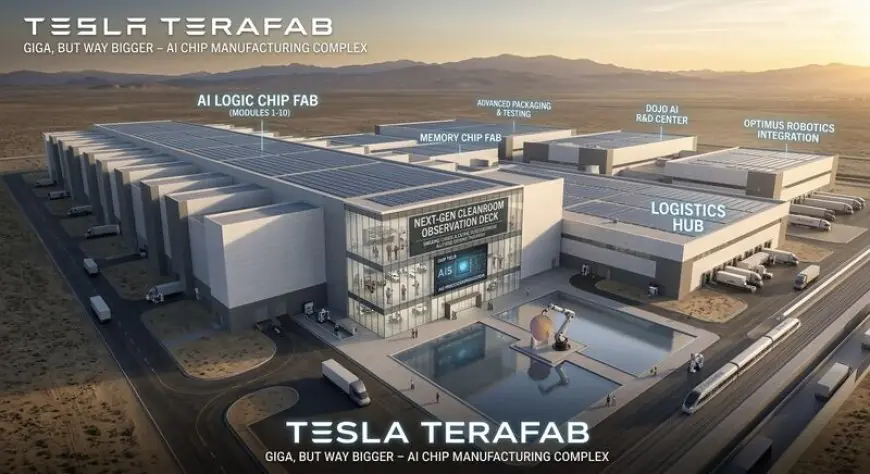

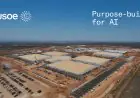
The global race for artificial intelligence has shifted from the laboratory to the factory floor. In a move that has sent shockwaves through both the automotive and tech sectors, Tesla has unveiled plans for its most ambitious project to date: the Terafab. This massive semiconductor manufacturing facility, set to be built at the Giga Texas campus in Austin, represents a $25 billion investment aimed at securing the hardware backbone of the next decade of automation.
For years, the narrative surrounding AI has focused on large language models and software breakthroughs. However, Tesla’s latest move confirms what many industry insiders have long suspected: the real battleground is infrastructure. By partnering with SpaceX and xAI in this joint venture, Tesla is looking to bypass the traditional semiconductor supply chain entirely. Elon Musk recently noted that existing giants like TSMC and Samsung, while impressive, simply cannot scale quickly enough to meet the staggering compute demands of a future filled with humanoid robots and autonomous vehicles.
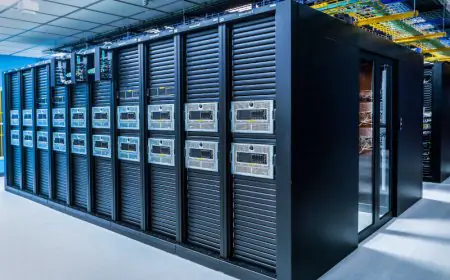
The scale of the Terafab is difficult to overstate. The goal is to produce one terawatt of computing power per year—a figure that rivals the entire current output of the United States. This isn't just about making cars smarter; it is about building the foundation for a "galactic civilization." The facility is designed to be vertically integrated, meaning everything from chip design and lithography to final testing and packaging happens under one roof. This radical approach could shrink the traditional nine-month chip iteration cycle down to just a few weeks, allowing Tesla to outpace competitors who remain tethered to third-party foundries.
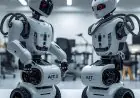
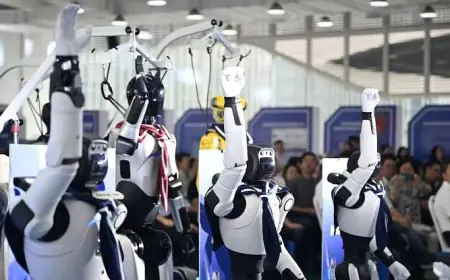
According to reports from Tesla, the plant will focus on two primary chip families. The first includes the AI5 and AI6 processors, which are optimized for edge inference. These are the "brains" that will power the Cybercab robotaxi and the Optimus humanoid robot line. The second class of chips is even more exotic: the D3 processor. Designed specifically for the harsh radiation and extreme temperatures of space, these chips will power SpaceX’s planned constellation of orbital data centers. Musk’s vision suggests that 80 percent of the Terafab's output may eventually head into orbit, where solar power is abundant and cooling is managed by the vacuum of space.
Wall Street has responded with a mix of awe and caution. Tesla’s stock saw a 3.5 percent bump following the announcement, as investors cheered the company's commitment to vertical integration. However, building a leading-edge 2-nanometer fabrication plant is notoriously difficult. Some analysts warn that Tesla is entering the most complex manufacturing field on Earth without prior experience. Yet, proponents argue that Tesla has a history of defying the odds, much like it did with its original Gigafactory and the successful deployment of the Dojo supercomputer.
The strategic shift also highlights a growing trend among tech giants to "de-risk" their supply chains. In an era of geopolitical instability and high demand for specialized silicon, relying on a handful of overseas foundries is increasingly seen as a liability. By bringing chip production to Texas, Tesla is not only protecting itself from global shortages but also creating a closed-loop system where hardware and software can be co-optimized for maximum efficiency. This level of control is something that legacy automakers and even some Silicon Valley rivals may find impossible to replicate.
As the Terafab moves from concept to construction, it sets a new standard for what it means to be an "AI company." Success will depend on whether Tesla can manage the astronomical costs and technical hurdles of high-end chip fabrication. If it succeeds, the Terafab won't just power cars—it will redefine the global economy’s relationship with artificial intelligence. The message to the rest of the industry is clear: if you want to lead in AI, you have to own the silicon.