





































Former Anthropic & Google Engineers Raise $200M to Build “Self-Improving AI for Science”
A startup founded by former Anthropic and Google researchers has raised $200 million at a $1 billion valuation to build AI tools that enable scientists to design and improve their own models. The funding signals growing interest in autonomous AI systems capable of accelerating scientific discovery.

A startup founded by former researchers from Anthropic and Google has emerged from stealth with $200 million in funding at a $1 billion valuation. The company is building what it describes as "self-improving AI for science" — autonomous systems designed to help scientists design, refine, and improve their own models without constant human intervention.


The round was led by top venture capital firms with participation from Nvidia, reflecting growing institutional interest in AI systems that can accelerate the pace of scientific discovery.
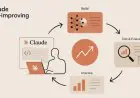
The core thesis behind the startup is that the next frontier of AI is not just building better models, but building AI that can improve itself. By automating the cycle of hypothesis generation, experimentation, and model refinement, the company aims to compress years of scientific research into weeks or even days. This vision aligns with a broader trend in AI research, where recursive self-improvement is increasingly seen as the path to more capable and adaptive systems.
"AI has the potential to accelerate the pace of scientific discovery across biology, chemistry, and materials science. Self-improving systems that can iteratively refine their own models could unlock breakthroughs that would take human researchers decades to achieve." – Industry analyst comment on autonomous AI for research
The implications of self-improving AI for science are profound. Traditional scientific research relies heavily on manual experimentation and human intuition. By contrast, AI systems capable of autonomously designing experiments, analyzing results, and refining their own models could dramatically accelerate progress in fields ranging from drug discovery to materials science. Investors appear to be betting that this approach could unlock entirely new categories of scientific insight.
The $200 million raise at a $1 billion valuation positions the startup among the most well-capitalized AI companies focused on scientific applications. As the self-improving AI movement gains momentum.