

































Google's Willow Chip Heralds New Era in Quantum Computing Error Correction
Google's Willow quantum chip demonstrated exponential error reduction as more qubits were added, a milestone that has eluded researchers for decades. The chip completed a benchmark computation in five minutes that would take the world's fastest supercomputer an estimated 10 septillion years.
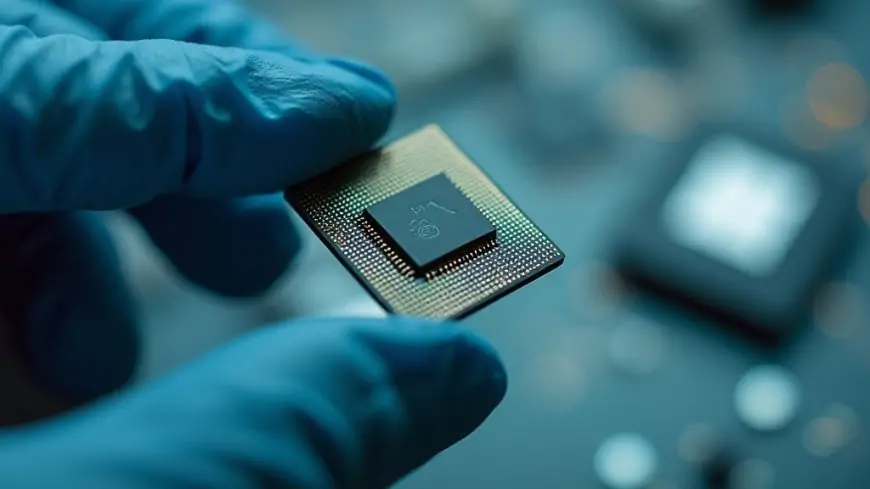
Google Quantum AI announced its Willow chip on December 9, claiming a breakthrough that quantum computing researchers have chased for nearly 30 years: exponential error reduction. As the chip scales from 3x3 to 5x5 to 7x7 grids of qubits, the error rate is cut in half each time. That trend—known as being “below threshold”—is the condition necessary for building a practical, large-scale quantum computer. It has never been demonstrated before.


The chip has 105 superconducting qubits fabricated in Google’s Santa Barbara facility. In a benchmark called random circuit sampling, Willow completed a computation in under five minutes. Google estimated the same task would take Frontier, the world’s fastest classical supercomputer at Oak Ridge National Laboratory, approximately 10 septillion years—a number that exceeds the age of the universe.
That specific benchmark is designed to be hard for classical computers and easy for quantum ones. It is not a useful computation. It proves that quantum advantage exists, not that quantum computers are ready to design drugs or crack encryption. But the error correction result is different. It is not a benchmark. It is physical evidence that the fundamental obstacle to scaling quantum computers—decoherence, the tendency of qubits to lose their quantum state and produce garbage—can be systematically overcome.
Willow achieved an average qubit lifetime of 100 microseconds, a 5x improvement over previous Google chips. Longer coherence times mean more operations before errors accumulate.
The qubits in Willow are arranged in a grid and connected to their nearest neighbors, forming what researchers call a surface code. The error correction works by encoding a single logical qubit across multiple physical qubits and continuously checking for errors without disturbing the computation. As the grid grows larger, the logical qubit becomes more stable, not less. That inversion—bigger means better, not worse—is what makes the exponential error reduction meaningful.
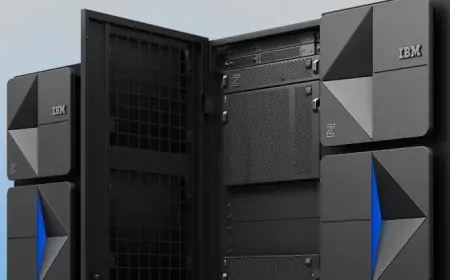
Google is not the only group pursuing this. IBM has a 1,121-qubit chip called Condor and a roadmap to a 100,000-qubit system by 2033. Microsoft and Quantinuum have focused on trapped-ion and topological approaches. What distinguishes Willow is not the qubit count but the error correction data. IBM has not published equivalent results showing exponential error suppression at scale.
Practical quantum computing is still years away. Google’s Hartmut Neven has said the next milestone is a “useful, beyond-classical” computation—one that solves a real problem no classical computer can handle. Willow brings that milestone closer, but it does not yet reach it. For now, the chip is a physics experiment that worked, not a product.