











































AI Agent Tsunami Is Forcing GitHub To Redesign Everything
New reports reveal that GitHub is facing unprecedented infrastructure strain as autonomous AI coding agents scale rapidly, leading to service outages, record-breaking commit volumes, and a strategic shift in how the platform manages machine-driven development.



For nearly two decades, GitHub has been the quiet, reliable backbone of the global software industry. It was built to handle the pace of human fingers on keyboards—a world where a "prolific" developer might push code a dozen times a day. But as we move through 2026, that human-centric model has been obliterated. A new report indicates that the platform is currently being hammered by an "agent tsunami," as autonomous AI coding agents generate more activity in a single hour than entire engineering teams used to produce in a month.
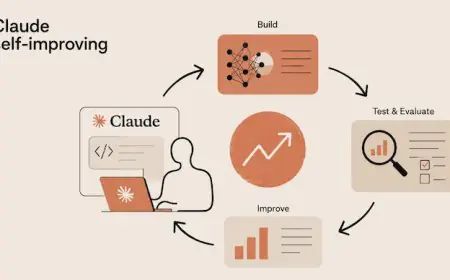
The scale of this shift is difficult to overstate. According to recent internal data leaks and public statements from GitHub leadership, the platform is now processing over 275 million commits per week. To put that into perspective, GitHub celebrated its first-ever billion-commit year in 2025. At its current trajectory, 2026 is on track to hit a staggering 14 billion commits. This 14-fold explosion in volume is almost entirely driven by agentic workflows where AI models like Claude Code and Devin are autonomously cloning, branching, and pushing code at machine speed.
The Breaking Point Of Human Scale Infrastructure
The core problem is that GitHub’s underlying architecture was never sized for "agent-scale" usage. While humans take breaks, sleep, and deliberate over logic, AI agents work in parallel, spawning dozens of sub-agents to tackle complex problems simultaneously. This has led to a series of high-profile outages, including a major database overload in February and recurring performance degradation throughout April. The platform’s database clusters, responsible for authentication and user management, are simply being choked by the sheer frequency of API calls.
Even GitHub Actions, the platform’s CI/CD powerhouse, is feeling the heat. Compute minutes have skyrocketed from 500 million per week in 2023 to over 2.1 billion minutes in a single week this year. As documented in a detailed report by QUASA Media, the platform is "starting to crack" under a load that would have sounded like science fiction only twelve months ago.
Why GitHub Is Restricting Access
In a move that has sent shockwaves through the developer community, GitHub recently paused new sign-ups for several of its Copilot tiers. This isn't just a capacity issue; it’s an economic one. The traditional flat-rate subscription model is becoming unsustainable when a single "agentic" user can consume more compute in a weekend than a thousand human developers do in a month. We are seeing a fundamental mismatch between the cost of running these massive AI models and the revenue generated by standard monthly fees.
To combat this, the platform is pivoting toward a metered infrastructure model. GitHub has introduced new "Agent Hosting" SKUs, designed specifically for autonomous systems. These specialized tiers offer higher rate limits and closer "to the metal" access, but they come at a premium price. This shift marks the end of the "all-you-can-eat" era of AI coding and the beginning of a world where compute is billed like a utility.
The Security Implications Of Machine Speed
Beyond the technical strain, the "agent tsunami" is creating a secondary crisis in security and open-source maintenance. AI agents are incredibly efficient at finding bugs, but they are equally efficient at generating them. Open-source maintainers are reporting a flood of AI-generated pull requests that, while technically valid, are overwhelming the human ability to review them. This creates a dangerous "convenience loop" where humans begin to trust the agent's output simply because they don't have the time to audit it.
As noted by InfoQ’s analysis of recent outages, the platform is now racing to decouple critical services and enhance load-shedding capabilities. The goal is to ensure that a rogue fleet of AI agents in one sector of the site doesn't bring down the entire global workflow. GitHub is no longer just a code host; it is becoming a battleground where infrastructure must constantly evolve to keep up with the very intelligence it helped create.
The question isn't whether GitHub can survive the AI boom, but what version of GitHub will remain. The transition from a social network for developers to a high-density compute layer for AI agents is well underway, and for those who aren't prepared for the new metered reality, the cost of "machine speed" development is about to get very expensive.