The AI Boom Is Quietly Holding Up the World Economy
The IMF raised its 2026 global growth forecast to 3.1% from 3.0%, crediting strong AI investment with offsetting the Middle East energy shock, while warning that gains are concentrating in fewer countries and that a downward reassessment of AI productivity could hit investment and markets.
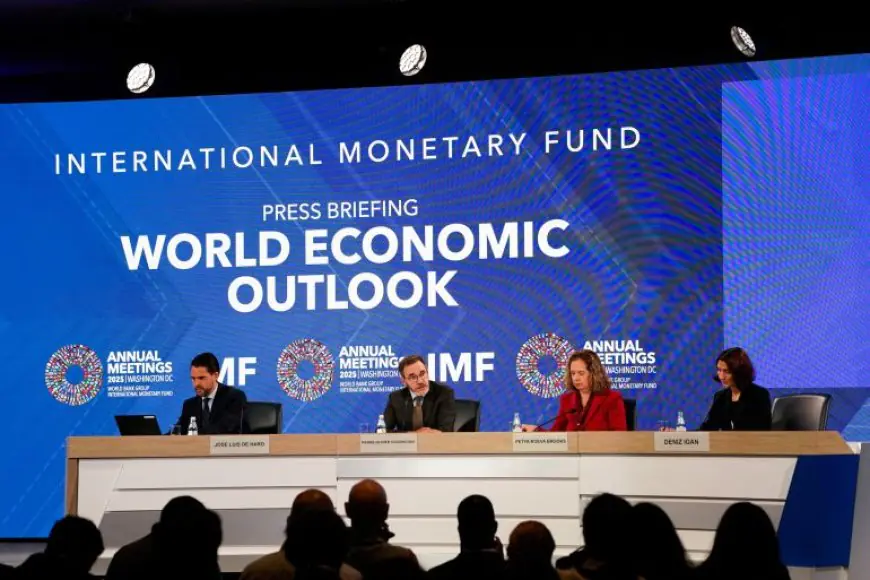
The artificial intelligence boom is now holding up the global economy, according to the people who track it. In its October World Economic Outlook, released in Bangkok, the International Monetary Fund raised its 2026 growth forecast to 3.1% from 3.0%, and Reuters reported that strong AI investment is offsetting the energy shock from the war in the Middle East. That is still slower than the 3.5% recorded in 2025, and the 2027 forecast is unchanged at 3.4%.


The IMF says AI-related spending gave the world economy a "demand impulse" that kept the first half of the year stronger than expected. Managing Director Kristalina Georgieva put it plainly: "AI, love it, hate it," it is what keeps growth near 3% despite the energy supply shock. A few numbers show where the benefit lands:
- Georgieva said the AI investment boom could lift growth in advanced Asian economies by 0.5 to 1 percentage point and in emerging Asia by 0.2 to 0.8, with hardware suppliers such as Thailand benefiting most
- Forecasts rose for advanced economies building AI platforms and for hardware exporters including South Korea, Malaysia, Mexico and Thailand, while the US is seen growing 2.3% and China 4.5%
- Growth is narrowing: just 32 countries now account for 95% of global growth, down from 54 in April, and the IMF has downgraded 47% of economies since then
The outlook is not uniformly positive. The IMF warns the boom is also adding to inflationary pressure and financial fragility, with global inflation forecast at 4.7% this year, and that technology firms borrowing to fund AI spending add to the strain.
Its central risk is a reversal: if expected productivity gains fail to materialise, a sharp fall in investment could weaken activity and pressure financial markets. As the fund put it, growth is being "reallocated" according to exposure to the war's supply shock and to AI-related demand. For countries outside the AI supply chain, particularly energy importers, that means this boom may be passing them by.