











































Germany Is Preparing a Major AI Deal With Nvidia to Power Its Factories Robots and Self Driving Cars
Government sources told Reuters Germany will announce an AI cooperation agreement with Nvidia next week to expand industrial AI use, involving partners beyond Nvidia. Handelsblatt reports it would support physical AI for robots and self-driving vehicles and build powerful industrial AI models, with investment in the hundreds of millions of euros.
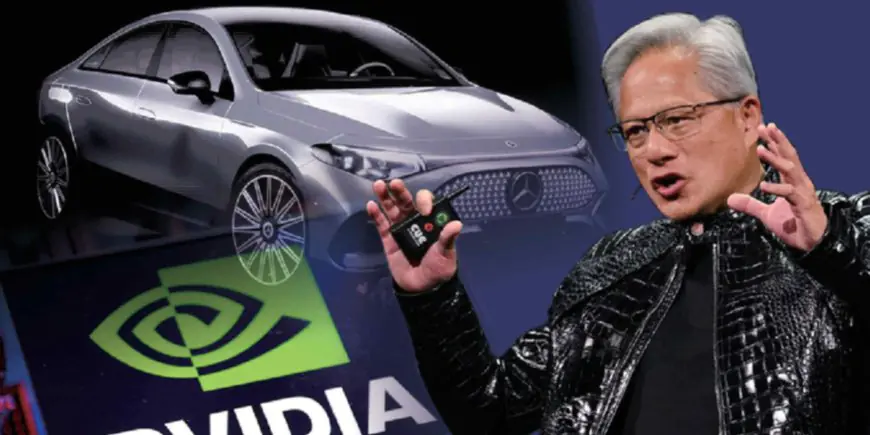
Germany is lining up a headline AI partnership, and the announcement is days away. Government sources told Reuters on October 16 that Berlin is set to announce a cooperation agreement with Nvidia next week to expand the use of artificial intelligence in German industry, adding that the plan will involve partners beyond Nvidia and be a major contribution to industrial AI. Nothing has been formally announced yet.


Handelsblatt, which first reported the plan, supplied most of the detail. According to its reporting, the agreement has two goals and a specific stage:
- Support physical AI tools used to train robots and self-driving vehicles
- Help create high-performance AI models for industrial use, built around SOOFI, the Sovereign Open Source Foundation Models project launched in Germany last year
- It would be unveiled at the Invest in Germany conference in Berlin, where Nvidia CEO Jensen Huang is a guest, with Siemens, Audi and Black Forest Labs reportedly among the participants
Handelsblatt says the investment would run to the hundreds of millions of euros, which is modest by Nvidia's scale but meaningful for a national industrial strategy. As TIKR notes,
Nvidia already works closely with German industry, including a Siemens industrial AI project and a Deutsche Telekom industrial AI cloud with 10,000 Nvidia GPUs, so the deal would deepen existing ties rather than start new ones.
The picture will become clearer once the details are public: who the partners are, how much comes from the government versus companies, and how an open-source-focused effort like SOOFI fits with relying on Nvidia's hardware.
The case for the agreement is that Germany's strengths in manufacturing, robotics and automotive could benefit directly from physical AI, and the open question is how much of the value stays in Germany rather than with the chip supplier.