





































Why a New Superfluid Helium Qubit Could Cut Quantum Computing Errors 100 Fold
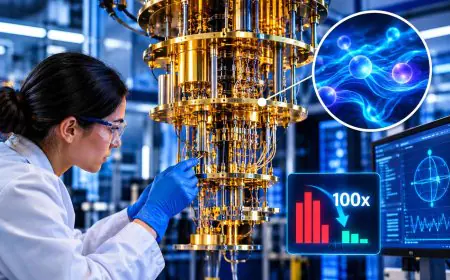
University of Surrey researchers have proposed the Superfluid Helium Oscillator Quantum device, a conceptual qubit design using charge-neutral helium-3 that calculations predict could reduce quantum computing error rates by roughly 100 times, a result closely watched by the AI industry given growing bets on quantum-AI compute convergence.
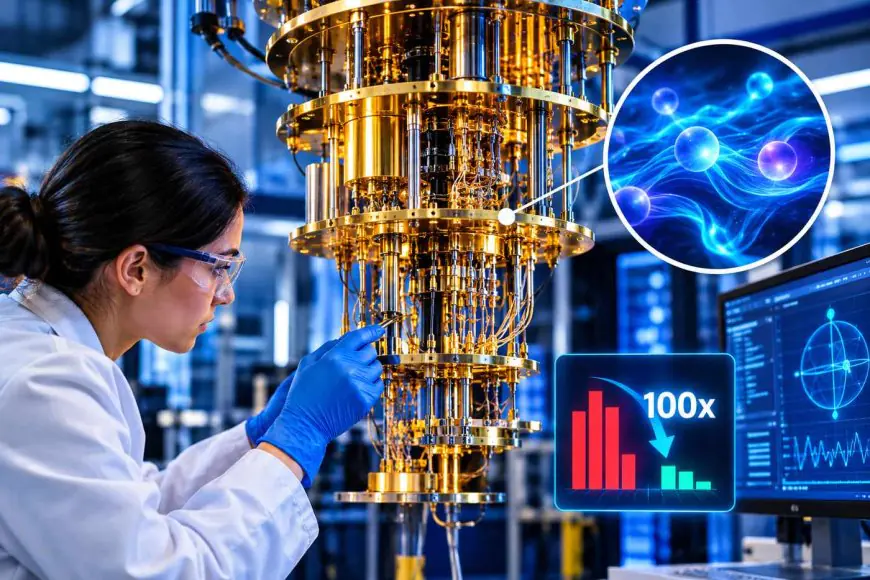
Quantum computing's biggest obstacle has never been building qubits — it's keeping them stable long enough to actually compute something.


Researchers from the University of Surrey's Quantum Sciences Group, working with Northwestern's Jens Koch — one of the physicists behind the transmon, a widely used superconducting qubit design — have proposed a conceptual qubit called the Superfluid Helium Oscillator Quantum device, built around helium-3, a liquid form of helium that flows without friction.
The core idea is elegantly simple: because superfluid helium-3 is charge-neutral, a qubit built from it should be naturally shielded from the electromagnetic noise that constantly disrupts today's leading superconducting qubits.
Published in npj Quantum Information, the team's calculations give a concrete case for why this matters:
- The SHOQ design is predicted to deliver error rates roughly 100 times lower than conventional superconducting qubits
- It's described as the first reported design for a qubit based on a superfluid, rather than a modification of existing hardware approaches
- The device is designed to potentially couple with existing superconducting quantum hardware rather than replace it outright, and could also serve as a new form of quantum memory
Dr. Priya Sharma, a research fellow on the project, was candid about where the work actually stands: "The math tells us that it should work.
The next step is to make a prototype and put those predictions to the test." That caveat matters — this is a theoretical design backed by calculations, not a working chip, and the extremely low temperatures the device requires, while already achieved in separate superfluid helium-3 experiments, still need to be demonstrated inside an actual working qubit.
For an AI industry increasingly betting on quantum-classical hybrid computing as a long-term path past today's GPU bottlenecks, a validated prototype — still years away at best — would matter far more than this proposal alone, but it adds a genuinely novel hardware approach to a field that's spent years iterating on the same superconducting foundations.