









































Treasury Department will secure the financial system through AI
The U.S. Department of the Treasury has launched the AI Innovation Series, a major public-private initiative designed to bolster financial stability and ensure the American financial sector remains a global leader in autonomous technology adoption.
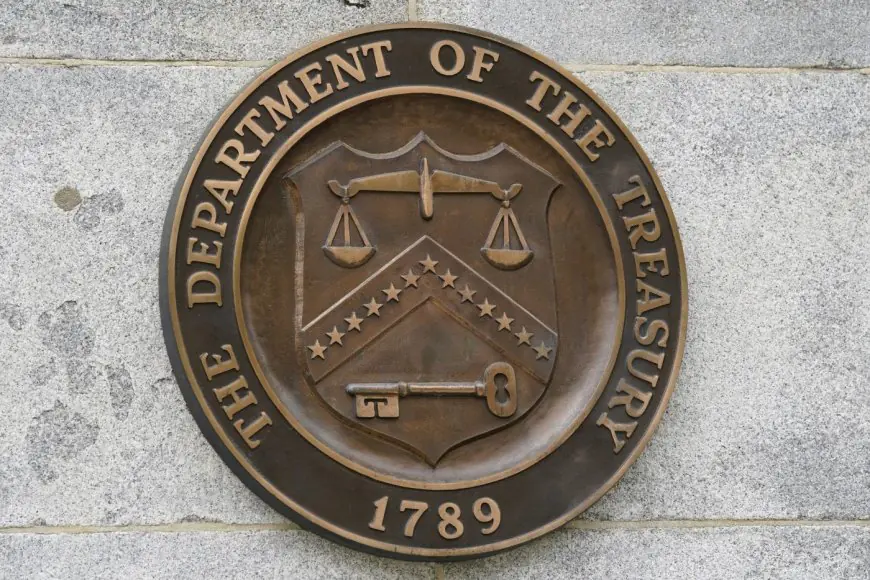


The U.S. Department of the Treasury is taking a decisive stand on the future of money. In a move that signals a pivot from cautious observation to active integration, Treasury Secretary Scott Bessent announced the launch of the Artificial Intelligence Innovation Series. This initiative isn't just about keeping up with Silicon Valley; it is a fundamental effort to rewire the resilience of the American financial system for an era where autonomous agents and high-speed algorithms define the market.
For years, regulators have viewed rapid technological shifts with a degree of skepticism, often prioritizing constraint over speed. However, this new series marks a change in philosophy. During the announcement, officials emphasized that the greatest risk to the U.S. financial sector is no longer just the misuse of technology, but rather the failure to adopt it. By failing to lead in AI, the government argues, the U.S. risks falling behind global competitors and leaving the domestic market vulnerable to more advanced, AI-driven threats from abroad.
Building a bridge between Main Street and Wall Street
The AI Innovation Series is structured as a sequence of four high-level roundtables. These sessions are designed to bring together a diverse cohort of stakeholders, including traditional banking giants, nimble fintech startups, and regulatory bodies. The goal is to move beyond abstract discussions and focus on the "operationalization" of AI—essentially, how to take these powerful tools and embed them securely into the daily workflows of banks and investment firms.
According to the U.S. Department of the Treasury, the initiative will focus on several critical areas where AI is already making an impact:
- Fraud Detection: Leveraging machine learning to identify illicit patterns that human auditors might miss.
- Credit Underwriting: Using advanced data analytics to expand access to credit for underserved populations while maintaining safety and soundness.
- Cybersecurity: Deploying AI-native defenses to counter the rise of deepfakes and automated social engineering attacks.
- Operational Resilience: Ensuring that as systems become more automated, they remain robust against technical glitches or market volatility.
One of the primary concerns addressed by the Treasury is the "data divide." While major Wall Street institutions have the resources to build proprietary AI models, smaller community banks often struggle to keep pace. The Innovation Series aims to create a more level playing field by fostering public-private partnerships that share best practices and risk-management frameworks. This ensures that the benefits of AI-driven productivity are not concentrated in just a few hands but are felt across the entire economic spectrum.
A shift in regulatory posture
Perhaps the most significant takeaway from the launch is the evolving tone of the Financial Stability Oversight Council (FSOC). Traditionally tasked with monitoring systemic risks, the council is now looking at AI through the lens of economic security. Deputy Assistant Secretary Christina Skinner noted that when institutions are unable to deploy tools that improve their efficiency and security, the entire system becomes more fragile. The focus is now on creating "fit for purpose" governance that encourages innovation rather than stifling it with outdated rules.
This move follows the recent release of the Treasury’s "AI Lexicon" and a sector-specific Risk Management Framework. These documents serve as the foundation for the new roundtables, providing a common language for regulators and tech developers to communicate. By standardizing definitions and expectations, the Treasury hopes to reduce the "compliance friction" that often prevents banks from implementing new technologies at scale.
As the series progresses throughout the year, the industry expects to see a clearer roadmap for how autonomous agents will be supervised. The transition from simple chatbots to agentic AI—systems that can execute trades or move funds independently—requires a new level of oversight. The Treasury's proactive approach suggests that the U.S. intends to be the one writing the global rulebook for this transition. For the financial sector, the message is clear: the AI revolution is no longer coming—it is being integrated into the very foundation of the national economy.