


















Samsung's Bixby AI Gets a Groundbreaking Global Upgrade with Galaxy S25
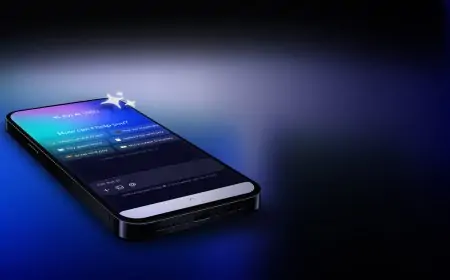
Samsung announced an AI-powered Bixby overhaul for the Galaxy S25 series, integrating large language model capabilities directly into the voice assistant for the first time. The upgrade puts Bixby back in competition with Google Assistant and Apple's Siri.
Samsung announced a comprehensive AI upgrade for Bixby on December 16, giving the voice assistant large language model capabilities that bring it closer to parity with Google Assistant and Apple’s upgraded Siri. The new Bixby, which will ship with the Galaxy S25 series in early 2025, can hold multi-turn conversations, understand context across apps, and execute complex commands that span multiple services. It is the most significant improvement to Samsung’s assistant since its debut in 2017.


Bixby has occupied an awkward position in Samsung’s ecosystem for years. Every Galaxy phone ships with both Bixby and Google Assistant pre-installed, and most users choose Google. The assistant gained a reputation for being competent at device-level tasks—changing settings, launching apps, scheduling reminders—but weak at the kind of open-ended questions and conversational exchanges that Google Assistant and ChatGPT handle easily. The LLM-based upgrade is designed to close that gap.
The new Bixby uses a model Samsung developed in-house, not a licensed version of Google’s Gemini or OpenAI’s GPT. That independence matters strategically. Samsung is the world’s largest smartphone manufacturer by volume, shipping roughly 230 million phones per year. If it can deliver a competitive AI assistant on its own hardware, it reduces its dependence on Google, which has been tightening the integration between Gemini and its own Pixel phones. By 2025, the AI assistant a phone ships with will be as important a differentiator as the camera system.
Samsung says the new Bixby can process natural language commands across 20 languages at launch, up from 8 in the previous version, and can chain up to five app-level actions from a single voice request.
The upgrade also ties into Samsung’s broader AI strategy, which includes on-device processing for privacy-sensitive tasks and cloud-based inference for more complex queries. The Galaxy S25 will include a dedicated neural processing unit capable of running a compressed version of the Bixby LLM without sending data to Samsung’s servers, addressing concerns about voice assistant privacy that have dogged the category since the Cambridge Analytica era.
The real question is whether Samsung can overcome Bixby’s brand problem. Most Galaxy users have trained themselves to ignore the dedicated Bixby button, and the assistant’s market share in voice queries is in the single digits. An LLM upgrade might give Bixby technical parity, but technical parity does not win markets. Habits do.