Samsung Galaxy S26 Privacy Shield Mode Is A Game Changer For AI
Samsung has officially unveiled the Galaxy S26 series, introducing a revolutionary Privacy Shield Mode alongside expanded generative AI capabilities. By allowing users to lock down their personal data during AI processing, Samsung is tackling the industry's biggest hurdle: the trade-off between advanced intelligence and personal security.
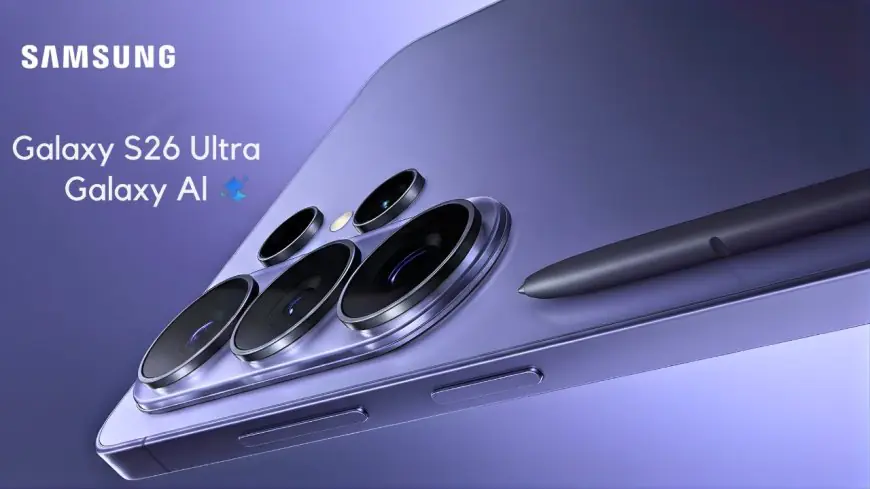


The wait is finally over for tech enthusiasts as Samsung officially pulls back the curtain on its most ambitious hardware lineup to date. While the Galaxy S26 series boasts the expected increments in camera resolution and processing speed, the real headline isn't what the phone can do, but how it protects you while doing it. With the debut of the new Privacy Shield Mode, Samsung is making a bold claim: you no longer have to choose between cutting-edge AI and your digital privacy.
For the past two years, the smartphone industry has been obsessed with "Cloud AI"—sending your photos, messages, and voice recordings to remote servers to be processed by massive models. Samsung’s new approach pivots back toward the user. The S26 leverages a massive upgrade in its Neural Processing Unit (NPU) to bring the heavy lifting directly onto the device, ensuring that your most sensitive data never leaves the palm of your hand.
The Anatomy of the Privacy Shield
The standout feature of the Galaxy S26 is undoubtedly the Privacy Shield Mode. This is a dedicated hardware-software toggle that, when activated, creates a "secure enclave" for all AI-driven tasks. Whether you are using the phone to summarize a confidential business meeting or to edit family photos, the system physically prevents the AI from communicating with external servers.
According to Samsung’s official technical brief, this mode is powered by a second-generation "Knox Matrix" that uses end-to-end encryption for on-device generative tasks. This effectively neuters the risk of "data leakage" that has haunted large language models since their inception. For enterprise users and privacy-conscious consumers, this is the "kill switch" for data tracking that the market has been demanding.
New AI Features That Actually Matter
Beyond the security protocols, the Galaxy S26 expands the existing Galaxy AI suite with tools that feel less like gimmicks and more like essential assistants. Some of the most impressive additions include:
- Live Translate 2.0: Now supporting over 35 languages and dialects, this feature works offline during voice calls and, for the first time, within third-party messaging apps like WhatsApp and Signal.
- Object Magic: An evolution of generative editing that allows users to not only move objects in a photo but to change their lighting and texture to match the surrounding environment seamlessly.
- Contextual Intent Search: A refinement of "Circle to Search" that understands the intent behind your query. If you circle a landmark, the AI can automatically draft a travel itinerary or check flight prices without a second prompt.
The integration of these features is remarkably fluid. Thanks to the Snapdragon 8 Gen 5 "for Galaxy" (and the Exynos 2600 in select markets), the latency that previously plagued mobile AI has been virtually eliminated. Actions that used to take three to five seconds to process now happen almost instantaneously.
Setting a New Standard for the Industry
Samsung’s move comes at a critical time. Competitors like Apple and Google have faced scrutiny over how much user data is fed back into training their respective models. By offering a transparent, user-controlled "shield," Samsung is positioning itself as the mature choice in an increasingly crowded market.
As noted by tech analysts at The Verge, the S26 represents a shift in philosophy. We are moving away from the "move fast and break things" era of AI and into a phase of responsible integration. Samsung isn't just selling a phone; they are selling a promise that your digital life belongs to you, even in an automated world.
The Galaxy S26, S26+, and S26 Ultra are expected to hit store shelves in early March, with pre-orders opening this week. If the initial reception to the Privacy Shield is any indication, Samsung may have just found the key to winning over the "AI-skeptic" demographic once and for all.