









































Anthropic Says Claude Just Found a Never Before Seen Enzyme
Anthropic says nearly 950 autonomous Claude agents spent 21.5 hours scanning 1.9 billion protein clusters and flagged a previously uncharacterized enzyme system with CRISPR-like repeating DNA in bacteriophage genomes, though the unpeer-reviewed preprint says the system's actual function remains unknown.
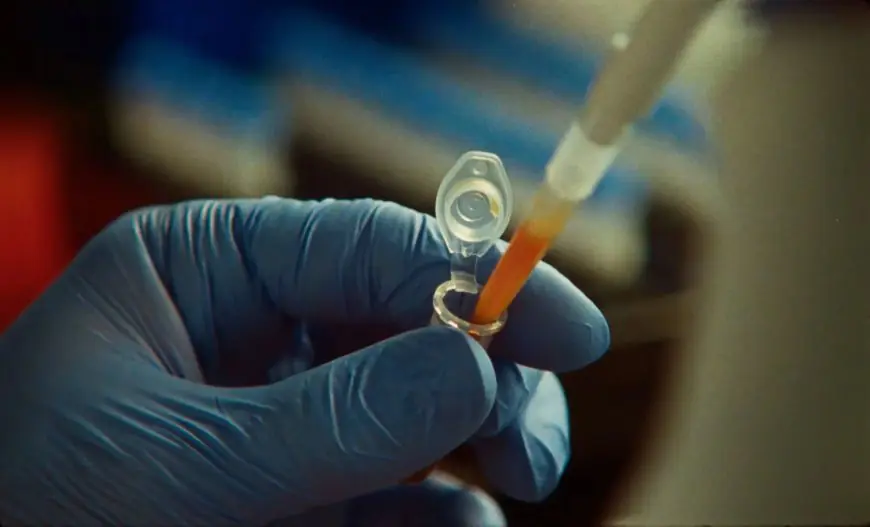
Anthropic says its AI didn't just answer a question this week — it noticed something no human had flagged before. The company announced Wednesday that autonomous Claude agents identified a previously uncharacterized enzyme system in bacteriophage DNA, which its new molecular biology lab has named array-associated reverse transcriptases, or ART. The finding appears in a company blog post and an accompanying preprint that has not yet been peer-reviewed.


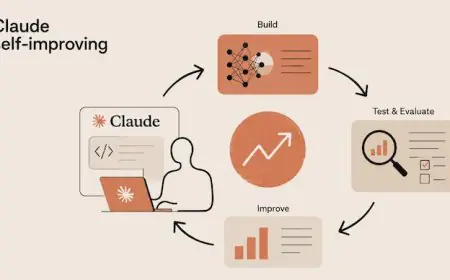
The setup was simple on paper: researchers gave Claude one research brief — find new reverse transcriptase systems inside a database of 1.9 billion protein clusters — and let autonomous agents running Claude Mythos 5 handle the rest, with one agent planning tasks and a second reviewing them.
What sits next to the enzyme's gene is what made agents pause: a long run of evenly spaced DNA repeats — "that's a CRISPR-like ... repeat array?!" one agent reportedly wrote mid-analysis — a layout that resembles the programmable guide-RNA banks that make CRISPR so useful for gene editing.
CRISPR pioneer Feng Zhang, who reviewed the preprint, called it "genuinely intriguing" and said it "merits further investigation." But Anthropic is careful not to oversell it: the preprint states plainly that the team hasn't yet shown the enzyme is active, doesn't know what ART actually does, and that human scientists — not Claude — ran every wet-lab experiment in Anthropic's biosafety-level 1 and 2 facility. Whether ART becomes the next CRISPR or simply an interesting footnote depends entirely on research that hasn't happened yet.