


























Apple Sues OpenAI for Alleged Theft of Hardware Trade Secrets
Apple has filed a 41-page federal lawsuit against OpenAI, accusing the AI company and two former Apple executives of orchestrating a coordinated campaign to steal confidential information about unreleased hardware products, technical specifications, and supply chain details. The lawsuit marks a dramatic rupture between the former partners.
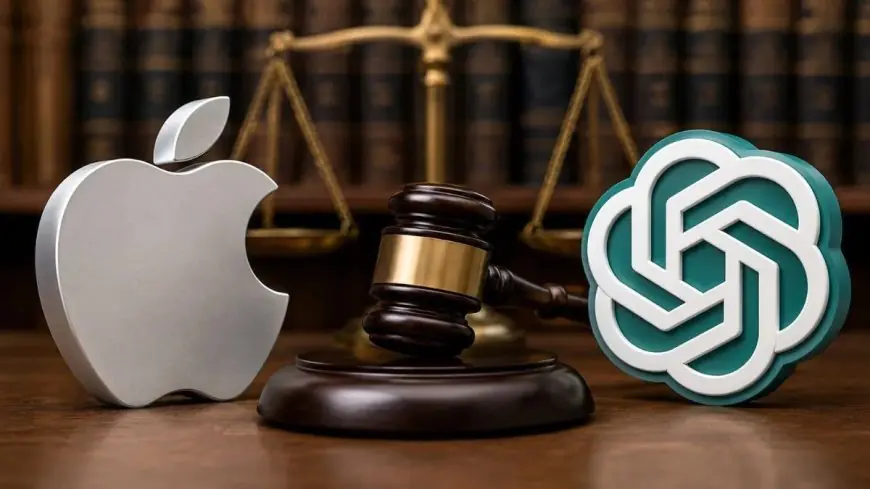
Apple has filed a 41-page federal lawsuit against OpenAI, accusing the AI company and two former Apple executives of orchestrating a coordinated campaign to steal confidential information about unreleased hardware products, technical specifications, and supply chain details.


The lawsuit was filed in the U.S. District Court for the Northern District of California and names OpenAI, OpenAI Foundation, OpenAI Group PBC, io Products, former Apple product design vice president Tang Yew Tan, and former Apple engineer Chang Liu as defendants.
Apple alleges that the defendants used proprietary information to accelerate OpenAI's expansion into the AI hardware market, marking one of the most significant AI-related legal disputes of 2026.
The lawsuit centers on allegations that Tan, who spent more than two decades at Apple helping develop products including the iPhone and Apple Watch before becoming OpenAI's chief hardware officer, engaged in a series of actions to transfer confidential information.
According to Apple's complaint, Tan emailed supplier information to himself before leaving the company, encouraged job candidates to bring hardware components and confidential materials to interviews, and advised departing employees on avoiding internal security procedures.
"Apple accuses OpenAI of misappropriating confidential trade secrets tied to AI hardware development. The lawsuit names former Apple executives Tang Yew Tan and Chang Liu as defendants." – JDJournal report on the lawsuit
Apple's concern extends beyond a single product — the company is fighting to protect the central role of the iPhone and the design and development capabilities that have allowed it to dominate the consumer electronics industry for two decades.
The lawsuit reveals that competition has expanded to another front: the supply chain. Apple alleges that OpenAI approached a joint manufacturing partner to learn about a metal surface finishing process allegedly proprietary to Apple, suggesting that competitive advantage in the technology industry lies not only in algorithms or engineering teams but also in manufacturing knowledge and supplier networks accumulated over many years.
The timing of the lawsuit is significant. OpenAI is no longer just an AI company — after acquiring io Products, a design company founded by former Apple chief design officer Jony Ive, OpenAI is building a hardware division with the ambition to develop a new generation of AI-centric devices rather than just smartphones.
If AI truly creates a new type of device to replace smartphones, the competition will be a race to define the computing interface of the next decade and determine who will become the gateway connecting users to artificial intelligence.
The Apple-OpenAI trade secret dispute reflects the rapidly changing relationships between technology corporations. Just a few years ago, Apple partnered with OpenAI to bring ChatGPT to the iPhone to fill a gap in its AI strategy.
But as OpenAI entered the hardware market, the complementary relationship quickly transformed into direct competition.
OpenAI has denied all allegations, stating it has no interest in other companies' trade secrets and plans to defend itself throughout the litigation.