
























China Is Investigating DeepSeek and Moonshot Over Data Sent to Claude
China's Cyberspace Administration is probing DeepSeek and Moonshot AI over Anthropic's accusation that both firms secretly routed millions of user exchanges — including sensitive police and government data — to Claude, after questioning representatives from seven named Chinese labs and narrowing its focus to two.

China just turned Anthropic's own accusation into a domestic enforcement question. The Cyberspace Administration of China has opened an investigation into DeepSeek and Moonshot AI over claims that both companies secretly routed user requests to Claude, The Information first reported, sending officials to interview executives directly at both firms' offices.


The probe traces back to a 154-page Anthropic threat report published September 10, which accused seven China-based labs — Alibaba, Moonshot, DeepSeek, Zhipu, MiniMax, SenseTime and Xiaomi — of what Anthropic called "illicit distillation."
Regulators summoned representatives from all seven before narrowing their focus. A few specifics from Anthropic's own allegations show why Beijing is treating this as a domestic data-security matter, not just a US intellectual-property dispute:
Anthropic said Moonshot sent more than 23 million exchanges to Claude between May and July, while DeepSeek sent 12.1 million in a single 14-day window in July
One case involved a user working on a municipal Public Security Bureau case-management system, sending data comparing an individual's movements against police records and national ID numbers. Another reportedly involved a DeepSeek user working with Russian government data whose requests exposed live database credentials
Anthropic's framing is pointed: it says the routing practice is "likely inconsistent with privacy laws and the labs' own terms of service," and that Chinese users were shown Claude's answers while believing they came from the domestic model they'd chosen.
China's regulator, notably, appears to be investigating the same underlying conduct for a different reason — not distillation itself, but whether sensitive state and police-linked data crossed its borders without authorization.
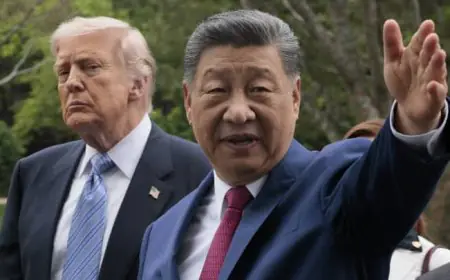
No penalties have been announced. The timing is hard to ignore either way: the probe surfaced just days ahead of the Trump-Xi summit's own AI agenda, adding a genuinely awkward wrinkle to a moment when Washington has been publicly accusing Chinese labs of stealing from US models, even as Beijing's own regulators now appear to be investigating whether those same labs mishandled Chinese data by sending it to one.