



























English Regulator Says AI Threatens Degrees and Wants Far More AI-Free Exams
The Office for Students says AI poses a generational risk to how English universities assess students, and it wants far more AI-free assessment, backed by possible regulatory sanctions.
England's higher education regulator has looked at how students are using AI on coursework and concluded that a lot of it no longer proves much. The Office for Students (OfS) said on Wednesday that AI poses a "generational risk" to how universities assess students, and it wants institutions to make far greater use of AI-free assessment. Universities that fail to measure what students actually know could face sanctions.


The warning comes with new research from the OfS and Advance HE, a charity focused on university teaching and governance. According to The Guardian, the researchers interviewed more than 300 students and staff at 127 universities and colleges this year. The OfS regulates higher education in England only, so this is not a rule for Scotland, Wales or Northern Ireland.
It is grim reading for anyone holding a degree. The OfS said many institutions still rely on unsupervised assessments that can be completed to a high standard with AI tools "without substantive engagement from students." Students described peers finishing assessments with large language models, "sometimes in just a few minutes," and getting similar grades to classmates who did the work themselves.
The bluntest lines came from the people doing the marking. One university staff member told the researchers, as quoted by The Guardian:
"I think we're realising that a number of our assessments may be unfit for purpose, and that pervasive use of AI may render our assessment of students close to impossible in some areas." University staff member, OfS and Advance HE research
That "close to impossible" phrase made The Guardian headline, but it belongs to lecturers and staff, not to the regulator. Another academic told the researchers that coursework "is now overwhelmingly written in part, or exclusively, with the help of AI." Others described piles of near-identical submissions citing the same literature in the same style.
Not a ban, but a warning with teeth
The OfS is not telling universities to outlaw AI. Its press release leads with helping students build AI skills. Josh Fleming, the OfS director of strategy and delivery, called AI "a huge opportunity" before pivoting hard.
"It also presents a generational risk to the system as it stands, threatening to undermine students' learning and institutions' ability to assess them. We need to see far greater efforts to tackle these risks, including far greater use of AI-free assessment." Josh Fleming, Office for Students
The enforcement part is where this gets interesting. The OfS said it will require institutions to ensure assessments are valid and reliable measures of students' knowledge and skills, and that "in many cases, this will require the use of secure (AI-free) assessments." It said it will hold institutions to account when they fall short, pointing to levers that include specific conditions of registration, monetary penalties, or suspending access to student support funding or OfS grant funding. The regulator did not name any university as being in breach.
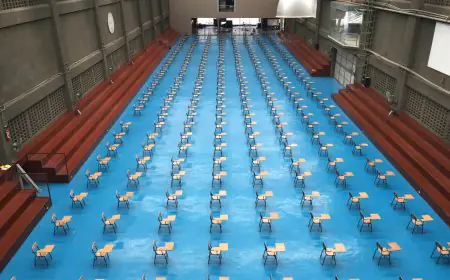
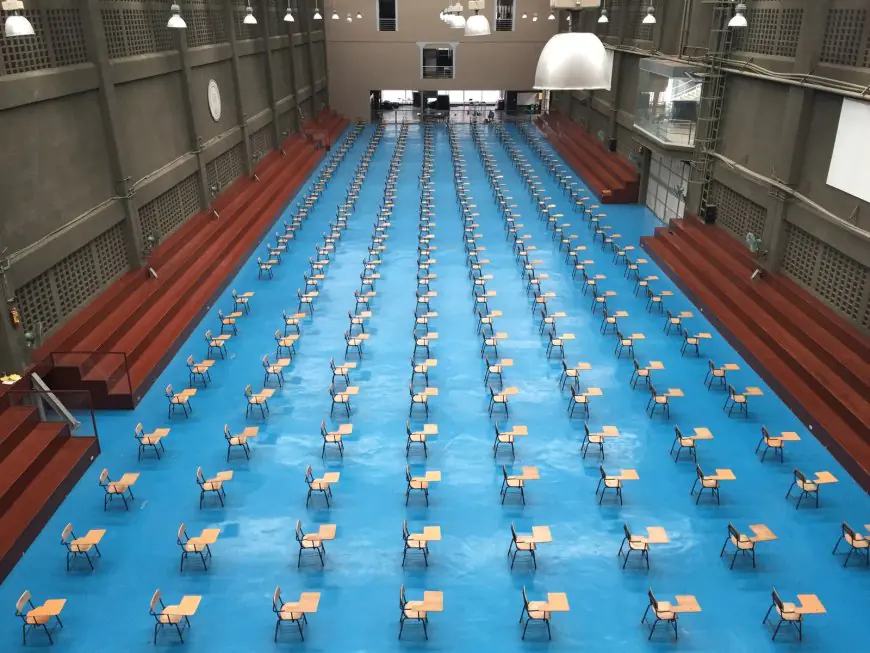
Its preferred toolkit is decidedly old school. The OfS said assessments designed to prevent AI use, such as closed-book exams, presentations, practical assessments and performances, are in many cases likely to be the most valid measure of attainment. Many institutions have already moved toward in-person exams, oral vivas, critiquing AI output and process-based work, the OfS said.
The government wants more. A Department for Education spokesperson told The Guardian it expects the OfS to "enforce the existing standards effectively" and to make its framework "explicit, strong and durable on the use of AI." Universities UK, which represents 147 institutions, said "there is further to go" but that many members have already made substantial changes.
The research also turned up a quieter problem. The OfS said many students find their institution's AI policies hard to understand, and that AI literacy training for staff is often limited, voluntary and poorly attended. So the regulator wants universities to crack down on AI in assessments while teaching students to use it well, with staff who in many cases have barely been trained themselves. Advance HE says it will launch an AI-focused Change Academy programme early in 2027. The message to students is blunt enough. The essay you hand in may soon count for less than the exam you sit.