



















AI Industry Midterm Money Got Mixed Results as Data Center Attack Ads Hit $173 Million
AI donors and super PACs poured tens of millions into the midterms, but their side lost in Ohio and South Carolina and at least 10 towns approved data center limits, CNBC reports. One tracker says most of the money in competitive races backed losing candidates.
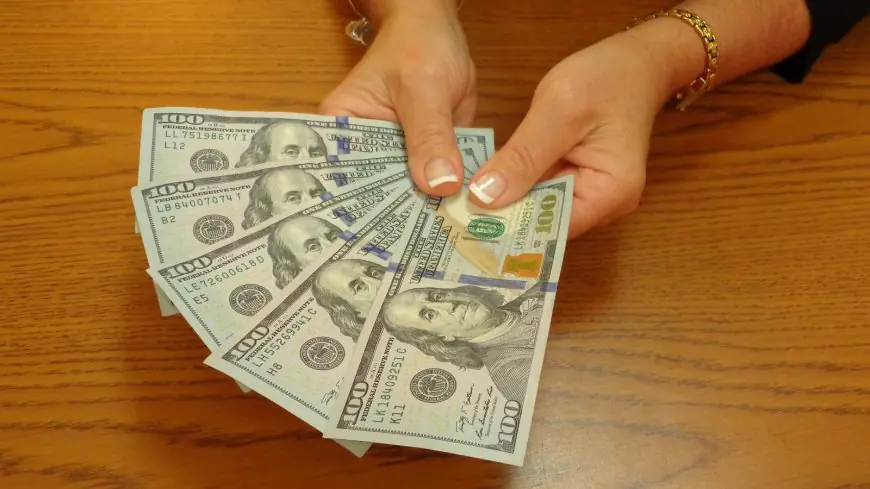
The AI industry spent heavily to shape this election, and the early returns say the money bought it a mixed bag at best. The loudest spending of the general election did not even come from the industry. According to CNBC, citing AdImpact, campaigns and outside groups put $173 million into ads about data centers, and the ads were almost entirely negative. Democratic advertisers accounted for $140 million of it. Our earlier report on the Texas governor result covers that race, so this piece follows the cash instead.


The industry side has a clear champion. Leading the Future, a political operation that wants to shape AI regulation, took $25 million from OpenAI President Greg Brockman and his wife Anna and $50 million from Andreessen Horowitz, according to FEC filings cited by CNBC. The Lever, reporting on research from the labor-backed rival group Guardrails Alliance, says the network's affiliated PACs never directed any of its roughly $140 million war chest to the 50 most competitive House races or the seven most competitive Senate races this general election. Guardrails Alliance has an obvious interest in that framing, but the claim fits the pattern in the results.
"Deep pockets were supposed to make [it] a political powerhouse, but the unpopularity of [its] agenda and [its] funders have made [it] a liability instead." Shaunna Thomas, Guardrails Alliance co-founder, as quoted by The Lever
The network does have a trophy. CNBC counts the defeat of New York lawmaker Alex Bores, an advocate for tougher AI safeguards, in a Democratic primary as an industry win. It was a muddy one. The Verge reported in June that Leading the Future spent $8.15 million against Bores while pro-Bores groups, partly funded by Anthropic, spent $19.26 million for him. The winner, Micah Lasher, had also cosponsored the RAISE Act.
The cleanest scorecard comes from Tech Influence Watch, a hand-updated tracker that follows crypto and AI super PACs together, so it is not a pure AI tally. This morning it showed $112 million spent in general elections with 109 of 221 races called. Of that, $25.2 million sat on the winning side, $74.7 million on the losing side and $12.1 million in races still open. In the 11 competitive races called so far, about 80 percent of the money backed a loser. The pattern is plain enough. Backing favorites paid off, and trying to move a result mostly did not.
Ohio is the sharpest case. Democrat Sherrod Brown ousted Republican Sen. Jon Husted, the AP reports, after campaigning on Husted as the face of data centers. Nebraska Public Media reported Oct. 30 that Defend American Jobs, a crypto super PAC largely funded by Fairshake, which draws donations from Coinbase, Andreessen Horowitz and Ripple Labs, had spent more than $90 million boosting Republicans, primarily in the Ohio Senate race. That is a crypto PAC, not an AI one, though the donor overlap is hard to miss. Nebraska went the other way. The AP called that Senate race for Republican Pete Ricketts at 3:27 a.m. Eastern, after Defend American Jobs put $13.5 million into ads opposing independent Dan Osborn.
South Carolina is the cleanest AI-specific test. Building the Future, a new data center industry super PAC, made Sen. Darline Graham its first candidate and reserved $1.5 million in ads for her. Annie Andrews, who campaigned for a two-year moratorium on new data centers, beat her anyway, and the AP called it Tuesday night.
Elon Musk's money is a category of its own. CNBC's analysis of campaign finance records puts his midterm spending at no less than $474 million. His America PAC spent nearly $87 million across 44 federal races. By Wednesday morning, CNBC says, Republicans it backed had lost 29, won three and had 12 contests still uncalled.
Local ballots told a similar story. Voters weighed 41 local data center measures on Tuesday, and at least 10 communities approved bans or restrictions, per CNBC, which did not list them. For donors the lesson is uncomfortable. National money can buy ads, but it has not bought back a town that just voted no, and whoever writes AI rules next year watched that happen.