
































Google Unveils a Secret-Keeping TPU and a Double Chip Giant, Making Four TPU Systems in a Year
Google added TPU 8tx for confidential inference and the dual chip TPU 8i Max for giant context windows to its eighth-generation lineup, but gave no prices or ship dates.
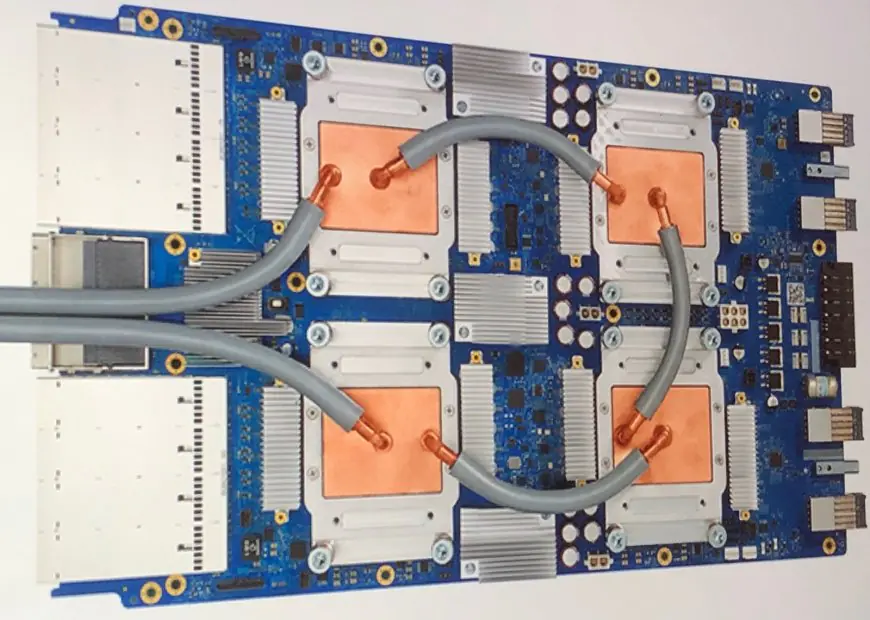
Google did not design a new chip this week. It did something it argues is just as useful and a lot faster: it took the two eighth-generation TPUs it unveiled in April and rebuilt the computers around them. The result is two more systems, TPU 8tx for confidential inference and TPU 8i Max for enormous context windows, and a claim Google has never made before. Four new TPU systems in a single year.


The announcement came Monday in a post by Amin Vahdat, Google SVP and chief technologist for AI and infrastructure. The new pair joins TPU 8t, which Google pitches as its large-scale training chip, and TPU 8i, its real-time reasoning engine, both introduced at Google Cloud Next in April.
Vahdat is unusually upfront that this is a packaging story, not a silicon one.
"There's an important difference between a new chip and a new system." Amin Vahdat, SVP and Chief Technologist, AI and Infrastructure, Google
A chip, he writes, is a multi-year process bound by physics and manufacturing. A system is how Google arranges compute, networking, storage and security around that chip, which he says lets the company deliver specialized supercomputers "in a matter of months rather than years." By its own account, that approach is how Google got to four launches in one year.
A TPU built to keep secrets
TPU 8tx is the more interesting of the two, because of who it is for. Google says it is built for regulated enterprises and governments that want to run frontier or proprietary models and autonomous agents next to their most sensitive data. The Verge, in a brief Nov 9 item, summed it up the same way: confidential computing for government agencies and regulated businesses.
The pitch targets a familiar weak spot. Data is usually encrypted at rest and in transit, Google notes, but has to be unlocked in memory while it is being processed. Google says TPU 8tx builds protection into the hardware layer so that data and model weights stay isolated even while in use. It uses the same silicon as TPU 8t, sits on 5th Generation AMD EPYC CPU hosts, and borrows the low-latency Boardfly network Google built for TPU 8i.
Google claims that combination delivers up to 2x lower latency than TPU 8t with a near-zero performance penalty for the security. Those are Google figures, and the post offers no independent test behind them. Google also says teams can fine-tune, distill and run reinforcement learning on one system without moving sensitive data between clusters.
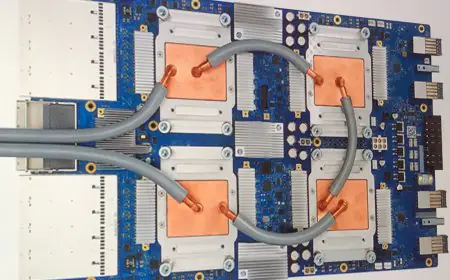
TPU 8i Max is the blunter instrument. Google took two TPU 8i chips and put them on a single package. It says that doubles compute, on-chip SRAM and HBM bandwidth compared with TPU 8i, and fits twice the silicon into the existing rack footprint.
"When dozens of AI agents work together across an entire software codebase or hours of video at once, memory bandwidth quickly becomes the bottleneck." Amin Vahdat, SVP and Chief Technologist, AI and Infrastructure, Google
What Google left out matters too. The post gives no prices and no date when customers can actually rent or install either system. It does say TPUs are now a fast-growing business with nearly 100 customers, including frontier labs, trading firms, retailers and universities.
The rest of the post is a software sales pitch, led by TorchTPU, which Google open-sourced last month so PyTorch code and Hugging Face models run natively on TPUs.
Google has been putting TPUs in stranger places lately, including a prototype satellite in orbit. This launch is more down to earth. Google is telling regulated companies and governments that data protection can be a hardware feature, and telling everyone else it can cram twice the silicon into the same rack. Until prices and dates show up, both remain promises.