





























DeepMind Says Its Robot Model Hit 96 Percent on Mercedes Lines, but the Last 4 Percent Is Hard
Google DeepMind says Gemini Robotics 2.5 helped Apptronik humanoids sort car parts on live Mercedes-Benz lines with a 96% success rate in a pilot. The model is only going to partners, and a DeepMind director says closing the last 4 percent will be a steep road.
A humanoid robot reached into a bin of metal brackets on a working Mercedes-Benz line and got it right 96 percent of the time. That is the headline number Google DeepMind attached to Gemini Robotics 2.5, the vision-language-action model it introduced on November 10 and calls its "most capable" so far. It is also a pilot figure reported by DeepMind alone, and the 4 percent it leaves on the table is where the real argument starts.


First, who gets it. DeepMind says Gemini Robotics 2.5 "is rolling out to our robotics partners." There is no public API. Ars Technica reports the model "is not generally available" and is in the hands of Google partners including Agile Robots, Apptronik and Boston Dynamics.
Inside the Mercedes pilot
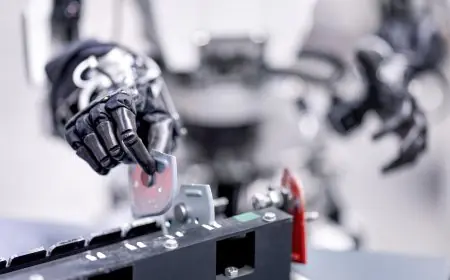
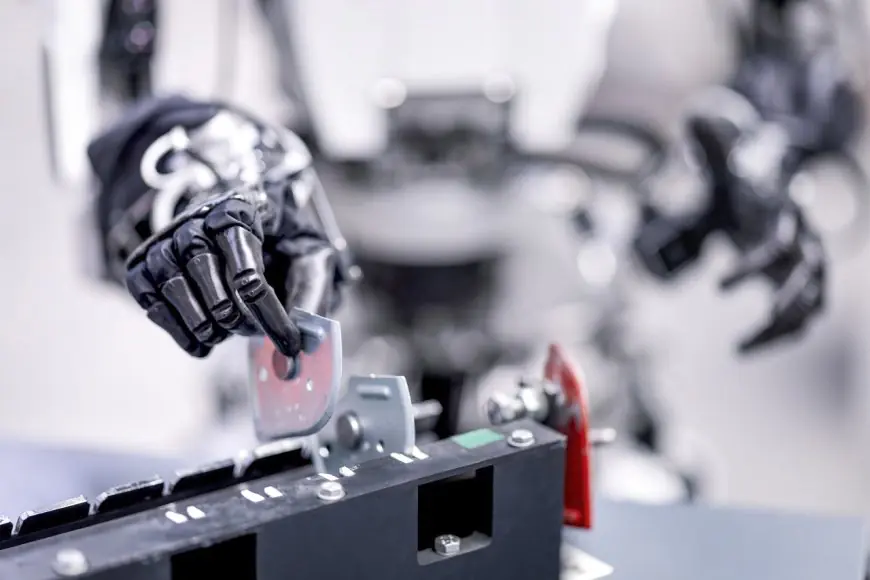
DeepMind describes the factory work as a "proof-of-concept" with Apptronik and Mercedes-Benz, run with Apollo 2 humanoids "on active automotive production lines in Kecskemét, Hungary, and Sindelfingen, Germany." The job was kitting, which DeepMind defines as "sorting individual parts from bulk bins into organized trays in the exact order needed for each vehicle on the line."
Here is the precise claim. Using Gemini Robotics ER to track the workflow and Gemini Robotics 2.5 to drive its hands and arms, DeepMind says, "the robot reaches into supply bins, picks up metal automotive brackets, and places them into sequencing containers, all while correcting for any gaps. Achieving a 96% success rate, this pilot shows promising progress toward widespread real-world industrial applications."
What the post does not say is just as telling. It gives no count of attempts, no definition of a success and no word on how often a person stepped in. Mercedes-Benz is not quoted at all. The partner voice comes from Apptronik, which builds the robot.
"Pairing Apollo 2 with Gemini Robotics, we saw the models improve dramatically in just a few weeks of post-training and carry over to Mercedes-Benz production with very little drop-off. This is the foundation for bringing humanoid robots to industrial and commercial environments at scale." Jeff Cardenas, co-founder and CEO of Apptronik, in DeepMind's announcement
"Very little drop-off" is doing a lot of work there. Ars Technica called the 96 percent impressive next to earlier robotic AI, then added that it is "still probably not enough for a company like Mercedes-Benz," because a human doing that repetitive task "will get it right virtually every time." Ars also reports that DeepMind director Kanishka Rao said closing that last 4 percent gap will be a "steep road."
On a line that runs in exact vehicle sequence, somebody has to catch every miss. That is the gap between a robot that helps a crew and a robot you leave alone on a shift, and nothing DeepMind published claims the second.
"We can be very good at a particular application at the cost of generalization. Or we can just push on the generalization axis and maybe not get to 99.9 in every application." Carolina Parada, head of robotics at Google DeepMind, to Ars Technica
That is the bet. One model for almost anything, with an openly lower ceiling on any single job.
The lab numbers are bigger, and softer. DeepMind says it tested the model on more than 200 tasks, from tying a bow on a gift box to pipetting liquid, and that it achieves "a 30% to 100% higher success rate depending on the type of task, while completing tasks 20% to 30% faster" than previous baselines. Ars stresses that those gains are "based on laboratory testing." Ars also notes the 2.5 release still runs on cloud-based servers, so it does not escape latency, and that the demo video it embedded was sped up by 2x.
Safety got its own push. DeepMind says inference-time reasoning guidance "boosted safe task completion around obstacles by 33% and around nearby people by 43%," and it released ASIMOV-Jailbreak, an open-source benchmark of prompts that try to trick a robot into unsafe actions.
A general model doing real kitting on live lines is a milestone. But 96 percent is a pilot score with no published denominator, the model is locked to partners, and by DeepMind's own director's account, the hardest part is still ahead.