























Why Demis Hassabis Just Cut His Own AGI Timeline to 2 to 3 Years
Google DeepMind co-founder Demis Hassabis now forecasts AGI within two to three years, down from his earlier estimates. His shorter clock lands the same week DeepMind staff are quitting over military AI.

Demis Hassabis has spent most of his career as the measured voice in a field full of hype merchants. Now even he is pulling his clock forward.


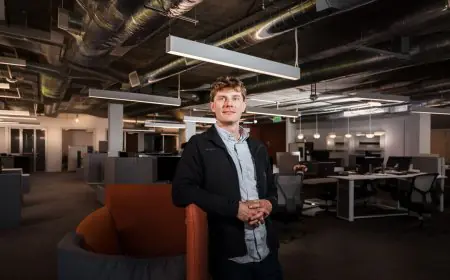
In a WSJ. Magazine profile published October 21, which names him the magazine's 2026 Innovator in Tech, the Google DeepMind co-founder told writer Ben Cohen that he now expects artificial general intelligence within two to three years. Earlier this year, according to the profile, he put it at three to five years away. In July, when we covered his call for a FINRA-style AI regulator, he was still talking about a five-year horizon.
"It's soon. I'm updating nearer and nearer." Demis Hassabis, speaking to WSJ. Magazine
That is a forecast, not a finding. Nobody has built AGI, and nobody agrees on how you would prove it. But when the person with a Nobel Prize for AlphaFold shaves years off his own estimate, people in government and inside the labs pay attention.
What he means by AGI
Hassabis sets a high bar. The WSJ describes his definition as a system with the full cognitive range of the human brain, "not just some of our capabilities but all of them." He also has a concrete test in mind, which he calls the Einstein test: could a system trained only on human knowledge up to 1901 produce Einstein's 1905 work?
By his own account, AI that can invent modern physics is still a few years off, though he says that is sooner than he would have guessed when he won the Nobel in 2024. He described how progress tends to unfold this way: "slow, slow, slow, then suddenly all at once."
He also has a new title. The profile says Hassabis recently became chief scientist at Alphabet and chair of DeepMind after a leadership shuffle, while still running the drug discovery company Isomorphic Labs. So the shorter timeline comes from someone stepping back from day-to-day lab management to focus on science, not from someone pitching a product launch.
The governance gap gets harder to ignore
If you take Hassabis at his word, the obvious question is whether oversight can keep pace. His own answer, as laid out in the profile, is cautious about rules written too early.
"What would be wrong is to try and regulate things now that we don't even fully understand. I think you're almost certainly going to get the wrong regulation, and wrong regulation is worse than no regulation." Demis Hassabis
That position is getting harder to square with a two to three year window. A regulator that waits to understand the technology may not have long to do the understanding. The WSJ notes that, when Cohen spoke to him, it was still unclear how or whether the industry would be regulated.
The timing is awkward for Google, too. The same week the profile landed, the BBC reported that several Google DeepMind staff have resigned or are leaving over the company's military AI contracts. Former researcher Andreas Kirsch told the BBC that Google's governance and oversight are not "sufficient or meaningful enough" to deploy AI safely in military and classified settings, or "to develop artificial superintelligence safely in the future." Research engineer Sofia Liguori said the push into military work made her "feel ashamed to work at Google."
Put those side by side and you get an uncomfortable picture. DeepMind's co-founder says the most consequential technology in history may be two to three years out. Some of the people who helped build it say the company's guardrails are not ready for what it already sells.
What winning looks like to him
Hassabis frames the race in terms that sound almost old-fashioned in today's AI market. Asked by Cohen what it takes to win, he said: "Winning means helping humanity steward AGI into the world safely and securely for the benefit of everyone."
He also told the magazine that not enough time has gone into what happens after AGI arrives, including how it affects institutions and who benefits. Those are good questions. On his own timeline, there are only a couple of years left to answer them.