












































China DeepSeek New Model Changes The Global AI Race
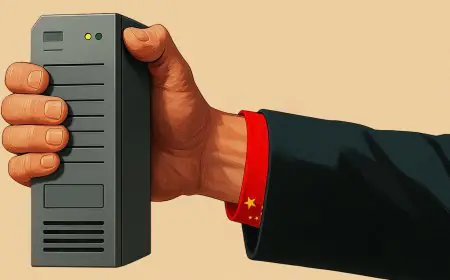
China’s DeepSeek is preparing to launch its most powerful multimodal AI model to date. Timed strategically before the country’s key political sessions, the release aims to challenge the dominance of US-based labs like OpenAI and Google by proving that sophisticated AI can be built with higher efficiency and lower costs.
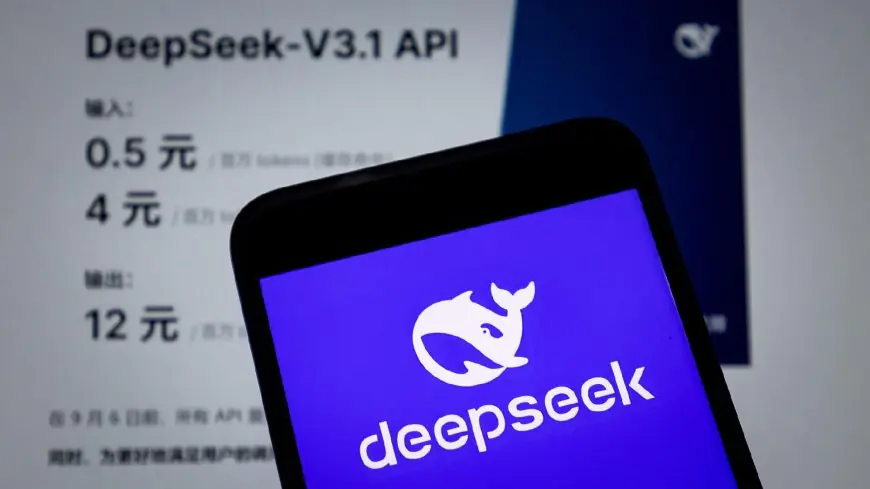


In the high-stakes theater of global artificial intelligence, a new act is about to begin. DeepSeek, the Hangzhou-based powerhouse that has consistently punched above its weight, is gearing up to unveil its latest multimodal large language model. This isn't just another incremental update; it is a calculated move designed to prove that Chinese innovation can thrive even under the shadow of stringent export controls and geopolitical friction. For Silicon Valley, the message is clear: the gap is closing faster than many anticipated.
The timing of this launch is anything but accidental. By preparing to debut the model just ahead of China’s "Two Sessions"—the country’s most significant annual political gatherings—DeepSeek is positioning itself as the crown jewel of national self-reliance in technology. As Beijing pushes for "AI Plus" initiatives across all sectors of the economy, this new model is expected to serve as the foundational infrastructure for a new wave of industrial and consumer applications.
Beyond Text And Into The Multimodal Future
While early iterations of DeepSeek’s models were lauded for their coding prowess and mathematical reasoning, the upcoming release takes a massive leap into multimodality. This means the AI won't just process text; it will natively understand and reason across images, audio, and video with a level of fluidity that rivals the best models from the West. The real story here isn't just the capability, but the efficiency with which it was built.
DeepSeek has gained a reputation for using a "Mixture of Experts" (MoE) architecture that allows massive models to run on significantly less hardware than traditional dense models. This technical sleight of hand is critical in a world where access to high-end Nvidia chips is restricted. By doing more with less, DeepSeek is providing a blueprint for how a sovereign AI ecosystem can flourish despite hardware bottlenecks. According to reports from the South China Morning Post, this efficiency has made DeepSeek a favorite among developers who want high performance without the staggering cloud costs associated with other frontier models.
The Geopolitical Chessboard
This launch comes at a time when the AI arms race is moving from theoretical research into raw industrial competition. For the last two years, US labs like OpenAI and Google have set the pace, but DeepSeek’s open-source contributions have created a "leveling" effect. By releasing high-quality weights to the public, DeepSeek has allowed smaller startups and researchers globally to build advanced tools without needing a billion-dollar R&D budget.
However, the new model represents a pivot toward more specialized, enterprise-ready intelligence. We are seeing a shift where:
- Reasoning capabilities are being prioritized over simple pattern matching.
- Language nuances specific to the Chinese market are being perfected to outperform Western models in regional contexts.
- Edge deployment is becoming a reality, allowing the AI to run on local hardware rather than just massive data centers.
As noted by analysts at TechCrunch, the competitive pressure from Chinese firms is forcing US companies to rethink their release cycles. If DeepSeek can deliver GPT-5 level performance at a fraction of the power consumption, it could disrupt the economic model of the entire industry. The "moat" that Silicon Valley has built around its compute resources is starting to look a lot more like a speed bump.
What To Expect From The Launch
Expectations are high for the model to demonstrate advanced spatial reasoning and complex problem-solving. Early testers suggest that the model’s ability to "see" a diagram and generate working code to replicate it is among the best in the world. But beyond the benchmarks, the real test will be integration. DeepSeek is expected to announce a suite of partnerships with Chinese hardware manufacturers and software giants, ensuring that their AI isn't just a research paper, but a tool used by millions from day one.
As we move through 2026, the narrative of "US leadership vs. Chinese catch-up" is being replaced by a more complex reality of two parallel, hyper-competitive ecosystems. DeepSeek’s latest move proves that in the world of AI, ingenuity and architecture can be just as powerful as raw silicon. The world will be watching the "Two Sessions" very closely to see how this new model is woven into the fabric of the world’s second-largest economy.