


































Nvidia is Turning Every Data Center into a Massive AI Factory
At the GTC 2026 conference, Nvidia CEO Jensen Huang unveiled the "Vera Rubin" platform, a revolutionary vertical stack of chips and liquid-cooled racks designed to industrialize artificial intelligence and solidify the company's role as the global backbone of AI infrastructure.
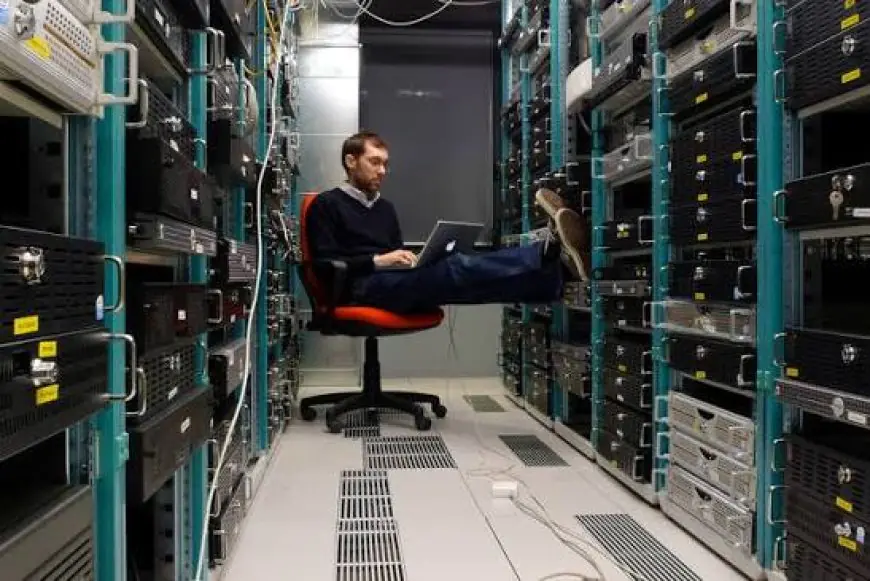


The era of the "chip company" is officially over. At this week's high-octane GTC 2026 conference in San Jose, Nvidia CEO Jensen Huang made it clear that his empire has moved beyond selling parts to building the entire engine of the modern economy. Standing before thousands of developers, Huang introduced the world to the "AI Factory"—a concept that reimagines the traditional data center not as a place to store files, but as a refinery that converts raw electricity and data into high-value "intelligence tokens."
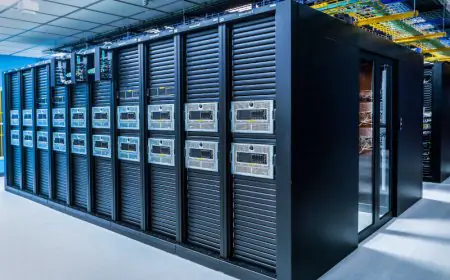
The star of the show was the Vera Rubin NVL72, a liquid-cooled rack-scale system that looks more like a sci-fi monolith than a server. Named after the pioneering astronomer Vera Rubin, this platform represents a massive leap in what Nvidia calls "extreme co-design." It isn't just a collection of GPUs; it’s a vertically integrated supercomputer that combines seven different types of proprietary silicon into a single, unified architecture.
The technical powerhouse behind the Rubin platform
Nvidia's strategy for 2026 is centered on a full-stack approach. The Rubin platform isn't just about faster graphics; it’s about solving the massive energy and compute bottlenecks currently facing the industry. The new setup includes:
- Rubin GPUs: Featuring 288GB of HBM4 memory and delivering five times the inference performance of the previous Blackwell generation.
- Vera CPUs: Custom-built processors designed specifically to handle the "agentic" logic—the decision-making part of AI—that traditional CPUs struggle with.
- Groq 3 LPUs: Following a landmark $20 billion acquisition in late 2025, Nvidia has integrated Groq’s ultra-low-latency technology directly into its racks to supercharge real-time interaction.
One of the most staggering claims from the keynote is the efficiency gain. Nvidia says the NVL72 can train complex "Mixture-of-Experts" (MoE) models with one-fourth the number of GPUs compared to the Blackwell platform. More importantly for businesses, it delivers a 10x reduction in the cost per token, making high-end AI reasoning affordable for nearly any enterprise.
From training models to running the world
The industry is hitting what Huang calls the "inference inflection point." While the last three years were defined by the frantic race to train bigger models, 2026 is the year of deployment. "AI now has to think. In order to think, it has to inference," Huang told the crowd. This shift is why Nvidia is pivoting so hard toward AI Infrastructure that can run millions of autonomous agents simultaneously.
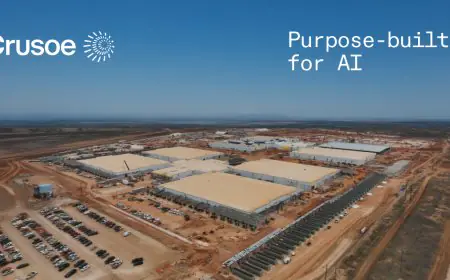
This isn't just theoretical. Cloud giants like Microsoft and AWS are already lining up to deploy "Fairwater" superfactories, which will scale to hundreds of thousands of Rubin superchips. According to an official Nvidia announcement, these facilities are designed to be the foundational layer for the next decade of digital growth, supporting everything from autonomous robotaxis to real-time drug discovery.
Nvidia isn't just stopping at the hardware. They also introduced NemoClaw, an enterprise-grade framework for managing autonomous agents. This software layer ensures that as these "AI factories" churn out intelligence, there are safety guardrails and privacy filters in place to keep the system from going off the rails. It’s a move that targets the growing enterprise need for "agentic AI" that can actually perform tasks rather than just answering questions.
As analysts at Data Center Knowledge have noted, Nvidia’s projections for AI infrastructure demand have now hit a staggering $1 trillion through 2027. By owning every layer of the stack—from the liquid-cooling manifolds to the inference operating system—Nvidia has effectively built a moat that competitors are finding nearly impossible to cross.
The message from GTC 2026 is unmistakable: the future of global industry is no longer about who has the best software, but who owns the "factories" that produce the intelligence driving it. With the Vera Rubin platform, Nvidia has firmly planted its flag as the owner of that future.