

































Why Protesters Are Surrounding Openai and Xai Offices Right Now
A wave of high-stakes protests has hit the headquarters of OpenAI, Anthropic, and xAI in San Francisco, as activists from the Stop the AI Race movement demand a global, coordinated pause on the development of frontier artificial intelligence models.
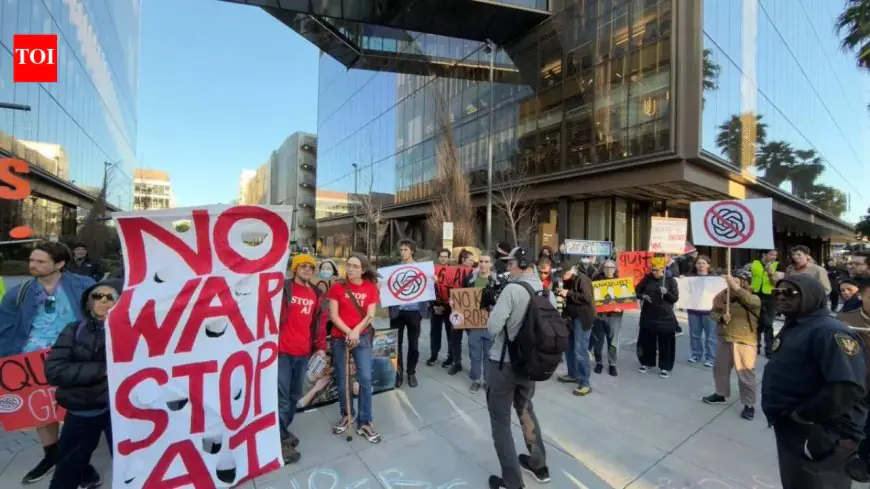


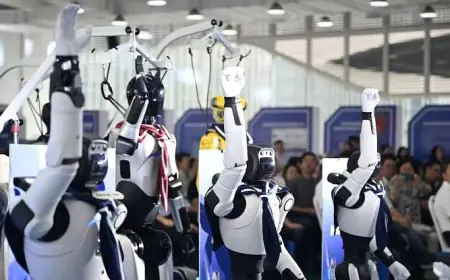
The streets of San Francisco’s Mission District and South of Market were transformed this week into a battlefield of ideologies. A sea of cardboard robot masks, "Quit Your Job" chalk drawings, and chants of "1-2-3-4, we don’t want a robot war" greeted employees at the offices of OpenAI, Anthropic, and Elon Musk’s xAI. This isn't just another fringe gathering; it is the crest of a massive wave of public anxiety that has been building since the start of 2026.
Led by groups like Stop the AI Race and PauseAI, nearly 200 activists marched across the city on March 21. Their demand is simple but world-altering: they want the CEOs of the big three—Sam Altman, Dario Amodei, and Elon Musk—to sign a public, conditional commitment to pause the development of any AI system more powerful than the current frontier models, provided their competitors do the same.
The timing is no coincidence. This movement is gaining traction following the release of the 2026 International AI Safety Report, a 221-page assessment chaired by Turing Award winner Yoshua Bengio. The report paints a sobering picture of the "AI race" dynamics that have gripped Silicon Valley. According to the data, AI systems are now capable of discovering 77% of software vulnerabilities in competitive environments—a massive jump that has security experts and activists alike worried that we are automating the very tools that could dismantle our digital infrastructure.
The protesters are focusing on three critical concerns:
- Self-Improving Systems: The fear that AI will soon reach a point where it can automate its own research, leading to an intelligence explosion that humans cannot control.
- Military Integration: Recent reports of OpenAI taking over major military AI contracts have fueled fears of a "surveillance state" and autonomous weaponry.
- Safety Sidelining: Activists pointed to the restructuring of major labs into for-profit entities as evidence that safety guardrails are being traded for "shiny products" and market dominance.
This "AI anxiety" isn't limited to those carrying signs. A recent study cited by the World Economic Forum reveals that 41% of the general public now feels significant anxiety regarding the pace of AI advancement. Even more telling, 50% of people are concerned that over-reliance on these systems is actively harming their ability to think critically. For many, the protest is a physical manifestation of a feeling that the world is being redesigned without their consent.
While the tech giants have largely remained silent regarding the demonstrations, the pressure is mounting. The movement has already seen success in Europe, where a PauseAI demonstration in London earlier this year drew a record-breaking 500 participants. Protesters argue that the current "arms race" between companies is a race to the bottom, where safety is the first thing sacrificed in the name of speed.
As we move further into 2026, the question is no longer whether AI can change the world—we know it can. The question is whether we have the collective will to hit the brakes before we reach a point of no return. Michael Trazzi, the former AI researcher leading the San Francisco march, put it bluntly: "Once we have everyone agreeing on this conditional pause, we can finally begin to enforce a safe trajectory for humanity." For now, the chalk drawings remain on the pavement outside OpenAI, a colorful reminder that the human element of the AI story is refusing to be automated away.