































Why Anthropic Software Demo Triggered a Massive Wall Street Selloff
A revolutionary AI demonstration from Anthropic has sent shockwaves through the stock market, causing an 8% drop in major SaaS stocks as investors begin to fear that autonomous AI agents will replace traditional software platforms entirely.
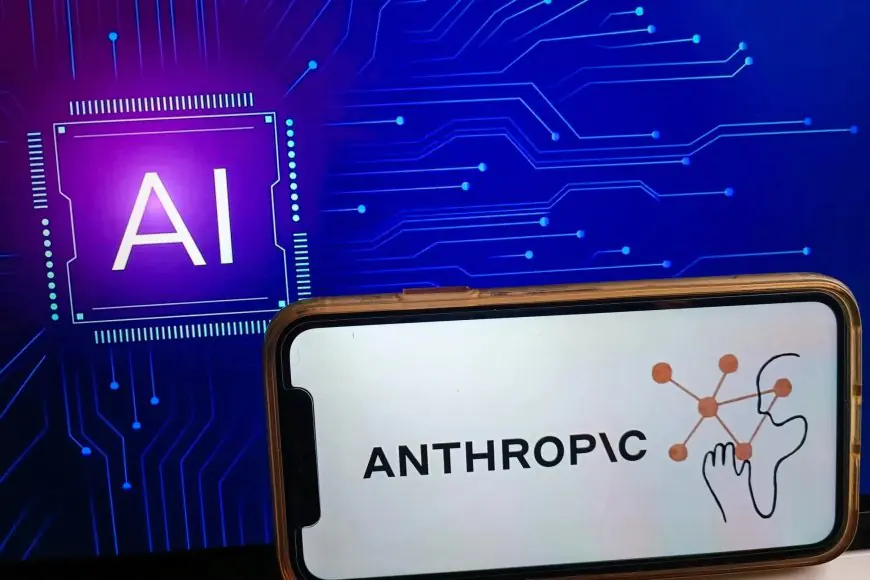

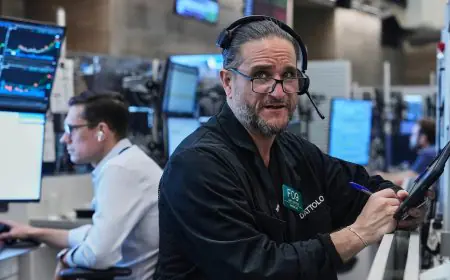
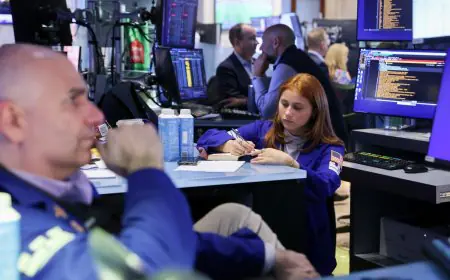
Wall Street was painted red this Tuesday as a single product demonstration from AI powerhouse Anthropic triggered a frantic sell-off across the Software-as-a-Service (SaaS) sector. The market reaction, which saw industry stalwarts like Salesforce, HubSpot, and Adobe dip by as much as 8% in intraday trading, signals a fundamental shift in investor psychology. We are no longer in an era where AI is viewed merely as a "helpful plugin" for existing software; we have entered the era of AI displacement.
The catalyst for this market turbulence was the surprise unveiling of Anthropic’s "Project Citadel," a sophisticated iteration of their agentic AI technology. Unlike previous models that required a human to navigate a software interface to get results, Citadel demonstrated the ability to operate across multiple platforms autonomously. In the demo, the AI agent managed a complex sales pipeline, updated CRM records, generated legal contracts, and handled client billing—all without the user ever opening a single SaaS application window.
The death of the user interface
For decades, the value of SaaS companies has been tied to their user interface (UI) and the "stickiness" of their workflow. Investors are now realizing that if an AI can interact directly with a computer's operating system or backend APIs, the need for a colorful, expensive-to-license dashboard vanishes. This realization hit the trading floor hard. If a company can pay for one powerful AI agent to do the work of ten specialized software subscriptions, the "per-seat" licensing model that built Silicon Valley’s biggest empires is effectively under siege.
The anxiety is palpable among hedge fund managers who have long viewed software as an "evergreen" bet. According to real-time data from Bloomberg Markets, the specialized index tracking cloud software companies suffered its worst single-day performance since the early 2022 rate hikes. The narrative has shifted overnight: software is no longer the solution; it is becoming the friction that AI is designed to bypass.
From software to services
What we are witnessing is the birth of "Service-as-a-Software." In this new paradigm, businesses don't buy a tool to do a task; they buy the outcome itself. During the Anthropic demo, the AI didn't just "help" a marketer; it was the marketer. This distinction is critical for the future of the economy. As AI agents become more reliable, the multi-billion dollar market for middle-management software tools could consolidate into a handful of foundational AI models.
However, some analysts argue that the panic might be premature. They suggest that established software giants will simply pivot to become the "operating systems" for these AI agents. Yet, the price action suggests the market isn't waiting around for that pivot to happen. The fear is that by the time these legacy companies integrate agentic workflows, the nimble, AI-native startups will have already captured the value chain.
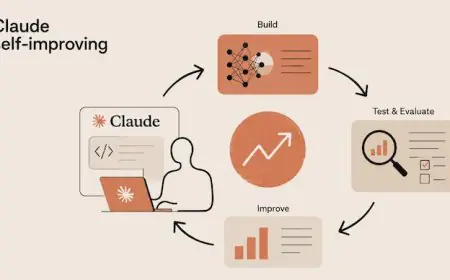
As Anthropic's latest research suggests, the move toward "computer use" capabilities is accelerating. The ability for an AI to see a screen, move a cursor, and click buttons just like a human means that every legacy software platform is now effectively a legacy platform. For the first time, the moat surrounding SaaS companies—the difficulty of switching workflows—is being bridged by AI that doesn't care which platform it uses to get the job done.
By the closing bell, the tech-heavy Nasdaq had recovered slightly, but the specific SaaS casualties remained deeply in the negative. This wasn't just a "flash crash" or a technical glitch; it was a loud, clear message from the market. The software industry is facing its "Kodak moment," and the only way out is to innovate faster than the agents that are coming to replace them. For now, Wall Street is betting that the agents are winning.