
























White House Is Keeping Its New AI Safety Rulebook Secret
The Trump administration has finalized a voluntary AI safety framework to evaluate the cybersecurity risks of frontier models, but has decided to keep the details confidential. The secrecy is drawing criticism from smaller AI labs, safety advocates, and researchers who argue that oversight without transparency is no oversight at all.
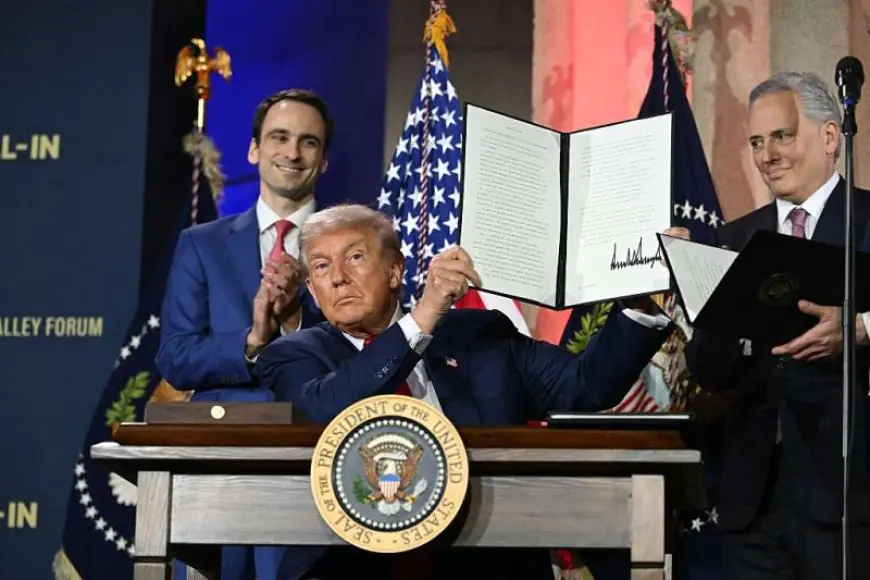
The Trump administration has finalized a voluntary framework for evaluating the cybersecurity risks of advanced artificial intelligence models, but has chosen to keep the details secret from the public.

White House officials invited staffers from OpenAI, Anthropic, Google, Meta, Nvidia, and other leading AI companies to a closed-door meeting on Tuesday to review the new oversight plan, which allows the government to access frontier models for up to 30 days before public release.
The administration has declined to share the contents of the framework, leaving companies, policymakers, researchers, and U.S. allies outside the process guessing how one of its key AI policies will be implemented.
According to sources familiar with the discussions, the White House does not plan to publicly release the framework, and the benchmarking process used to assess advanced cyber capabilities has been designated as classified under the June executive order.
The decision to keep the framework confidential has drawn sharp criticism from technology watchdogs, smaller AI startups, and safety advocates. Critics argue that oversight without transparency defeats the purpose of a safety framework. "If only the AI companies know the rules, then there is no accountability," said Chris Mackenzie of Americans for Responsible Innovation.
Some argue that the secretive process will give an advantage to larger companies, entrenching the dominant frontier model providers and leaving smaller startups in the dark. "They're essentially creating an entrenchment program for the big AI model providers, which are now considered the most frontier," said a person familiar with the White House's discussions with AI labs.
The framework reportedly defines a "covered" model as closed-source, with state-of-the-art capabilities and national security risks, though sources say neither term has been clearly defined.
"This is far too important an issue to be hidden behind a cloak of secrecy. This is not a handshake deal with tech companies. It's the rulebook for ensuring they don't endanger the public. If only tech companies know what's in the rulebook, it doesn't work." – Brad Carson, President of Americans for Responsible Innovation
According to reports, the framework focuses on the most advanced closed models from U.S. developers such as OpenAI, Anthropic, and Google, while open-weight models are expected to be exempt.
This exclusion has raised questions about the framework's scope and whether it could inadvertently benefit foreign competitors. "If the specific cyber benchmarks must remain classified, the administration should still publish the scope, criteria and timelines, because predictable rules are what let U.S. developers move fast," said Michelle Lopes Maldonado of the Information Technology and Innovation Foundation.
As the debate over AI governance intensifies, the secretive nature of the White House's framework is likely to fuel further controversy. With no legislation codifying AI oversight, the administration's approach to voluntary, confidential reviews may shape the future of AI regulation in the United States.