










































AI is Reviving the Traditional CPU in the Chip Wars
While GPUs have dominated the artificial intelligence conversation for years, a major architectural shift is underway in 2026 as inference workloads and agentic systems bring the central processing unit back to the center of the global chip wars.
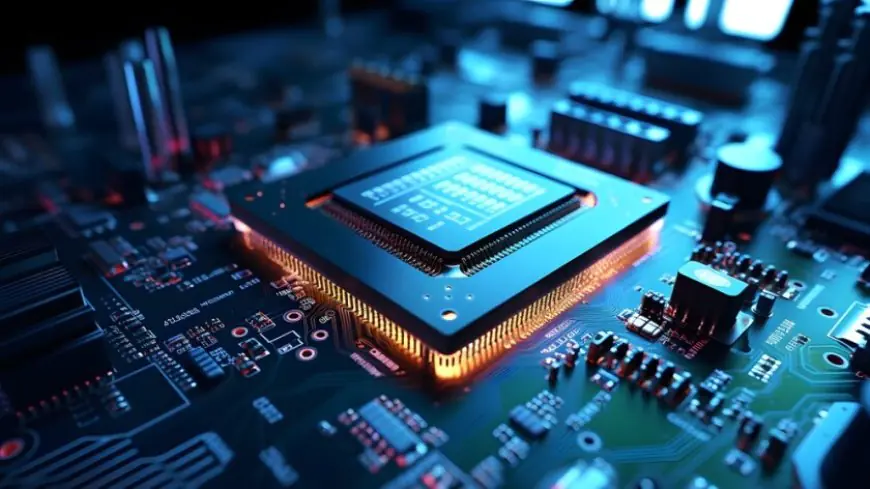


For the past three years, the narrative in Silicon Valley has been simple: the GPU is king, and the CPU is a relic of a bygone era. We watched as Nvidia’s market cap soared into the stratosphere while traditional chipmakers like Intel and AMD scrambled to prove they were still relevant. But as we move into the second quarter of 2026, the "chip wars" are taking a surprising turn. The humble Central Processing Unit (CPU) is experiencing a massive resurgence, not as a replacement for the GPU, but as the essential partner that keeps the entire AI ecosystem from grinding to a halt.
This "renaissance of the CPU" is driven by a fundamental change in how we use artificial intelligence. In 2024 and 2025, the world was obsessed with training—the computationally expensive process of teaching a model like Claude or GPT-5 how to think. Today, the focus has shifted toward inference, which is the process of actually running those models for millions of users simultaneously. As it turns out, while GPUs are great for the heavy lifting of training, they can be overkill—and incredibly expensive—for the day-to-day tasks of AI reasoning.
Industry analysts are now pointing to a "structural pivot" in hardware demand. According to recent market reports from TradingView, the semiconductor trade in 2026 is tilting heavily toward high-end CPUs. This is because modern AI workloads are becoming more "agentic." When an AI agent has to navigate a computer, write code, and make logical decisions in real-time, it requires the sequential processing power and low latency that only a sophisticated CPU can provide.
The tech giants are already adjusting their playbooks. At the recent GTC 2026 conference, even Nvidia—the undisputed champion of the GPU—admitted that the "host CPU" is now a mission-critical component of its new Rubin NVL72 systems. These "AI Factories" aren't just racks of graphics cards; they are heterogeneous environments where the CPU acts as the primary orchestrator, managing data pipelines and ensuring that the GPUs aren't left waiting for information.
The impact on the market has been immediate and, for some, painful. We are seeing a new type of shortage emerge:
- Server CPU Priority: Intel and AMD are reportedly pivoting their manufacturing capacity away from consumer-grade PC chips to focus on high-margin Xeon and EPYC server processors.
- Price Hikes: Due to this shift, prices for high-end consumer CPUs are expected to rise by as much as 15% this year as supply tightens.
- Architectural Diversity: New players like Arm are entering the fray with "AGI CPUs" specifically designed to handle the logic-heavy demands of autonomous agents.
This shift is also a win for sustainability. One of the biggest criticisms of the AI boom has been its insatiable thirst for electricity. As Intel newsroom updates have highlighted, using optimized CPUs for inference can offer a much lower total cost of ownership (TCO) and better energy efficiency compared to running every single query through a power-hungry GPU cluster. For enterprises looking to scale their AI operations without bankrupting their carbon goals, the CPU is the logical "right-sized" solution.
What we are witnessing is the maturation of the AI industry. We are moving away from the "throw more power at it" phase and into the "optimization" phase. In this new era, the winner won't be the company with the most GPUs, but the one with the most efficient architecture. The CPU isn't just breathing new life; it’s reclaiming its throne as the brain of the digital world, while the GPU remains its powerful, specialized muscle. The chip wars aren't over—they've just become a lot more interesting.