





































Big Tech Explores "Silicon Diplomacy" via Potential Supply Line Resets in Beijing
Major technology companies including NVIDIA, Tesla, and Apple are reportedly exploring new supply chain arrangements tied to artificial intelligence infrastructure and semiconductor manufacturing. The discussions signal a possible shift in global AI trade relations as the United States and China navigate growing demand for advanced computing power.
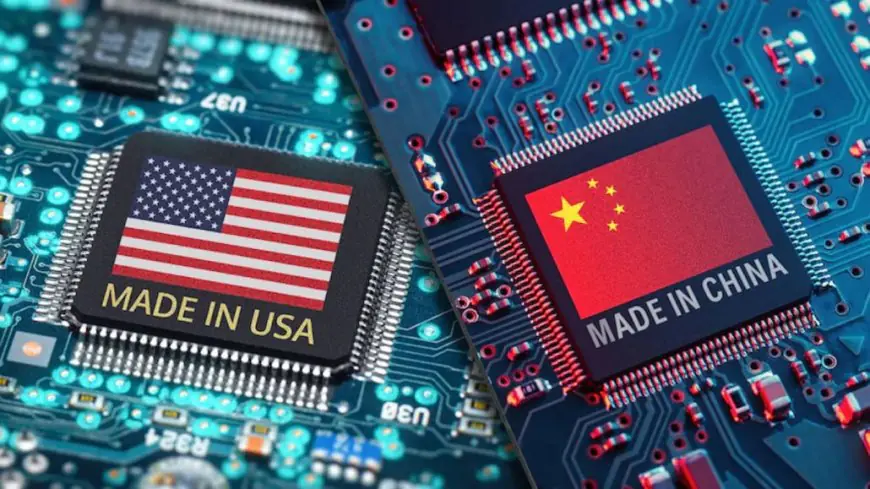


Big Tech Is Quietly Rewriting The Rules Of AI Supply Chains
The global artificial intelligence race may be entering a new phase shaped less by software breakthroughs and more by strategic semiconductor diplomacy. Recent discussions involving executives from NVIDIA, Tesla, and Apple have sparked growing speculation that major technology firms are exploring new supply chain agreements designed to stabilize access to advanced AI hardware while easing geopolitical tensions between the United States and China.
Financial analysts increasingly describe the trend as “silicon diplomacy” — a highly transactional approach where semiconductor access, manufacturing partnerships, and AI infrastructure investments become tools of broader economic negotiation. At the center of the conversation is the possibility that US-manufactured silicon chips could eventually support domestic Chinese AI infrastructure in exchange for long-term manufacturing guarantees and supply chain stability.
Why The Semiconductor Industry Holds So Much Power
Semiconductors have become one of the most strategically important assets in the global economy. Advanced AI systems depend heavily on high-performance GPUs and specialized AI accelerators capable of handling enormous computational workloads. As demand for generative AI infrastructure explodes worldwide, access to cutting-edge chips is increasingly viewed as both an economic advantage and a national security priority.
That reality has intensified pressure on governments and corporations alike. Over the past several years, export restrictions, trade tensions, and manufacturing bottlenecks have exposed how fragile global semiconductor supply chains can be. Technology giants are now seeking ways to reduce uncertainty while maintaining access to critical production ecosystems spread across the United States, Taiwan, South Korea, and China.
Companies such as NVIDIA have emerged as central players in this shifting landscape because their AI chips power much of the modern generative AI economy. From enterprise cloud systems to autonomous driving research, demand for advanced silicon continues rising at a pace few analysts predicted only a few years ago.
China Remains Too Important To Ignore
Despite ongoing political tensions, China remains one of the world’s most important manufacturing and technology markets. For companies like Apple and Tesla, Chinese production infrastructure continues to play a major role in global operations. At the same time, Chinese demand for AI computing resources is growing rapidly as local firms race to compete in cloud computing, robotics, and enterprise AI development.
Analysts believe this mutual dependency is driving renewed discussions around potential supply line resets. Rather than pursuing complete economic separation, many multinational technology firms appear to be searching for a more pragmatic middle ground that protects commercial interests while complying with evolving government regulations.
The issue is especially important because AI infrastructure spending is expected to surge dramatically over the next decade. According to industry forecasts from organizations like the Semiconductor Industry Association, demand for advanced chips tied to AI workloads, data centers, and edge computing systems is likely to reshape the global semiconductor market for years to come.
Silicon Diplomacy Could Redefine The AI Economy
The broader significance of these discussions extends far beyond hardware manufacturing. If major economies move toward negotiated semiconductor cooperation instead of aggressive fragmentation, it could dramatically influence the pace of AI innovation worldwide. Stable chip supply chains would help technology companies scale infrastructure faster, lower production uncertainty, and support expanding enterprise AI adoption.
At the same time, geopolitical risks remain impossible to ignore. Governments continue to worry about intellectual property protection, cybersecurity concerns, and strategic dependence on foreign manufacturing networks. Any large-scale policy shift involving AI chips and cross-border infrastructure agreements would likely face intense scrutiny from regulators and national security officials.
Still, the rise of silicon diplomacy signals an important reality about the modern AI economy. Artificial intelligence is no longer just a software industry story. It is now deeply tied to manufacturing capacity, global trade relationships, energy infrastructure, and geopolitical influence. As competition intensifies, the companies and nations controlling semiconductor ecosystems may ultimately shape the future direction of artificial intelligence itself.