







































Avnet And HKSTP Are Betting Big On Physical AI Startups
Avnet and the Hong Kong Science and Technology Parks Corporation have launched the DfMA Launchpad, a 12-month accelerator program focused on Physical AI and Edge AI startups. The initiative aims to help emerging companies scale hardware-driven AI innovations into high-performance manufacturing and global commercialization.



Avnet And HKSTP Launch New Accelerator For Physical AI Innovation
The global artificial intelligence race is no longer focused only on software and chatbots. Increasingly, attention is shifting toward hardware-powered AI systems capable of operating in the physical world. In a significant move aimed at accelerating that transition, Avnet and the Hong Kong Science and Technology Parks Corporation (HKSTP) have officially launched the DfMA Launchpad, a new accelerator program focused on Physical AI and Edge AI startups.
The 12-month initiative is designed to help emerging companies bridge one of the most difficult challenges in the technology industry: transforming promising AI prototypes into scalable, manufacturable products ready for commercial deployment. Applications for the program are now open to startups across the Greater Bay Area and international markets.
Why Physical AI Is Becoming A Major Industry Focus
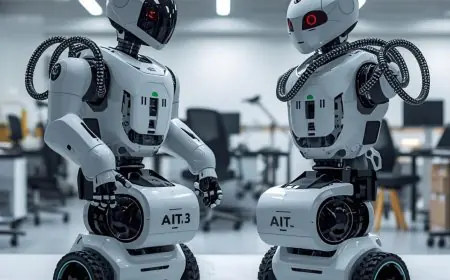
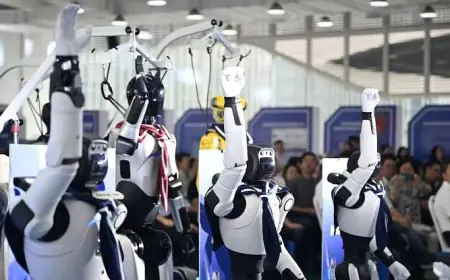
For years, much of the AI industry centered around cloud platforms, virtual assistants, and large language models operating primarily online. Physical AI represents a different direction. These systems combine artificial intelligence with hardware, sensors, robotics, autonomous devices, and real-world operational environments.
Examples include intelligent industrial robots, smart healthcare devices, autonomous machines, AI-powered logistics systems, advanced surveillance technologies, and connected infrastructure capable of making decisions at the edge rather than relying entirely on cloud computing.
Industry analysts believe Physical AI could become one of the fastest-growing sectors in artificial intelligence over the next decade. As businesses demand faster response times, lower latency, and more secure localized processing, Edge AI systems are becoming increasingly attractive across manufacturing, transportation, healthcare, retail, and smart city development.
DfMA Launchpad Aims To Solve Manufacturing Challenges For AI Startups
One of the biggest obstacles facing AI hardware startups is scaling beyond the prototype stage. Building a working AI device in a lab is very different from manufacturing reliable products at commercial scale. Many startups struggle with supply chains, production engineering, regulatory requirements, hardware optimization, and market readiness.
The DfMA Launchpad program is specifically targeting that gap. DfMA, which stands for Design for Manufacturing and Assembly, focuses on helping companies streamline production processes while improving efficiency and product reliability.
Through the accelerator, startups are expected to gain access to manufacturing expertise, engineering support, commercialization guidance, and industry partnerships designed to accelerate deployment. The collaboration combines Avnet’s global electronics and supply chain capabilities with HKSTP’s growing innovation ecosystem in Hong Kong.
Hong Kong Expands Its Position In The Global AI Economy
The initiative also reflects broader ambitions within Hong Kong and the Greater Bay Area to strengthen their influence in advanced technology industries. Governments and technology organizations across Asia are aggressively investing in semiconductor innovation, robotics, AI infrastructure, and smart manufacturing capabilities.
By focusing on Physical AI and Edge AI, HKSTP is positioning itself within one of the most strategically important areas of the future AI economy. Unlike cloud-based AI applications that can often be developed remotely, hardware-driven AI ecosystems rely heavily on manufacturing infrastructure, component supply chains, and specialized engineering expertise.
That gives regions with strong manufacturing networks a potential advantage in the next phase of artificial intelligence development. The Greater Bay Area, which includes Hong Kong, Shenzhen, and Guangzhou, is already considered one of the world’s most important technology manufacturing hubs.
Why Edge AI Could Define The Next Generation Of Smart Devices
Edge AI is attracting growing interest because it allows artificial intelligence systems to process data locally on devices instead of relying entirely on remote cloud servers. This approach can improve speed, reduce bandwidth costs, enhance privacy, and enable real-time decision-making in critical environments.
For startups developing autonomous systems or intelligent connected devices, that capability is increasingly essential. Applications ranging from robotics and industrial automation to autonomous vehicles and healthcare monitoring depend heavily on low-latency AI processing.
The launch of DfMA Launchpad signals how quickly the AI industry is evolving beyond software-only innovation. The next major wave of artificial intelligence may not simply live inside apps and websites. It may increasingly operate inside factories, machines, vehicles, and smart devices powering the physical world around us.
Learn more through Avnet and follow innovation initiatives from HKSTP.