






















Baidu Debuts Next-Gen AI Agents at Create 2026
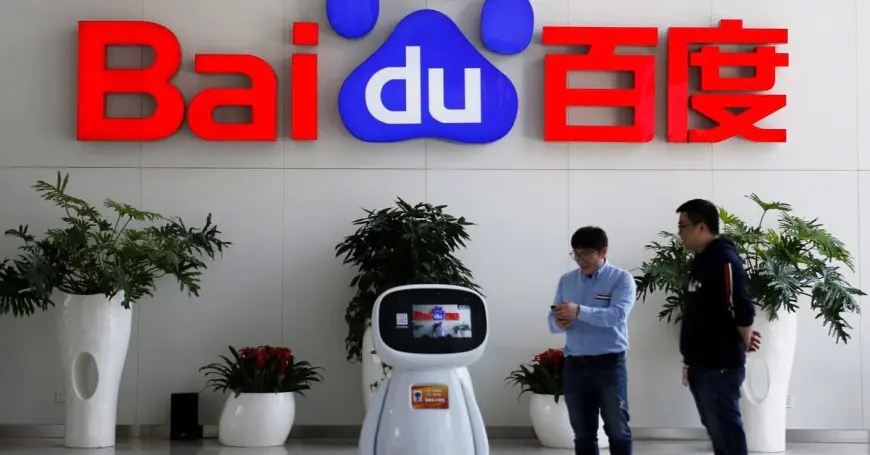
Baidu unveiled a new generation of autonomous AI agents at its Create 2026 developer conference in Beijing, including DuMate and Miaoda. The company says the tools are designed to move beyond traditional chatbots by handling complex business workflows and executing real operational tasks with minimal human involvement.

Baidu Pushes Beyond Chatbots With Autonomous AI Agents
Baidu used its Create 2026 developer conference in Beijing to introduce a major new wave of autonomous AI technology aimed at transforming how businesses interact with artificial intelligence. The company unveiled several next-generation AI agents, including DuMate, a general-purpose enterprise assistant, and Miaoda, a specialized coding-focused AI agent built to handle software development workflows.
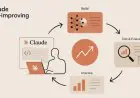
The announcement reflects a growing shift in the AI industry where companies are moving beyond simple conversational chatbots toward autonomous systems capable of independently completing multi-step tasks. Baidu says its new agents are designed to bridge the gap between AI assistants and digital employees that can execute end-to-end operational workflows inside enterprise environments.
Why The AI Agent Race Is Accelerating
Over the past two years, generative AI platforms have largely focused on answering questions, generating content, and assisting users with individual tasks. However, businesses are now demanding AI systems that can take meaningful action rather than simply provide recommendations.
Autonomous agents represent the next stage of enterprise AI evolution because they can coordinate tasks, interact with software systems, process data, and make operational decisions with far less human intervention. Technology firms across the globe are investing heavily in this area as organizations search for ways to automate increasingly complex workflows.
What DuMate And Miaoda Bring To Enterprises
According to Baidu, DuMate is designed as a broad enterprise AI assistant capable of supporting operational processes across departments such as customer service, administration, workflow coordination, and information management. Miaoda, on the other hand, focuses specifically on coding and software engineering tasks, helping developers generate code, debug systems, and accelerate technical project execution.
The company believes these systems can significantly reduce repetitive digital workloads while improving efficiency across enterprise teams. Instead of employees manually coordinating every step of a workflow, the AI agents are designed to manage tasks dynamically and respond to changing operational requirements in real time.
- Automates multi-step enterprise workflows
- Supports coding and software development tasks
- Acts more like a digital employee than a chatbot
- Improves operational efficiency for businesses
- Expands AI automation across enterprise systems
Baidu Is Positioning Itself In The Global AI Competition
The launch also highlights Baidu’s broader ambitions in the global artificial intelligence market. Chinese technology companies are increasingly competing with major Western AI firms to develop enterprise-grade AI ecosystems capable of supporting large-scale automation, software development, and intelligent business operations.
Baidu has invested heavily in AI infrastructure, cloud computing, and large language models over recent years. By introducing autonomous agents with real operational capabilities, the company is attempting to strengthen its position in a rapidly evolving market where enterprises are seeking AI systems that deliver measurable productivity gains rather than experimental features.
The Future Workplace May Depend On AI Agents
Industry analysts increasingly believe autonomous AI agents could become central to the future workplace. Instead of functioning solely as assistants that respond to prompts, these systems are evolving into intelligent operational layers capable of coordinating tasks across applications, departments, and business environments.
For enterprises, this could mean faster decision-making, reduced administrative workloads, and more scalable digital operations. However, it also raises important questions about governance, oversight, workforce adaptation, and the balance between automation and human control.
Create 2026 Signals A New Phase Of Enterprise AI
Baidu’s Create 2026 conference made one thing clear: the AI industry is rapidly moving toward autonomous systems that do far more than generate text or answer questions. Companies now want AI that can actively participate in business execution and operational management.
As the competition around autonomous AI agents intensifies, enterprise adoption is expected to accelerate across industries ranging from software development and finance to logistics and customer support. More information about Baidu’s latest AI initiatives and developer ecosystem can be found through the official Baidu AI Platform.