
































China's New Five Year Plan Puts Artificial Intelligence At The Center Of Everything
Beijing has unveiled its ambitious 15th Five-Year Plan for 2026-2030, introducing a sweeping AI Plus action plan designed to embed artificial intelligence into every facet of the national economy, from the factory floor to the classroom.


As the doors opened for the National People's Congress in Beijing this week, the global tech community was watching for one thing: how China plans to navigate an increasingly isolated and competitive technological landscape. The answer arrived in the form of the 15th Five-Year Plan, a 141-page roadmap that mentions artificial intelligence more than 50 times. This isn't just a minor update to existing policy; it is an aggressive national pivot that positions AI as the "core engine" of China's future economic survival.
At the heart of this strategy is the newly minted "AI Plus" action plan. Much like the "Internet Plus" initiative that transformed Chinese retail and finance a decade ago, AI Plus aims to weave generative models and intelligent automation into the very fabric of traditional industries. The goal is to move beyond simple research and into what officials call "new productive forces"—a buzzword for a tech-driven economic model that relies on high-end innovation rather than cheap labor or property development.
Transforming the Industrial Backbone
The blueprint specifically targets three massive sectors: manufacturing, healthcare, and education. In the industrial heartlands, the government is pushing for the deployment of "embodied AI"—robots that don't just follow a script but learn and adapt to their environment. This move is a direct response to China’s tightening labor market and aging population. By automating the factory floor with intelligent systems, Beijing hopes to maintain its status as the world’s workshop even as its workforce shrinks.
In healthcare, the plan envisions AI agents acting as primary diagnostic assistants, reaching rural areas where specialist doctors are scarce. Meanwhile, the education sector is being prepped for "personalized learning tracks," where AI tutors assist students in mastering complex STEM subjects. According to reports from Reuters, this systemic integration is expected to drive the value of China's core digital economy to 12.5% of its total GDP by 2030.
The Quest for Self-Reliance
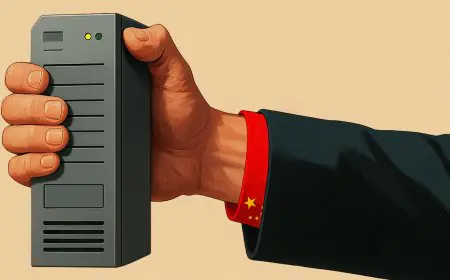
Perhaps the most significant aspect of the new plan is its focus on "seizing the commanding heights" of technology. This is coded language for decoupling from Western dependencies. With the U.S. maintaining strict export controls on high-end semiconductors, China is doubling down on its own silicon and software stack. The five-year plan vows to achieve "decisive breakthroughs" in core technologies, particularly in independent R&D for AI-specific chips and open-source foundation models.
The rivalry with the United States is the unspoken subtext of every chapter. By building a domestic ecosystem that doesn't rely on Western hardware or cloud infrastructure, Beijing is attempting to "future-proof" its economy against further sanctions. Industry experts at the Brookings Institution have noted that this centralized push could lead to a two-tiered global AI landscape, with China leading a localized, highly controlled model of AI development that rivals the more decentralized Western approach.
A Strategic Bet on the Future
What makes this 2026-2030 cycle different is the sense of urgency. China's economic growth target has been set at a more modest 4.5% to 5%, reflecting a reality where the old engines of growth—like real estate—are cooling. The government is effectively betting the house on AI and robotics to bridge the gap. It is a high-stakes gamble: if the AI Plus initiative succeeds, China could leapfrog its structural challenges and emerge as a truly autonomous tech superpower.
As we watch this plan unfold over the next five years, the focus will shift from Beijing's lofty rhetoric to actual on-the-ground implementation. Whether it’s autonomous logistics fleets in Shenzhen or AI-driven biomanufacturing in Shanghai, the world is about to see what happens when a global power decides that artificial intelligence isn't just a tool, but a national necessity. For the rest of the world, the message is clear: the race for AI supremacy has just entered a much more intense, and permanent, phase.