







































Broadcom Expects To Reach One Hundred Billion Dollars In AI Revenue
Semiconductor powerhouse Broadcom has issued a bold forecast, projecting that its AI-related chip revenue will soar past the $100 billion mark by 2027 as the global hunger for custom silicon and high-speed networking shows no signs of slowing down.
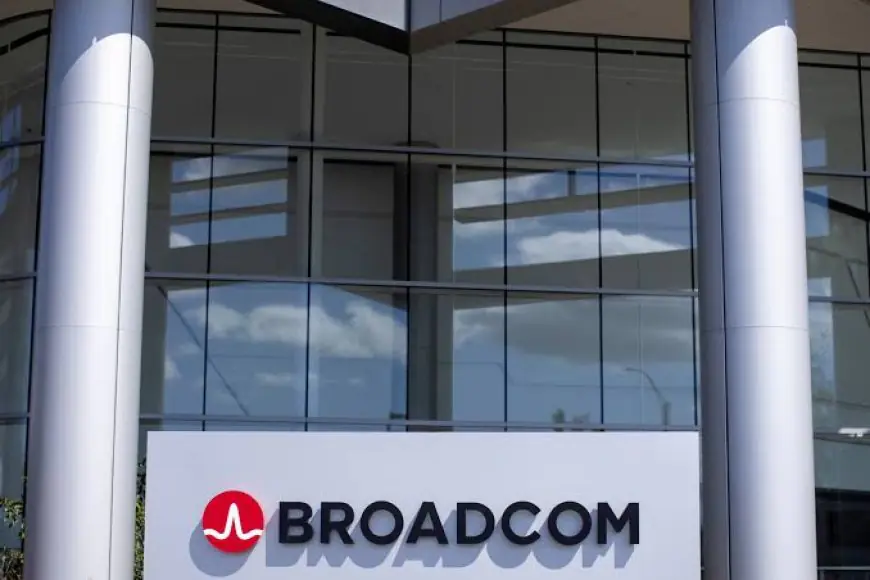


The semiconductor industry is currently witnessing a tectonic shift in power dynamics, and Broadcom is positioning itself at the very center of the upheaval. While much of the public's attention has been fixed on the meteoric rise of GPU manufacturers, Broadcom has quietly become the indispensable architect of the modern AI data center. In its latest strategic outlook, the company has projected that its annual revenue specifically from AI-related chips will exceed $100 billion by 2027.
This staggering figure represents more than just corporate optimism; it reflects a fundamental change in how the world’s largest tech companies are building their "brains." As the industry moves away from off-the-shelf solutions toward bespoke, highly efficient hardware, Broadcom’s expertise in custom silicon is becoming the gold standard for the likes of Google, Meta, and ByteDance.
The Rise of Custom AI Accelerators
A significant portion of Broadcom’s projected $100 billion windfall is expected to come from what the industry calls "ASICs" or Application-Specific Integrated Circuits. Unlike general-purpose chips, these are custom-designed for a specific task—in this case, running the complex neural networks that power generative AI. According to reports from Bloomberg, Broadcom is already the primary partner for major hyperscalers looking to design their own proprietary AI hardware.
By helping these tech giants build their own chips, Broadcom provides a path to higher performance and lower energy consumption. In a 2026 landscape where electricity costs and thermal management are the biggest bottlenecks to AI progress, the efficiency of custom silicon is no longer a luxury—it is a survival requirement. This "custom-first" strategy allows Broadcom to lock in long-term contracts that are insulated from the typical boom-and-bust cycles of the broader chip market.
Networking Is the Secret Sauce
Beyond the actual processing chips, Broadcom’s dominance in networking infrastructure is the other half of the $100 billion equation. An AI model isn't just one chip; it’s tens of thousands of chips working in perfect harmony. The "glue" that holds these massive clusters together is high-speed Ethernet switching, a category where Broadcom holds a commanding market lead.
As AI models grow in complexity, the speed at which data travels between individual processors becomes the primary speed limit for the entire system. Broadcom’s latest Jericho and Tomahawk switching platforms are designed to handle the massive data throughput required for real-time AI training. Industry analysts at CNBC have noted that for every dollar spent on AI compute, a significant and growing percentage must be spent on the networking fabric that connects it, effectively giving Broadcom a "tax" on almost every major AI build-out globally.
What This Means for the 2027 Horizon
Reaching a $100 billion run rate in just a few years would place Broadcom in an elite tier of technology companies. It suggests that the AI build-out phase is far from over. In fact, it indicates that we are entering the second act of the AI revolution—one defined by infrastructure maturity and optimization rather than just raw experimentation.
For investors and industry observers, the message is clear: the AI era is being built on a foundation of Broadcom silicon. The company’s ability to integrate high-speed connectivity with specialized compute power creates a moat that is incredibly difficult for competitors to cross. If Broadcom hits its 2027 target, it won't just be a win for their shareholders; it will be a confirmation that the world has fully committed to an AI-driven economy.
As we move through 2026, the focus will remain on how quickly Broadcom can scale its manufacturing to meet this explosive demand. With the current trajectory, the $100 billion milestone isn't just a possibility—it's looking like an inevitability in the race for digital supremacy.