





























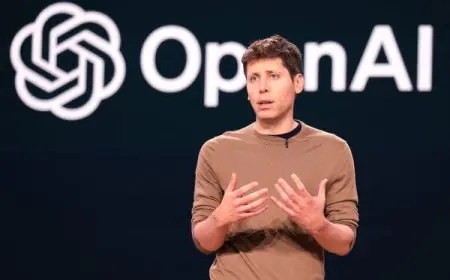











Closing Arguments Begin in Musk v. OpenAI Showdown
Closing arguments have begun in the high-profile legal showdown between Elon Musk and OpenAI leadership, including CEO Sam Altman. The case centers on allegations that OpenAI abandoned its original nonprofit mission, with the outcome potentially carrying major implications for the governance and future direction of artificial intelligence companies.



Musk And OpenAI Head Toward A Landmark Verdict
The closely watched legal confrontation between OpenAI and Elon Musk has entered its final stage as closing arguments begin in a federal courtroom in Oakland, California. After weeks of testimony, legal challenges, and intense public attention, jurors are now preparing to deliberate on one of the most consequential disputes in the modern artificial intelligence industry.
The case centers on allegations that OpenAI and CEO Sam Altman violated the organization’s original nonprofit mission and foundational agreements established during the company’s early years. Musk, who was one of OpenAI’s original co-founders before leaving the organization in 2018, argues that the company shifted away from its original commitment to open and broadly beneficial artificial intelligence development.
The Core Of The Dispute Around OpenAI
Attorneys representing Musk argued in court that OpenAI evolved from a nonprofit research initiative into a commercially driven AI powerhouse that now prioritizes competitive advantage and corporate expansion. During closing statements, Musk’s legal team described Altman as a “duplicitous operator” who allegedly redirected the organization away from its founding principles.
OpenAI’s defense strongly rejected those accusations, arguing that Musk’s lawsuit is motivated less by principle and more by frustration following his failed attempt to take greater control of the organization years earlier. Lawyers for OpenAI characterized the dispute as part business rivalry, part personal fallout, and part ideological disagreement over how artificial intelligence should be developed and governed.
Why The Case Matters Beyond Silicon Valley
The legal battle has attracted enormous attention because the outcome could influence how future AI companies are structured, funded, and regulated. As artificial intelligence becomes increasingly central to global economies and digital infrastructure, questions surrounding governance, accountability, and public benefit are becoming far more significant.
At the heart of the case is a broader debate over whether advanced AI development can realistically remain aligned with nonprofit ideals while competing in an industry that requires enormous capital investment, infrastructure spending, and global-scale computing resources.
- The case focuses on OpenAI’s original nonprofit mission
- Elon Musk alleges foundational agreements were breached
- OpenAI argues the lawsuit is driven by rivalry and control disputes
- The outcome could influence future AI governance models
- Jurors are preparing to deliberate after weeks of testimony
AI Governance Is Becoming A Global Concern
The courtroom drama also reflects the growing international debate surrounding who should control powerful artificial intelligence systems. Governments, researchers, and technology leaders worldwide are increasingly questioning how advanced AI should be regulated and whether commercial incentives can coexist with long-term public safety goals.
OpenAI’s transformation from a nonprofit research lab into one of the most influential AI companies in the world has become a central example in those discussions. The company now sits at the center of global AI competition, enterprise adoption, infrastructure expansion, and policy debates involving governments and regulators across multiple countries.
The Trial Has Exposed Deep Divisions Inside AI Leadership
Throughout the proceedings, the trial has revealed long-standing tensions between some of the most influential figures in artificial intelligence. Testimony and legal filings highlighted disagreements over corporate structure, investment strategy, competitive positioning, and the balance between openness and commercial sustainability.
For many observers, the dispute represents more than a personal conflict between Musk and Altman. It has evolved into a symbolic clash between competing visions for the future of AI development — one emphasizing open access and caution, and the other prioritizing rapid deployment and large-scale commercialization.
The Verdict Could Influence The Next Era Of AI Companies
Regardless of the final outcome, the Musk versus OpenAI case is already shaping conversations across the technology industry. Investors, startups, policymakers, and enterprise leaders are closely monitoring the proceedings because the decision could influence how future AI ventures are legally organized and publicly governed.
As artificial intelligence systems continue expanding into enterprise operations, infrastructure, healthcare, education, finance, and national security, debates around transparency and accountability are expected to intensify. More information about OpenAI’s organizational structure and AI initiatives can be found through the official OpenAI News platform.