



































Why robotic vacuums finally replaced the manual vacuuming and mopping in 2026
As we move through 2026, the era of pushing a heavy vacuum or dragging a bucket and mop is effectively over. We take a look at how brands like Roborock, Dreame, and Ecovacs have perfected autonomous floor care.
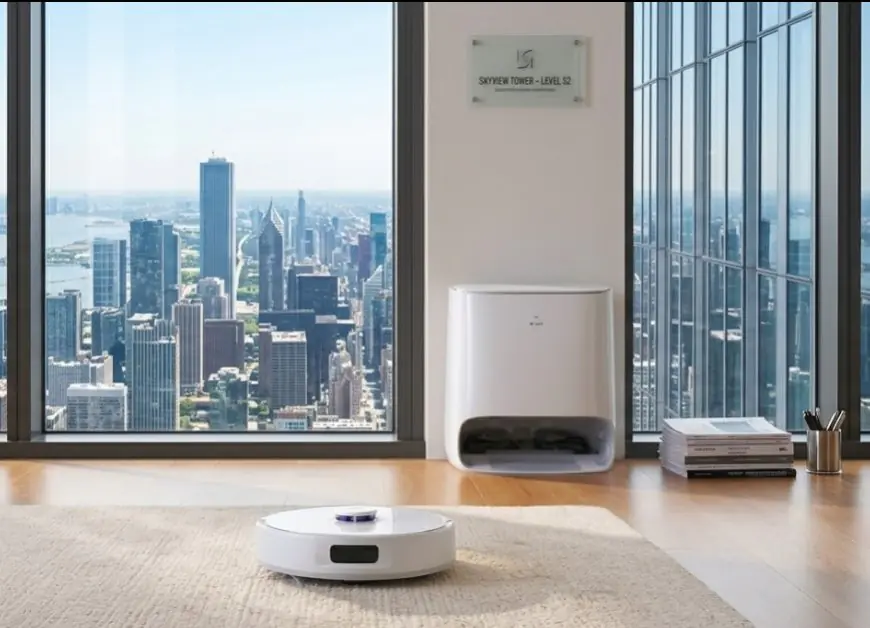
There was a time, not too long ago, when owning a robot vacuum felt like a bit of a gamble. You would set it off to clean, only to find it thirty minutes later tangled in a charging cable or smeared across a mess it was supposed to avoid. But as we settle into 2026, those frustrations have largely become artifacts of the past. The technology has matured so rapidly that for most households, the manual mop has been relegated to the back of the closet, likely gathering dust next to the old corded uprights.


The transformation we are seeing this year isn't just about better suction or bigger batteries. It is about the seamless integration of multimodal AI and sophisticated mechanical engineering. Today’s flagship models from industry leaders have turned what used to be a "helper" tool into a fully autonomous maintenance system. If you haven't looked at the market lately, you might be surprised at just how hands-off floor care has actually become.
The titans of the clean floor revolution
In 2026, the competition is fierce, and that has been a win for consumers. Several brands have separated themselves from the pack by focusing on "true autonomy"—the idea that you shouldn't have to touch the robot for weeks at a time. Here is how the big players are currently dominating the landscape:
- Roborock: Their latest S-series models have perfected the retractable mop arm. When the robot detects a rug, the mop doesn't just lift; it tucks away with surgical precision, ensuring your high-pile carpets never feel a drop of moisture.
- Dreame: Known for their high-torque scrubbing systems, Dreame’s 2026 lineup features dual-rotating mops that apply downward pressure equivalent to a human hand. Their "MopExtend" technology ensures that baseboards and tight corners—historically the weakness of round robots—are cleaned thoroughly.
- Ecovacs: The Deebot X-series has leaned heavily into AI-driven obstacle avoidance. Using neural networks trained on millions of household objects, these machines can now identify and navigate around even the most "unpredictable" pet messes with a 99% success rate.
We are also seeing innovative strides from brands like Mova and Narwal, which are pushing the boundaries of base station design. The modern docking station is no longer just a charging pad; it is a miniature plumbing facility. Most high-end units in 2026 now offer professional installation kits that connect directly to your home's water lines, meaning the robot fills its own tank and drains its dirty water without you ever lifting a finger.
Why 2026 is the tipping point for AI cleaning
The real secret sauce behind the success of these machines is the advancement in vision systems. Older robots relied on basic Lidar that could see walls but struggled with thin table legs or transparent glass. Today’s robots utilize advanced computer vision to create 3D maps of the home that are accurate down to the millimeter. This allows for "room-specific" logic—the robot knows that the kitchen needs a heavy-duty scrub with hot water, while the hardwood in the hallway only requires a light damp dust.
Furthermore, the integration of Large Language Models (LLMs) has changed how we interact with these devices. Instead of fiddling with a complex app, you can simply tell your home assistant, "Clean up the crumbs under the dining table," and the robot knows exactly where that is and what tool to use. This level of contextual awareness has moved these devices from being "gadgets" to being essential appliances.
According to recent industry reports on smart home adoption, over 60% of new home buyers in 2026 are prioritizing built-in "robot garages" in their kitchen cabinetry. It is clear that the market has shifted; we no longer view automated cleaning as a luxury, but as the standard. With the hardware finally catching up to the software, the dream of a self-cleaning home is, for the first time, a reality for the average person.
As we look toward the second half of the year, the trend is moving toward even more specialized attachments and quieter operation. If you are still holding onto that old manual mop, 2026 might just be the year you finally let it go.