



























SoftBank Launched A New Physical AI Push For Robotics And Machines
SoftBank is pivoting its investment strategy toward Physical AI, a transformative movement that integrates autonomous intelligence with industrial machines and robotics. Led by Masayoshi Son, this new initiative focuses on logistics automation, domestic AI infrastructure in Asia, and the realization of Artificial Super Intelligence through physical systems.
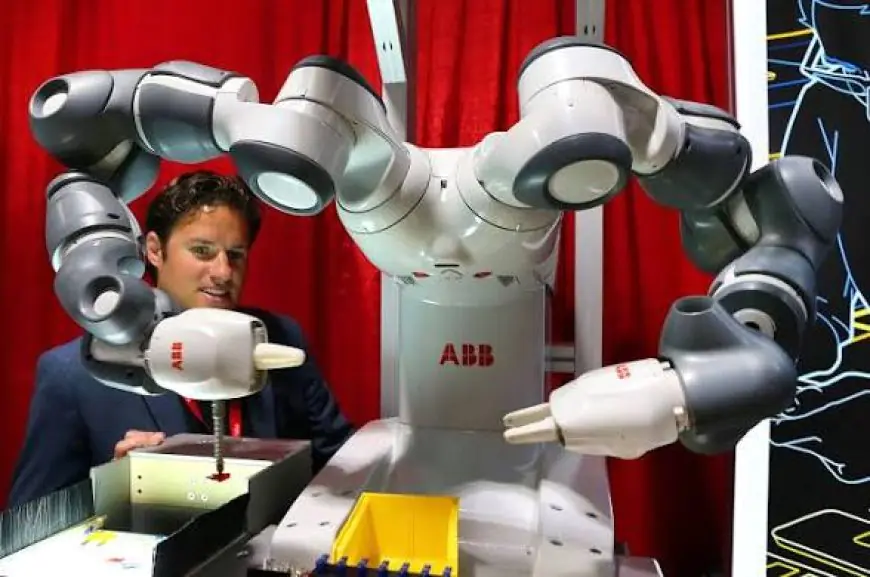


For years, the conversation around artificial intelligence has been dominated by digital models—chatbots, image generators, and coding assistants that live behind a screen. However, SoftBank Group is now spearheading a massive shift toward "Physical AI," a bold strategy designed to bring autonomous intelligence out of the cloud and into the real world. By focusing on systems that can control machines and robots in physical spaces, SoftBank is positioning itself as the primary architect of a new industrial era where AI doesn't just think, but acts.
The move marks a pivotal moment for Masayoshi Son, the SoftBank Chairman who has long preached the coming of Artificial Super Intelligence (ASI). Under this new directive, SoftBank is moving beyond speculative tech investments to build the actual infrastructure—chips, data centers, and robotic systems—required for robots to navigate and manipulate the human environment. This "Physical AI" push is not just a commercial endeavor; it is a play for sovereign AI leadership in Asia, ensuring that the region possesses the domestic technology to automate its most critical industries.
Building The Foundation For Autonomous Machines
The core of SoftBank’s strategy lies in the convergence of high-performance computing and robotics. In early 2026, SoftBank Corp CEO Junichi Miyakawa confirmed that the company’s AI data centers in Tomakomai and Sakai are beginning operations to provide the massive compute capability needed for physical tasks. Unlike digital AI, which can tolerate slight delays, physical AI requires real-time, low-latency processing to prevent mechanical errors in environments like warehouses, factories, and hospitals.
To accelerate this, SoftBank recently joined forces with three other Japanese giants—NEC, Sony, and Honda—to form a powerhouse venture dedicated to developing Japanese-made AI. This alliance aims to produce "Physical AI" models specifically tuned for controlling hardware, from autonomous vehicles to industrial robotic arms. According to recent reports from SoftBank Robotics, the goal is to create a "society that coexists with AI," where machines are no longer programmed with rigid scripts but are instead given the intelligence to make autonomous decisions on the fly.
Logistics and The Smart Building Revolution
One of the most immediate applications of SoftBank’s physical AI push is in logistics and facility management. Through its acquisition of Green Clean Commercial (GCC), SoftBank Robotics is launching "Smart Building X" (SBX). This platform utilizes predictive intelligence and physical AI to manage large-scale commercial facilities, optimizing everything from energy usage to automated cleaning and maintenance. By embedding AI directly into live service environments, these systems can learn and improve their performance with every task they complete.
In the logistics sector, the implications are even more profound. SoftBank is working to integrate its AI-RAN (Radio Access Network) technology to provide the seamless connectivity required for swarms of autonomous robots to communicate in massive distribution centers. This isn't just about efficiency; it's about solving the global labor shortage in manual industries. SoftBank’s "Orchestrator" role ensures that these machines can work alongside humans safely, filling gaps in the workforce while increasing output across the board.
The Road To Artificial Super Intelligence
While the current focus is on industrial automation, the ultimate goal remains Masayoshi Son’s vision of ASI. SoftBank believes that for AI to truly surpass human wisdom, it must be able to interact with and learn from the physical world. This requires a feedback loop where AI models are trained on real-world sensory data rather than just internet-based text. By controlling the robots that collect this data, SoftBank effectively owns the most valuable training ground for the next generation of intelligence.
As the market continues to evolve, the competition for AI dominance is shifting from who has the best model to who has the most capable physical presence. With its deep ties to Arm for chip architecture and its growing network of AI data centers, SoftBank is building a vertical stack that few other companies can match. This hardware-led approach suggests that global tech investors are now prioritizing companies that can bridge the gap between software and the physical world. For SoftBank, "Physical AI" is more than a buzzword—it is the final piece of the puzzle in the quest for a fully autonomous future.